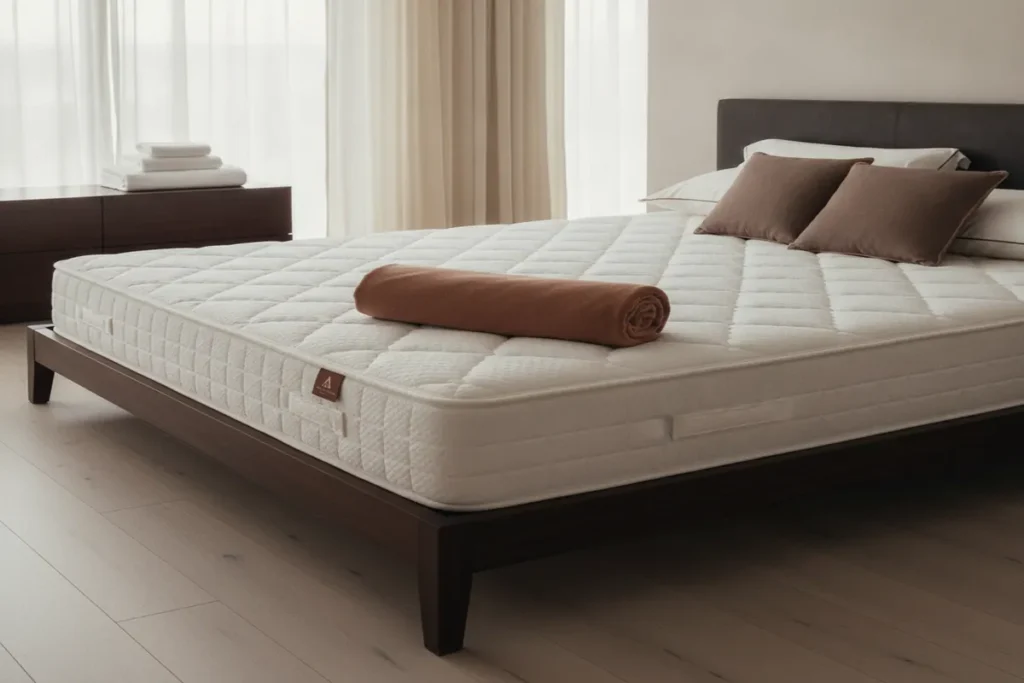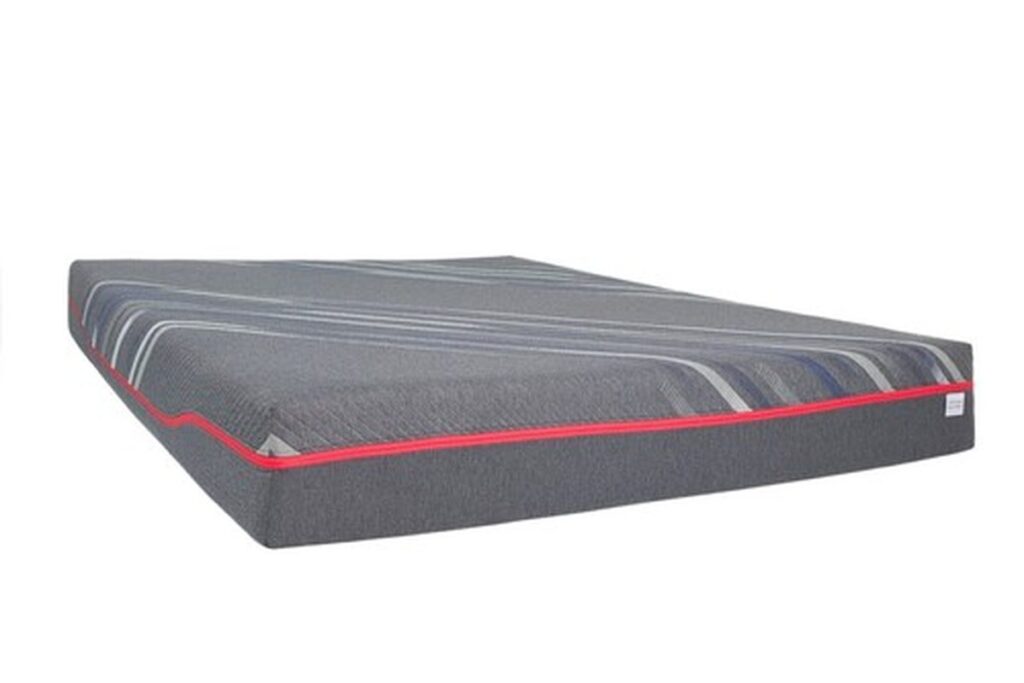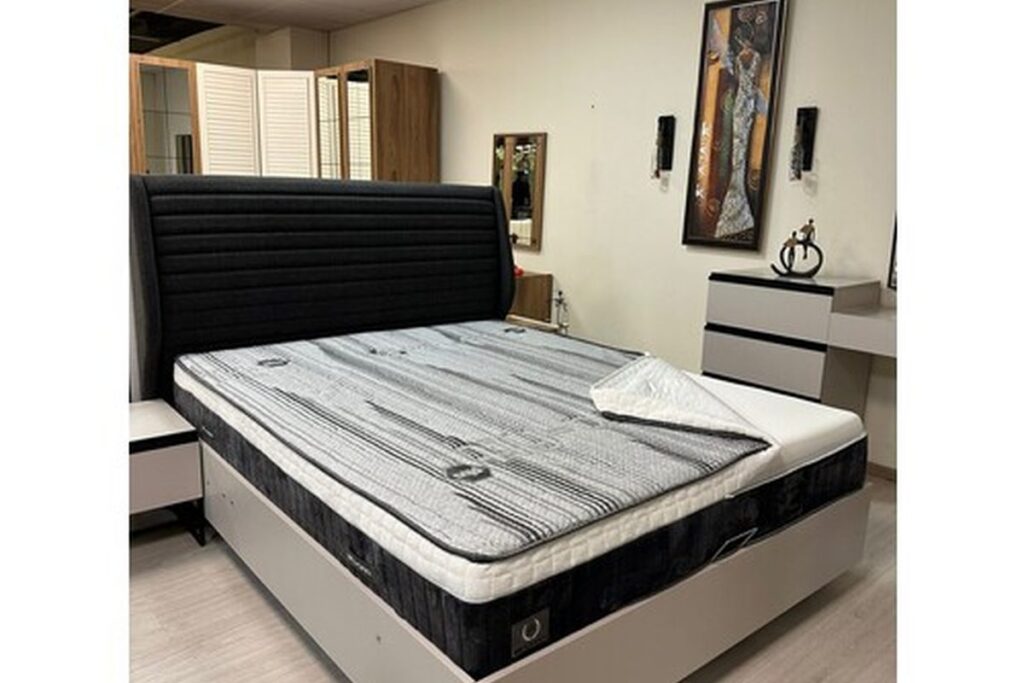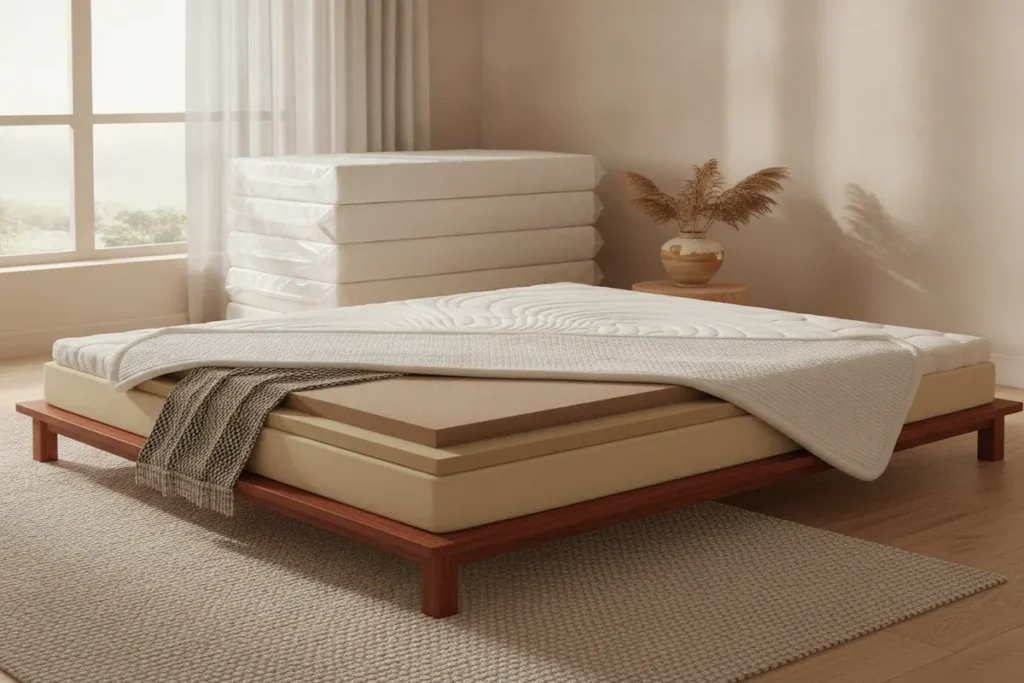

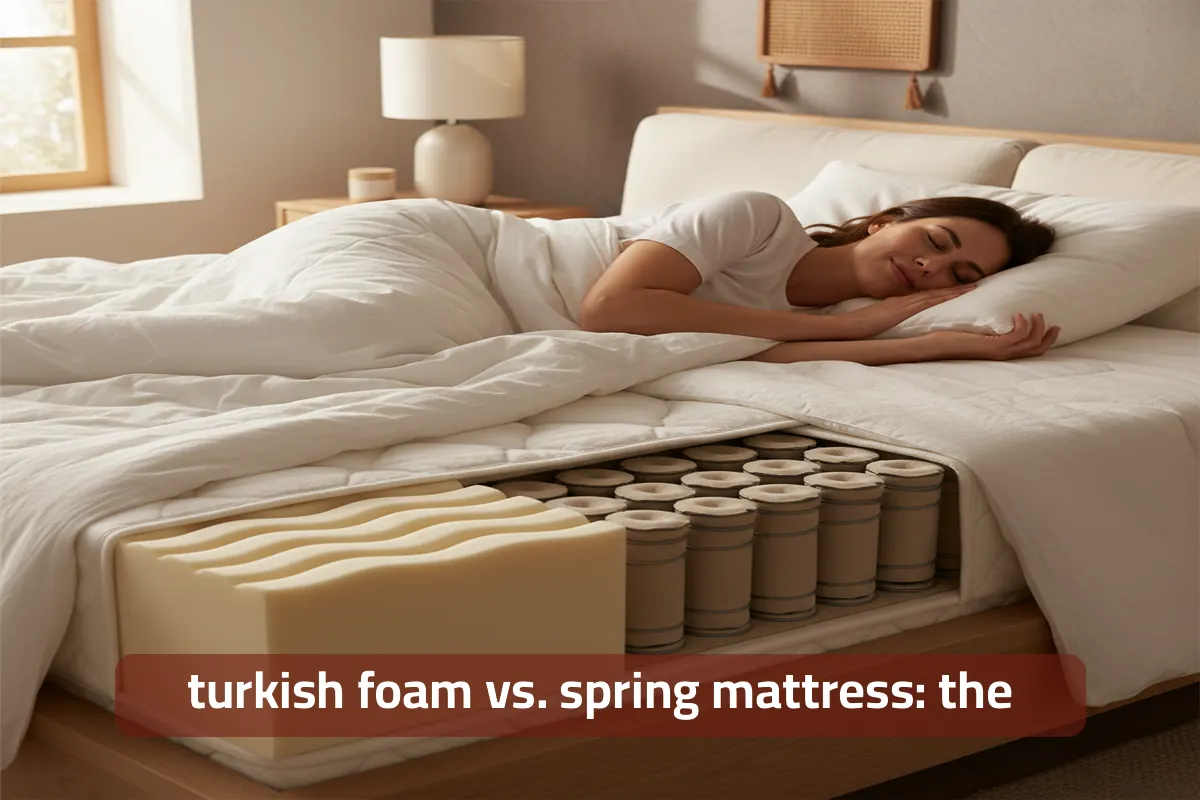
Choosing the ideal mattress is a pivotal decision for your sleep quality and overall well-being. In 2026, Turkish mattresses continue to gain global recognition for their quality and craftsmanship, presenting buyers with a core dilemma: Turkish foam vs. spring. While foam mattresses offer exceptional pressure relief, contouring, and motion isolation, spring and hybrid models provide robust support, superior airflow, and a traditional bounce. The optimal choice is deeply personal, hinging on your unique sleep preferences, body type, and specific comfort requirements. This guide will equip you with expert insights to confidently select the Sinyora Yatak mattress that promises your best night’s sleep.
Quick Summary
- Turkish foam mattresses excel in contouring, pressure relief, and motion isolation, ideal for side sleepers and those with pain
- Turkish spring mattresses, especially hybrids, offer superior breathability, robust support, and a traditional bouncy feel
- The “best” choice depends on individual sleep style, body type, and desired firmness
- Modern Turkish manufacturing integrates advanced materials for both types, enhancing durability and comfort
What Defines Turkish Foam and Spring Mattresses in 2026?
Turkish mattress manufacturers, like Sinyora Yatak, have earned a reputation for blending traditional craftsmanship with cutting-edge sleep technology. Understanding the core construction of foam and spring mattresses, especially in the context of 2026 innovations, is crucial for an informed decision.
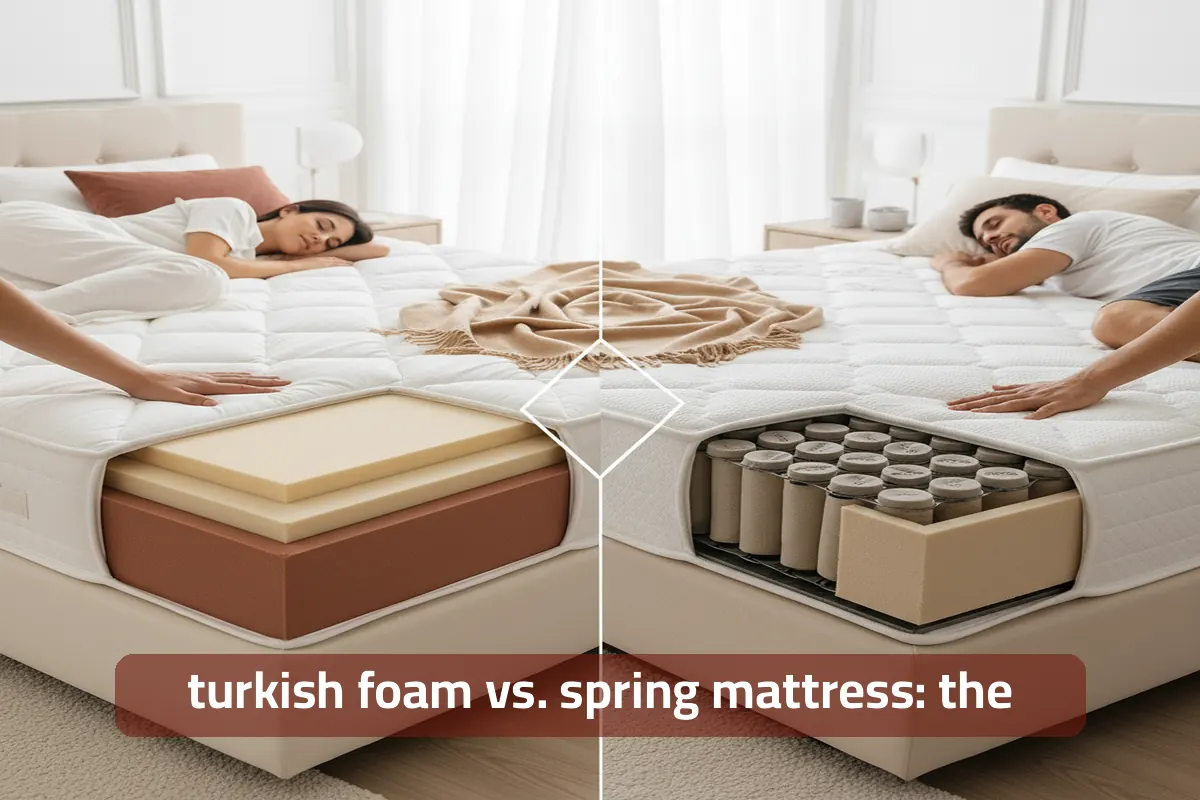
Turkish Foam Mattresses: A Deep Dive into Comfort Layers
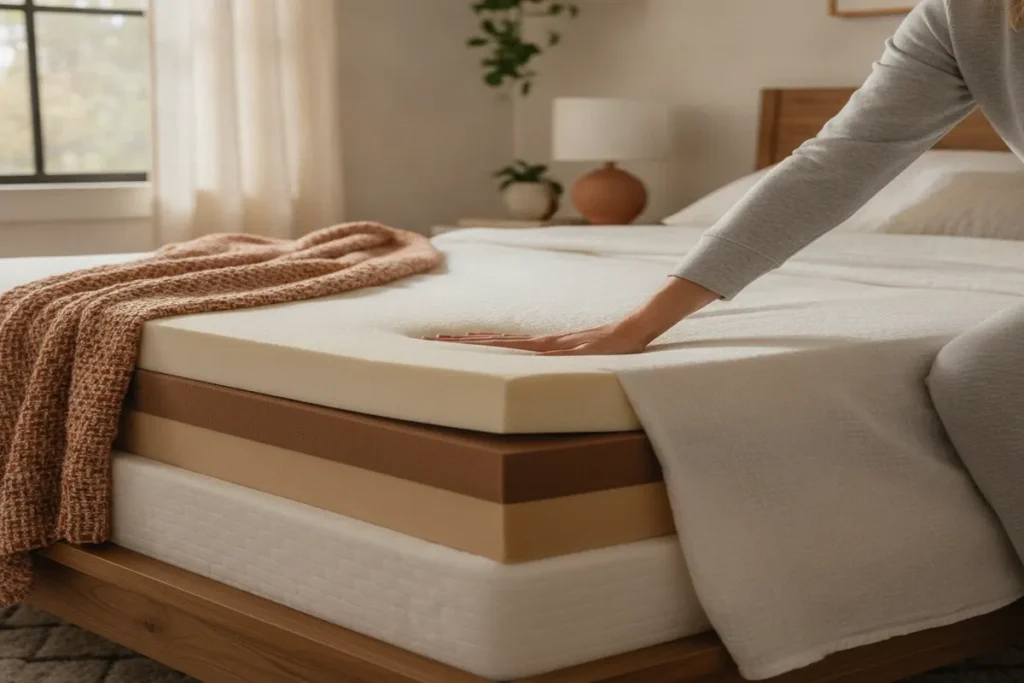
Turkish foam mattresses are engineered without traditional coil systems, relying entirely on advanced foam layers for support and comfort. The quality and density of these foams are paramount, setting Turkish offerings apart.
-
Polyurethane (Polyfoam): Often forms the durable core or transition layers. In 2026, Turkish manufacturers frequently utilize higher-density polyfoams (e.g., 1.8-2.5 lbs/cu.ft or higher) to ensure superior longevity and resilient support compared to standard foams.
-
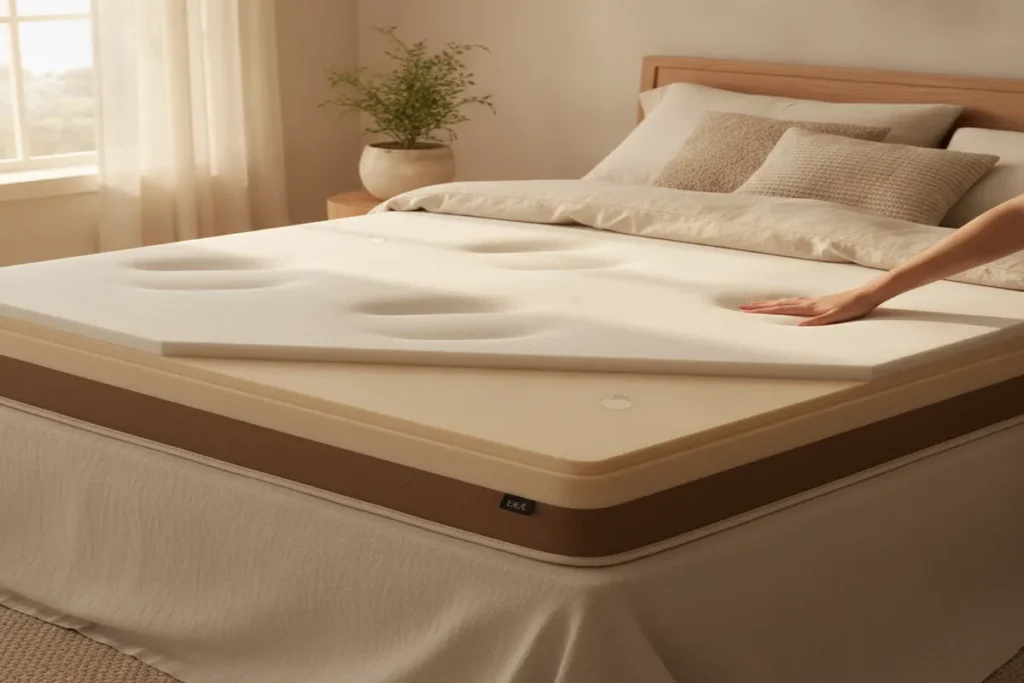
Memory Foam (Viscoelastic Foam): Renowned for its body-conforming properties, offering exceptional pressure relief and a “hug” sensation. Modern Turkish memory foam mattresses often feature gel infusions, open-cell structures, or graphite layers to mitigate heat retention, a common concern with traditional memory foam, making them cooler for 2026 climates.
-
High-Resilience (HR) Foam: A premium polyurethane foam that provides a quicker response and greater durability than standard polyfoam. It offers a bouncier feel than memory foam while maintaining excellent support, often used in comfort layers for a balanced feel.
-
Natural Latex Foam: Derived from rubber trees, natural latex is highly prized for its exceptional durability, buoyant responsiveness, natural breathability, and hypoallergenic properties. Turkish latex mattresses are often sought after for their eco-friendly profile and long-lasting, supportive comfort.
-
Key 2026 Trends: Expect to see more zoned foam constructions for targeted support, plant-based foams for sustainability, and advanced cooling technologies integrated directly into the foam layers.
Turkish Spring (Innerspring & Hybrid) Mattresses: Support Meets Innovation
Turkish spring mattresses utilize a robust coil system as their primary support, evolving significantly beyond traditional designs.
-
Innerspring Mattresses: These feature interconnected coil systems, such as Bonnell coils (hourglass shape, durable, traditional bounce) or Offset coils (similar to Bonnell but with hinged coils for better contouring). They typically offer a firmer, more traditional feel with excellent airflow.
-
Hybrid Mattresses: Representing the pinnacle of spring mattress innovation in 2026, hybrids combine a core of individually wrapped pocketed coils with multiple layers of advanced comfort foams (memory foam, latex, HR foam).
- Pocketed Coils: Each coil moves independently, providing precise contouring, superior motion isolation (compared to traditional innerspring), and targeted support. This is a crucial distinction for shared beds.
- Comfort Layers: The foam layers atop the coils provide pressure relief and cushioning, effectively marrying the benefits of foam and spring.
- Key 2026 Trends: Hybrids often incorporate micro-coils in comfort layers for enhanced responsiveness, perimeter support systems to prevent edge sag, and advanced fabric technologies (e.g., phase-change materials) for temperature regulation. Turkish hybrid mattresses are increasingly sophisticated, offering a highly balanced sleep experience.
How Do Turkish Foam and Spring Mattresses Compare on Key Performance Factors?
Understanding the practical differences in how these mattress types perform is essential. Here’s a side-by-side look at critical factors that influence your sleep experience.
Which Turkish Mattress Type Best Suits Your Sleep Style and Body?
Your primary sleep position, body weight, and any specific health considerations are paramount in determining the best mattress type. Turkish mattress makers craft options for every need.
For Side Sleepers
-
Recommendation: Turkish Foam Mattresses (especially Memory Foam or Latex).
-
Why: Side sleepers need significant pressure relief at the shoulders and hips to prevent pressure points and maintain spinal alignment. Foam’s ability to contour and cradle these areas is ideal.
- Memory Foam: Offers deep contouring, “sinking in” just enough to relieve pressure. Look for medium-soft to medium-firm options.
- Latex Foam: Provides buoyant contouring without the deep sink, offering excellent pressure relief with more responsiveness.
- Hybrid with Soft Top: A hybrid with a generous memory foam or latex comfort layer can also work, combining pressure relief with spring support.
For Back Sleepers
-
Recommendation: Turkish Foam (HR foam or firmer Memory Foam) or Hybrid Mattresses.
-
Why: Back sleepers require a balance of support for the lumbar region and gentle contouring to maintain the natural curve of the spine.
- Medium-Firm Foam: A firmer memory foam or HR foam can provide the necessary support while still conforming to the lumbar curve.
- Hybrid Mattresses: Offer excellent spinal alignment. The pocketed coils provide robust, targeted support, while the foam comfort layers prevent pressure points. This is often the ideal choice.
For Stomach Sleepers
-
Recommendation: Firmer Turkish Spring (Innerspring or Hybrid) or Firmer Foam Mattresses.
-
Why: Stomach sleepers need a firmer surface to prevent their hips from sinking too deeply, which can arch the spine and lead to back pain.
- Firmer Innerspring/Hybrid: The robust push-back of coils helps keep the body on a relatively flat plane.
- High-Density Polyfoam/HR Foam: A firm foam option can also provide the necessary support without excessive sink. Avoid soft memory foam.
For Heavier Individuals (230 lbs+)
-
Recommendation: High-Density Turkish Foam or Robust Hybrid Mattresses.
-
Why: Heavier individuals require more durable materials and stronger support to prevent premature sagging and ensure adequate spinal alignment.
- High-Density Foam: Look for polyfoams with densities of 2.0 lbs/cu.ft or higher, and natural latex, which is inherently dense and durable.
- Hybrid Mattresses with Strong Coils: Pocketed coils made from thicker gauge steel (e.g., 13-14 gauge) combined with high-density foam layers offer exceptional support and longevity. Perimeter support is also critical to prevent edge sag.
For Lighter Individuals (<130 lbs)
-
Recommendation: Softer Turkish Foam or Hybrid Mattresses with Plush Tops.
-
Why: Lighter individuals may not activate the deeper support layers of very firm mattresses, leading to pressure points. They need softer materials to contour to their lighter weight.
- Softer Memory Foam: Allows for comfortable sink and pressure relief.
- Plush Hybrid: A hybrid with a thicker, softer comfort layer can provide cushioning while the coils offer underlying support.
What Are the Common Mistakes When Choosing Between Foam and Spring?
Navigating the mattress market can be tricky, and several common pitfalls can lead to buyer’s remorse. Being aware of these mistakes can save you time, money, and discomfort.
-
Mistake 1: Not Considering Your Sleep Partner’s Needs.
- Problem: If you share a bed, one person’s ideal mattress might be another’s nightmare. For instance, a very bouncy innerspring can transfer motion easily, disturbing a light sleeper.
- Solution: Prioritize motion isolation for couples. Turkish foam mattresses (especially memory foam) and pocketed coil hybrids excel here. Consider a split firmness mattress if preferences are drastically different.
-
Mistake 2: Relying Solely on Online Reviews Without Personal Experience.
- Problem: While reviews offer insights, mattress comfort is highly subjective. What feels “firm” to one person might feel “medium” to another.
- Solution: If possible, test mattresses in person (at a Sinyora Yatak showroom or authorized retailer). Utilize generous in-home trial periods offered by reputable brands. Your body needs time to adjust.
-
Mistake 3: Overlooking Material Quality and Certifications.
- Problem: Not all foams or springs are created equal. Cheap, low-density foams can sag quickly, and poor-quality coils can lose support.
- Solution: Inquire about foam density (for polyfoam/memory foam) and coil gauge (for springs). Look for certifications like CertiPUR-US equivalent for foams (ensuring low VOCs and no harmful chemicals) and robust warranty information from Turkish manufacturers like Sinyora Yatak, indicating confidence in their materials.
-
Mistake 4: Prioritizing Price Over Long-Term Value and Health.
- Problem: A cheap mattress might seem like a good deal initially, but if it causes back pain or sags within a few years, it’s a poor investment.
- Solution: View a mattress as a long-term investment in your health and sleep quality. Factor in the lifespan, warranty, and potential health benefits. A slightly higher upfront cost for a quality Turkish mattress often translates to better sleep and fewer replacements over a decade.
-
Mistake 5: Ignoring Warranty and Return Policies.
- Problem: A mattress is a significant purchase. Not understanding the warranty or return policy can leave you stuck with an unsuitable or defective product.
- Solution: Always review the warranty details (length, what it covers) and the return/exchange policy (trial period length, fees, pickup process) before purchasing. Sinyora Yatak, for example, offers clear policies to ensure customer satisfaction.
-
Mistake 6: Forgetting About Your Bed Base.
- Problem: A mattress performs optimally when paired with the correct foundation. Using an old, unsupportive box spring with a modern foam mattress can void the warranty and compromise comfort.
- Solution: Ensure your bed base (slatted frame, platform bed, adjustable base) is compatible with your chosen mattress type. Foam mattresses generally require a solid, even surface or closely spaced slats.
How Do You Evaluate Durability and Lifespan for Turkish Mattresses?
A mattress is a substantial investment, so understanding its potential lifespan and durability is key. Turkish manufacturers are known for their robust construction, but specific material choices make a significant difference.
Factors Influencing Durability in Foam Mattresses
-
Foam Density: This is the most critical factor.
- Polyfoam: Look for core layers with a density of at least 1.8 lbs/cu.ft (pounds per cubic foot). Higher densities (2.0-2.5 lbs/cu.ft) offer superior longevity.
- Memory Foam: Aim for memory foam layers with a density of 4.0 lbs/cu.ft or higher. Lower density memory foam (e.g., 2.5-3.5 lbs/cu.ft) is more prone to softening and body impressions.
- Latex Foam: Natural latex is inherently dense and extremely durable, often lasting 15+ years. Its density is less about a numerical value and more about its composition (Talalay vs. Dunlop, natural vs. blended).
-
Layering and Construction: A well-designed foam mattress will use a combination of different foam types and densities, with firmer, denser foams at the base for support and softer foams at the top for comfort.
-
Certifications: While not directly about density, certifications like CertiPUR-US (or equivalent Turkish standards) ensure the foams are manufactured without harmful chemicals, which can also degrade material integrity over time.
Factors Influencing Durability in Spring/Hybrid Mattresses
-
Coil Gauge: Refers to the thickness of the steel wire used for the coils.
- Lower Gauge Number = Thicker Wire: A 12-gauge coil is thicker and more durable than a 15-gauge coil.
- Support Coils: For the main support system, look for coils in the 12-14 gauge range for robust durability. Softer comfort coils might be higher gauge.
-
Coil Type and Count:
- Pocketed Coils: Generally more durable than interconnected coils because they move independently, reducing stress on individual springs. A higher coil count (e.g., 800-1200+ for a Queen size) often indicates more individualized support and better durability.
- Reinforced Edges: Look for edge support systems (e.g., higher gauge coils around the perimeter, foam encasement) to prevent sagging when sitting on the edge of the bed.
-
Comfort Layer Quality: In hybrid mattresses, the durability of the foam layers on top is just as important as the coils. Apply the same foam density criteria as for pure foam mattresses.
-
Turkish Craftsmanship: Sinyora Yatak, for example, emphasizes quality control and robust construction methods, which translate directly into a longer-lasting product.
What Budget Considerations Should Guide Your Turkish Mattress Choice?
The cost of a Turkish foam or spring mattress can vary significantly. Understanding what influences these prices and what constitutes good value is crucial for making a financially sound decision in 2026.
Price Range Overview (Estimated for 2026, Queen Size USD)
-
Basic Turkish Innerspring: $400 – $800
- Value Proposition: Entry-level support, traditional feel, good airflow. Best for guest rooms or those on a tight budget needing basic support.
-
Mid-Range Turkish Polyfoam/Memory Foam: $700 – $1,500
- Value Proposition: Good pressure relief, motion isolation, varying firmness levels. Offers a significant upgrade in comfort over basic innerspring.
-
Premium Turkish Hybrid (Pocket Coils + Advanced Foams): $1,200 – $2,500+
- Value Proposition: Best of both worlds – contouring, pressure relief, motion isolation, robust support, and superior breathability. A long-term investment for primary bedrooms.
-
Luxury Turkish Latex Foam: $1,500 – $3,500+
- Value Proposition: Exceptional durability, natural materials, buoyant support, hypoallergenic properties. Often considered the pinnacle for those prioritizing natural sleep and longevity.
Factors Influencing Price
-
Material Quality and Type: Natural latex is generally more expensive than memory foam, which is typically more expensive than polyfoam. Higher-density foams and thicker gauge steel coils cost more to produce.
-
Construction Complexity: Hybrid mattresses, with their intricate combination of coil systems and multiple foam layers, are inherently more complex and thus more expensive than simpler innerspring or all-foam designs.
-
Brand Reputation and Warranty: Established Turkish brands like Sinyora Yatak, known for quality and offering comprehensive warranties, may have higher price points reflecting their commitment to materials and customer service.
-
Special Features: Advanced cooling technologies (gel infusions, phase-change materials), zoned support systems, reinforced edge support, and organic certifications all add to the cost.
-
Size: Larger sizes (King, California King) will naturally be more expensive than smaller ones (Twin, Full, Queen).
Maximizing Value for Your Budget
-
Prioritize Needs: Identify your absolute non-negotiables (e.g., motion isolation, firm support for back pain) and allocate your budget accordingly.
-
Consider Lifespan: A more expensive, high-quality mattress that lasts 10-15 years can be a better long-term investment than a cheaper one needing replacement every 5-7 years. Calculate the “cost per night.”
-
Look for Sales: Mattress retailers frequently have sales, especially around holidays.
-
Understand Delivery and Setup Costs: Factor in any additional costs for shipping, white glove delivery, and old mattress removal. Sinyora Yatak provides clear information on international shipping to the US.
Your Expert Checklist: Choosing the Ideal Turkish Mattress for 2026
To ensure you make the best decision for your sleep, use this practical framework, incorporating insights for the current year.
-
Assess Your Primary Sleep Position:
- Side Sleeper: Prioritize pressure relief; lean towards memory foam, latex, or plush hybrids.
- Back Sleeper: Seek balanced support and contouring; medium-firm foam or hybrids are excellent.
- Stomach Sleeper: Demand firm support to prevent hip sink; firm innerspring or high-density foam.
-
Evaluate Your Body Type and Weight:
- Lighter Individuals (<130 lbs): Softer foams or hybrids with plush comfort layers.
- Average Individuals (130-230 lbs): Most medium-firm options in both foam and hybrid will work.
- Heavier Individuals (>230 lbs): High-density foams (2.0+ lbs/cu.ft) or robust hybrids with low-gauge coils and strong edge support.
-
Consider Your Comfort Preferences:
- “Hug” & Deep Contour: Memory foam.
- Bouncy & Responsive: Latex foam or spring mattresses.
- Balanced (Support + Cushion): Hybrid mattresses.
- Traditional Firm: Firmer innerspring.
-
Factor in Specific Needs (2026 Context):
- Heat Retention: Look for gel-infused memory foam, open-cell foam, natural latex, or spring/hybrid options with good airflow and cooling fabric technologies.
- Motion Isolation (for couples): Foam mattresses or pocketed coil hybrids are superior.
- Back/Joint Pain: High-quality memory foam or latex for targeted pressure relief and support.
- Allergies: Natural latex is naturally hypoallergenic and dust mite resistant.
-
Scrutinize Material Quality & Durability:
- Foam: Inquire about density (e.g., 4+ lbs/cu.ft for memory foam, 1.8+ lbs/cu.ft for polyfoam). Look for CertiPUR-US equivalent certifications.
- Springs: Check coil gauge (lower is thicker/stronger) and coil count (higher for pocketed coils is generally better). Assess edge support.
- Turkish Craftsmanship: Sinyora Yatak emphasizes high-quality materials and rigorous manufacturing standards, which contribute significantly to longevity.
-
Set a Realistic Budget & Seek Value:
- Determine your comfortable price range, but prioritize long-term value. A quality Turkish mattress is a health investment.
- Compare features against price; premium materials and advanced construction will command higher prices.
-
Review Warranty & Trial Period:
- A minimum 10-year warranty is standard for quality mattresses.
- Look for a risk-free home trial (e.g., 90-120 nights) to ensure the mattress is truly right for you.
-
Ensure Proper Foundation:
- Confirm your existing bed base is suitable, or consider purchasing a new, compatible foundation.
Expert Insight
“The evolution of mattress technology, particularly in Turkish manufacturing, means today’s buyers have an unprecedented array of choices. In 2026, the distinction between foam and spring isn’t just about ‘soft’ or ‘bouncy’; it’s about the sophisticated layering of materials designed for specific physiological needs. High-quality Turkish mattresses, whether foam or hybrid, represent a significant investment in sleep health, provided consumers focus on material density, coil integrity, and how these elements align with their unique body profile and sleep habits.”
Key Terms
-
Viscoelastic Foam (Memory Foam): A type of polyurethane foam that reacts to body heat and pressure, conforming closely to the sleeper’s shape for pressure relief.
-
Pocketed Coils: Individually wrapped spring coils that move independently, providing targeted support and excellent motion isolation, commonly found in hybrid mattresses.
-
High-Resilience (HR) Foam: A premium polyurethane foam that offers more bounce and durability than standard polyfoam, often used for a responsive yet supportive feel.
-
Motion Isolation: The ability of a mattress to absorb movement, preventing disturbances from a partner’s tossing and turning.
-
Coil Gauge: A measurement of the thickness of the wire used in mattress coils; a lower gauge number indicates a thicker, more durable wire.
How Can You Upgrade to More Comfortable Sleep with Sinyora Yatak?
At Sinyora Yatak, we understand that exceptional sleep begins with the right mattress. Our extensive collection of Turkish foam and spring mattresses is crafted with the highest standards of quality, using premium materials and advanced manufacturing techniques tailored for the discerning US market. Whether you’re seeking the contouring embrace of our Visco Foam Mattress, the natural resilience of our Latex Foam Mattress, or the balanced support of our innovative Pocket Coils Mattress, we have a solution designed for your unique sleep profile. We offer transparent international shipping to the United States, comprehensive warranties, and dedicated customer support to ensure a seamless experience. Explore our Mattress Collection today and discover why Sinyora Yatak is the trusted choice for elevating your sleep comfort.
Frequently Asked Questions
Q: What are the primary benefits of choosing a Turkish foam mattress over a spring mattress?
Q: Are Turkish spring mattresses still relevant in 2026, or are foam mattresses better?
Q: How do Turkish mattress manufacturers address heat retention in foam mattresses?
Q: What is the typical lifespan of a high-quality Turkish mattress, both foam and spring?
Q: Can I get a Turkish mattress shipped to the United States, and what should I expect for delivery?
Q: What level of firmness should I look for in a Turkish mattress if I suffer from back pain?