
Yes, you can absolutely ship Turkish mattresses internationally to your home in the United States! Thanks to advancements in logistics and packaging, reputable Turkish manufacturers like Sinyora Yatak have streamlined the process, making it a surprisingly straightforward experience in 2026. This comprehensive guide will walk you through everything from understanding the benefits of Turkish mattresses to navigating shipping costs, customs, and ensuring a smooth delivery, so you can enjoy superior comfort no matter where you live.
Quick Summary
- International shipping of Turkish mattresses to the US is seamless
- Reputable manufacturers compress and roll mattresses for efficient transit
- Costs vary by size, weight, and shipping method, including duties
- Always verify customs requirements and choose an experienced freight partner
Why Choose a Turkish Mattress for International Shipping to the US in 2026?
The global appeal of Turkish mattresses continues to grow, driven by their unique blend of quality, value, and specialized features. For discerning consumers in the United States, importing a Turkish mattress in 2026 offers distinct advantages that often outweigh the logistics, providing access to a sleep experience not always readily available domestically.
-
Superior Quality & Craftsmanship: Turkish mattress manufacturers are celebrated for their meticulous attention to detail and durable construction. They often combine traditional, hand-finished techniques with cutting-edge sleep technology, resulting in mattresses built to last. Many brands, including Sinyora Yatak, use high-quality, ethically sourced materials.
-
Diverse Comfort & Customization Options: Whether you seek orthopedic firmness for back support, plush contouring for pressure relief, or a balanced feel, Turkish brands offer an extensive range. You’ll find options incorporating natural latex, premium memory foam, advanced pocketed coil systems, and even specialized materials like cashmere. Many manufacturers also excel in custom-made mattresses, allowing for personalized dimensions, firmness levels, and material combinations perfectly suited to your specific needs or unique bed frames.
-
Competitive Value Proposition: Despite their premium features and quality, Turkish mattresses often provide exceptional value. When compared to similarly specified products from Western markets, they can offer a more accessible price point without compromising on comfort or durability. This value becomes even more apparent when considering the mattress’s extended lifespan.
-
Specialized Features for Varied Climates and Needs: Many Turkish mattress designs incorporate features ideal for warmer climates or those who sleep hot. This includes highly breathable fabrics, advanced cooling technologies, and materials that promote optimal airflow. For instance, Sinyora Yatak’s “4 Seasons Bed” offers adaptable comfort for changing temperatures, a feature often sought after in diverse US climates.
-
Access to Unique Technologies and Materials: Turkish manufacturers often innovate with materials and construction methods that might be niche or premium in other markets. This can include specific foam densities, natural fiber blends, or hybrid designs that deliver a truly distinctive feel and performance.
By opting for a Turkish mattress, US consumers gain access to a world of advanced sleep solutions, often at a better price-to-performance ratio, making the international shipping process a worthwhile investment in long-term sleep health and comfort.
How Does International Mattress Shipping from Turkey to the US Actually Work?
Shipping a mattress across continents might seem daunting, but reputable Turkish manufacturers have refined the process into a secure and efficient operation. Understanding these steps will demystify the journey of your new mattress from Turkey to your bedroom in the United States.
The typical international shipping process for a Turkish mattress in 2026 involves several key stages:
-
Order Confirmation and Production:
- Once you place your order, whether for a standard model or a custom-made mattress, the manufacturer confirms specifications.
- The mattress is then produced, adhering to stringent quality controls. This phase ensures your mattress meets both the manufacturer’s standards and your specific requirements.
-
Specialized Packaging for Export:
- This is a crucial step for international transport. Most modern Turkish mattresses, especially foam and hybrid models, undergo a specialized packaging process.
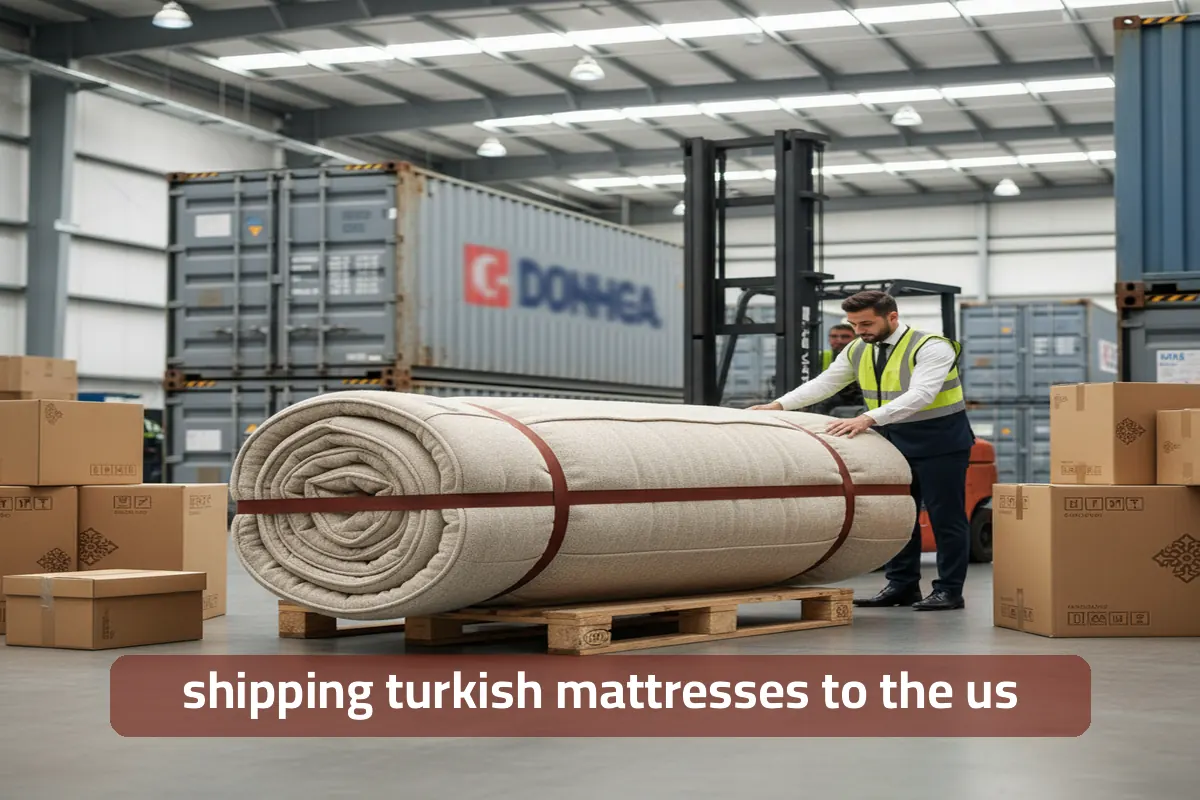
- Compression and Rolling: The mattress is carefully compressed using industrial machinery, significantly reducing its volume.
- Vacuum Sealing: It is then vacuum-sealed in durable, multi-layer plastic to protect against moisture, dust, and damage during transit.
- Secure Boxing: Finally, the compressed and rolled mattress is placed into a sturdy, reinforced cardboard box, often with additional protective layers. This compact form not only protects the mattress but also drastically reduces shipping volume, which directly impacts freight costs.
-
Freight Forwarding and Logistics:
- Turkish manufacturers typically partner with established international freight and logistics companies. These experts handle the complex movement of goods across borders.
- Documentation: The freight forwarder prepares all necessary export documentation, including the commercial invoice, packing list, and Bill of Lading (BoL).
- Transport to Port/Airport: The packaged mattress is transported from the factory to a major port (e.g., Istanbul, Izmir) for sea freight or an international airport for air freight.
- Loading and Departure: The mattress is loaded onto a cargo ship or plane. You will receive tracking information at this stage.
-
Customs Clearance in Turkey (Export):
- Before departure, the mattress undergoes Turkish customs clearance. The freight forwarder manages this, ensuring all export regulations are met and taxes/duties are paid (if applicable on the export side).
-
International Transit:
- This is the longest phase. Sea freight typically takes 3-6 weeks, while air freight is much faster, usually 5-10 days, depending on the origin and destination.
- Throughout transit, the mattress remains securely packaged, designed to withstand the rigors of international travel.
-
Customs Clearance in the US (Import):
- Upon arrival at a US port or airport, your mattress must clear US Customs and Border Protection (CBP).
- The freight forwarder or a customs broker (often part of the freight company’s service) submits all import documentation, including the commercial invoice, and pays any applicable import duties or taxes on your behalf (which are typically factored into your total shipping cost or billed separately).
-
Last-Mile Delivery:
- Once cleared by US Customs, the mattress is transferred to a local delivery service.
- Depending on the service level chosen, this could be curbside delivery, or “white glove” delivery where the mattress is brought into your home, unpacked, and potentially set up.
- You will be contacted to schedule the final delivery.
This streamlined process, especially the compression and robust packaging, is what makes international mattress shipping viable and increasingly popular, allowing consumers worldwide to access premium Turkish sleep products.

What Are the Key Factors Influencing Turkish Mattress Shipping Costs to the US?
Understanding the cost components of shipping a Turkish mattress to the US is crucial for budgeting and managing expectations. Several variables contribute to the final price, and these can fluctuate based on market conditions in 2026.
Here are the primary factors that influence international mattress shipping costs:
-
Mattress Size and Weight: This is the most significant factor. Larger and heavier mattresses (e.g., King size, dense latex models) will naturally cost more to ship than smaller, lighter ones (e.g., Twin, foam models). The compressed and rolled dimensions are what primarily determine the volumetric weight or chargeable weight, which carriers use for pricing.
-
Shipping Method (Air Freight vs. Sea Freight):
- Sea Freight: Generally the most economical option for large, heavy items like mattresses. It’s slower (3-6 weeks transit time) but offers substantial cost savings.
- Air Freight: Significantly faster (5-10 days transit time) but considerably more expensive. This option is typically chosen for urgent deliveries or high-value, smaller items where speed is paramount.
-
Distance and Destination: Shipping from Turkey to the West Coast of the US might incur different costs than shipping to the East Coast, due to inland transportation legs.
-
Fuel Surcharges: Global fuel prices directly impact shipping costs, especially for air freight and long-haul sea routes. These surcharges can fluctuate.
-
Customs Duties, Taxes, and Fees:
- The US imposes import duties on certain goods. Mattresses (HS code 9404.29.90.10) typically have a duty rate. This rate can change, so it’s important to confirm the current Harmonized Tariff Schedule (HTS) rate for 2026.
- Additionally, there may be customs processing fees charged by the US Customs and Border Protection or the freight forwarder.
-
Insurance: It is highly recommended to purchase shipping insurance to protect against loss or damage during transit. The cost of insurance is usually a small percentage of the mattress’s declared value.
-
Delivery Service Level:
- Curbside Delivery: The most basic and least expensive, where the mattress is delivered to your curb. You are responsible for moving it into your home.
- Threshold Delivery: The mattress is brought just inside your front door or garage.
- White Glove Delivery: The most comprehensive and expensive service, where the mattress is brought to your room of choice, unpacked, set up, and often includes removal of old packaging.
-
Manufacturer/Freight Forwarder Margins: Different companies will have varying pricing structures and partnerships, influencing their quoted shipping rates.
To illustrate the difference in shipping methods, consider this comparison:
When requesting a quote, always ask for a door-to-door price that includes all duties, taxes, and final delivery charges to avoid hidden fees. This “all-in” price gives you the most accurate picture of the total investment.
Navigating Customs and Import Duties for Turkish Mattresses in the US
Importing goods into the United States, including a Turkish mattress, requires navigating specific customs procedures and understanding potential import duties. While your chosen manufacturer or freight forwarder will handle most of the paperwork, being informed helps ensure a smooth process in 2026.
Key Documents and Information Required:
-
Commercial Invoice: This document, provided by the seller (Sinyora Yatak, for instance), details the goods being shipped, their value, quantity, and buyer/seller information. It’s crucial for customs valuation.
-
Packing List: Outlines the contents of the shipment, including dimensions and weight of each package.
-
Bill of Lading (for sea freight) or Air Waybill (for air freight): This is the contract of carriage between the shipper and the carrier, acting as a receipt for the goods and a document of title.
-
Importer of Record (IOR) Information: As the buyer, you are generally the IOR. This means you are responsible for ensuring import compliance. Your freight forwarder will guide you on providing necessary personal identification.
-
Harmonized Tariff Schedule (HTS) Code: Mattresses fall under specific HTS codes (e.g., 9404.29.90.10 for mattresses with spring interior or stuffed/fitted with any material). This code determines the applicable duty rate.
Understanding Import Duties and Taxes in 2026:
-
Duty Rates: The US imposes duties on imported goods to protect domestic industries and generate revenue. For mattresses, the duty rate can vary. As of 2026, it’s essential to confirm the current HTS duty rate. These rates are a percentage of the declared value of the mattress.
-
De Minimis Value: For small shipments, the US has a “de minimis” value, below which duties and taxes are not collected. For most individual shipments, this is currently $800. However, a mattress typically exceeds this value, making duties applicable.
-
Customs Brokerage Fees: The freight forwarder usually includes customs brokerage services, or they may use a third-party broker. These services involve preparing and submitting documentation to CBP and are part of the overall shipping cost.
-
Payment of Duties: Duties are typically paid by the freight forwarder on your behalf upon arrival and then billed to you, or they may be included in the “door-to-door” quote you receive from the manufacturer. It’s critical to clarify who is responsible for paying these duties and when.
Practical Tips for Customs Clearance:
-
Work with an Experienced Partner: Choose a Turkish mattress manufacturer or freight forwarder with a proven track record of international shipping to the US. They will have the expertise to handle the complexities of customs.
-
Be Prepared for Communication: Respond promptly to any requests for information from your freight forwarder or customs broker. Delays in providing necessary details can hold up your shipment.
-
Request an “All-Inclusive” Quote: When getting a shipping quote, specifically ask if it includes all import duties, taxes, and customs clearance fees (DDP – Delivered Duty Paid). This prevents unexpected charges upon arrival.
-
Understand the Declared Value: The declared value on the commercial invoice is what customs will use to calculate duties. Ensure this accurately reflects the purchase price of the mattress.
-
Stay Informed: While your partner handles the details, a basic understanding of the process empowers you to ask the right questions and ensure everything proceeds smoothly.
By being aware of these aspects, you can significantly reduce the likelihood of customs-related delays or unforeseen costs, ensuring your Turkish mattress arrives without hassle.
What Common Mistakes Should You Avoid When Importing a Turkish Mattress?
While the process of importing a Turkish mattress has become more efficient, certain pitfalls can lead to delays, unexpected costs, or even disappointment. Being aware of these common mistakes will help you ensure a smooth and satisfying experience.
-
Ignoring Customs Duties and Taxes:
- Mistake: Assuming the quoted shipping price covers all costs, only to be surprised by significant import duties, taxes, and brokerage fees upon arrival in the US.
- How to Avoid: Always request an all-inclusive, door-to-door quote (DDP – Delivered Duty Paid) that explicitly states whether import duties and taxes are covered. If not, ask for an estimate of these charges based on the mattress’s HTS code.
-
Not Verifying Manufacturer’s International Shipping Experience:
- Mistake: Choosing a manufacturer solely based on mattress price without confirming their expertise in international logistics and US imports.
- How to Avoid: Look for manufacturers like Sinyora Yatak that openly advertise and demonstrate their international shipping capabilities. Check for testimonials from US customers, inquire about their freight partners, and ask about their process for handling customs documentation.
-
Underestimating Lead Times:
- Mistake: Expecting a Turkish mattress to arrive as quickly as a domestic purchase, leading to frustration if you need it by a specific date.
- How to Avoid: Factor in ample time. Production can take 1-3 weeks, sea freight 3-6 weeks, and customs clearance/local delivery another 1-2 weeks. Plan for a total of 6-10 weeks minimum from order to delivery, especially for custom sizes.
-
Neglecting Shipping Insurance:
- Mistake: Opting out of shipping insurance to save a small amount, leaving you vulnerable to financial loss if the mattress is damaged or lost in transit.
- How to Avoid: Always purchase comprehensive shipping insurance. The cost is typically a small percentage of the mattress’s value and provides invaluable peace of mind against unforeseen events during its long journey.
-
Poor Communication with the Manufacturer/Shipper:
- Mistake: Not actively communicating or responding promptly to requests for information from the manufacturer or freight forwarder.
- How to Avoid: Maintain open lines of communication. Provide all requested personal and delivery information accurately and in a timely manner. Ask for regular updates on your shipment’s status and tracking information.
-
Failing to Inspect Upon Delivery:
- Mistake: Signing for the delivery without thoroughly inspecting the packaging and mattress for visible damage.
- How to Avoid: Before the delivery driver leaves, carefully inspect the exterior packaging for any tears, punctures, or signs of mishandling. If any damage is noted, document it on the delivery receipt and take photographs. If the mattress itself appears damaged upon unboxing, notify the manufacturer immediately.
-
Not Understanding the Warranty for International Purchases:
- Mistake: Assuming a domestic-style warranty applies equally to international shipments without verifying the terms.
- How to Avoid: Clarify the warranty terms for international customers. Ask about the process for making a warranty claim, who covers return shipping for defective products, and any specific conditions that apply to your region. Reputable companies like Sinyora Yatak will have clear policies.
By proactively addressing these potential issues, you can significantly enhance your experience and ensure your Turkish mattress arrives safely and as expected.
A Checklist for a Smooth Turkish Mattress International Delivery
To ensure a successful and stress-free experience when importing a Turkish mattress to the US, follow this practical checklist. It covers key considerations from pre-purchase to post-delivery.
Before You Buy:
-
Research Reputable Manufacturers:
- Verify the Turkish manufacturer’s experience with international shipping to the US.
- Check customer reviews and testimonials, particularly from international buyers.
- Confirm their commitment to quality and customer service (e.g., Sinyora Yatak’s reputation).
-
Clarify Mattress Specifications:
- Confirm exact dimensions (length, width, height) in inches/cm, especially for custom sizes.
- Understand the mattress construction (foam, spring, hybrid, latex) and materials used.
- Inquire about certifications or standards met by the mattress.
-
Obtain a Detailed, All-Inclusive Quote:
- Request a door-to-door (DDP) shipping quote that explicitly includes:
- Mattress cost
- Freight charges (sea or air)
- Export customs fees (Turkey)
- Import customs duties and taxes (US)
- Customs brokerage fees
- Shipping insurance cost
- Final delivery service (curbside, threshold, white glove)
- Get this quote in writing.
- Request a door-to-door (DDP) shipping quote that explicitly includes:
-
Understand Lead Times:
- Ask for an estimated production time.
- Get an estimated transit time for both sea and air freight options.
- Factor in time for customs clearance and local delivery (typically 6-10 weeks total).
-
Review Warranty and Return Policies:
- Understand the manufacturer’s warranty for international customers.
- Clarify the process for returns or exchanges, especially for defective items.
- Ask about responsibility for international return shipping costs.
-
Prepare Your Space:
- Measure your bedroom, doorways, and stairwells to ensure the mattress can be moved into place.
- Confirm your bed frame is compatible with the mattress dimensions.
During Shipping:
-
Provide Accurate Information:
- Ensure all your contact and delivery details (name, address, phone, email) are accurate and complete.
- Respond promptly to any requests for information from the manufacturer or freight forwarder.
-
Track Your Shipment:
- Obtain a tracking number and instructions on how to monitor your mattress’s journey.
- Regularly check the status for updates on transit and customs clearance.
-
Communicate Proactively:
- If you have any questions or concerns, reach out to the manufacturer or freight forwarder.
- Confirm the scheduled delivery date and time with the local delivery service.
Upon Delivery:
-
Inspect Packaging Thoroughly:
- Before signing any delivery receipt, carefully inspect the exterior of the package for visible damage (tears, punctures, crushing).
- Take clear photographs of any damage found.
- Document any damage on the delivery receipt before the driver leaves.
-
Unbox and Inspect Mattress:
- Once inside, carefully unbox the mattress (following manufacturer instructions for unrolling/decompression).
- Inspect the mattress itself for any manufacturing defects or transit damage.
- Allow the mattress to fully decompress for 24-72 hours as recommended.
-
Report Any Issues Immediately:
- If you find any damage or defects, contact the manufacturer (and potentially the freight forwarder) within the specified timeframe (usually 24-48 hours of delivery).
- Provide photos and detailed descriptions of the issue.
-
Keep Documentation:
- Retain all purchase receipts, shipping documents, insurance policies, and communication records.
By diligently following this checklist, you significantly increase the likelihood of a seamless and satisfying international mattress purchase from Turkey.
Who Are the Best Providers for Shipping Turkish Mattresses to the US?
When it comes to successfully shipping a Turkish mattress to the US, the choice of manufacturer and their logistics partners is paramount. You need providers with a proven track record, not just in mattress quality, but also in navigating the complexities of international trade.
Key Criteria for Choosing a Reputable Manufacturer/Shipper:
-
Direct International Shipping Experience:
- Look for: Manufacturers who explicitly state their capability and experience with international exports, particularly to the US. They should have established relationships with international freight forwarders.
- Red Flag: Companies that offer “local delivery only” or seem hesitant about discussing international logistics.
-
Transparent Pricing and All-Inclusive Quotes:
- Look for: Providers who offer clear, itemized quotes that detail all costs: mattress, freight, insurance, customs duties, taxes, and final delivery. They should be able to provide a DDP (Delivered Duty Paid) option.
- Red Flag: Vague pricing, hidden fees, or an unwillingness to provide a comprehensive quote that includes all import-related costs.
-
Positive International Customer Reviews:
- Look for: Testimonials or reviews from customers in the US or other international markets who have successfully received their mattresses. This offers real-world validation of their shipping process.
- Red Flag: A lack of any international reviews or a pattern of complaints related to shipping or customs.
-
Robust Packaging and Handling Procedures:
- Look for: Manufacturers who utilize advanced compression, rolling, and vacuum-sealing techniques, followed by secure, reinforced boxing specifically designed for export.
- Red Flag: Any indication of less-than-professional packaging or a lack of detail about how the mattress is prepared for its journey.
-
Reliable Communication and Tracking:
- Look for: Companies that provide regular updates, clear tracking information, and responsive customer service throughout the entire process, from order to delivery.
- Red Flag: Difficulty getting updates, slow response times, or a lack of proactive communication.
-
Comprehensive Warranty and Support:
- Look for: Clear warranty terms that apply to international customers, along with transparent policies for handling potential issues, damages, or returns.
- Red Flag: Vague warranty statements or an inability to clearly explain how international warranty claims are managed.
Sinyora Yatak: An Example of a Trusted Provider
Sinyora Yatak stands out as a manufacturer that meets these criteria, offering a seamless experience for US customers seeking high-quality Turkish mattresses.
-
Proven Track Record: With years of experience exporting to various global markets, Sinyora Yatak has refined its international shipping processes, including robust packaging and reliable logistics partnerships.
-
Quality and Customization: Specializing in diverse mattress types (foam, spring, latex, visco, pocket coils) and offering custom dimensions, Sinyora Yatak ensures you get a mattress perfectly suited to your needs. Their commitment to superior craftsmanship is evident in products like the “Cashmere Bed” or “Avant-Garde Bed.”
-
Customer-Centric Approach: Sinyora Yatak prioritizes clear communication, providing detailed quotes and support throughout the shipping journey. Their customer service team is equipped to assist with international queries, including those related to customs and delivery.
-
Comprehensive Product Range: From specialized “Hotel Mattresses” to options for “Side Sleepers,” Sinyora Yatak’s extensive collection means you don’t have to compromise on comfort or features when buying internationally. They also offer complementary products like “Visco Pillows Neck Support” and “Latex Toppers” which can be shipped alongside your mattress.
By choosing a manufacturer like Sinyora Yatak, you’re not just buying a mattress; you’re investing in a trusted partner who can deliver Turkish comfort directly to your doorstep in the US, backed by expertise and support.
Expert Insight
“The landscape of international e-commerce for bulky goods like mattresses has rapidly evolved. In 2026, consumers can confidently explore global markets for premium products, as logistics providers and manufacturers have significantly streamlined cross-border shipping, making it more reliable and transparent than ever before. The key is to partner with a manufacturer who understands the nuances of export regulations and customer expectations in the target market.”
Key Terms
-
Freight Forwarder: A company specializing in organizing shipments for individuals or corporations to get goods from the manufacturer or producer to a market, customer, or final point of distribution.
-
Harmonized Tariff Schedule (HTS) Code: A standardized system used worldwide to classify traded products. This code determines the specific duties and taxes applicable to imported goods.
-
Delivered Duty Paid (DDP): An international shipping term where the seller assumes all risks and costs associated with transporting goods until they are delivered to the buyer’s specified destination, including duties, taxes, and customs clearance.
-
Volumetric Weight (Chargeable Weight): A pricing technique for commercial freight that takes into account the density of a package. The volumetric weight is calculated and compared with the actual weight of the item, and the higher of the two is used to determine the shipping cost.
-
Bill of Lading (BoL): A legal document issued by a carrier to a shipper that details the type, quantity, and destination of the goods being carried. It serves as a receipt of freight services, a contract between a freight carrier and shipper, and a document of title.
How Can You Upgrade to More Comfortable Sleep with Sinyora Yatak?
Ready to experience the unparalleled comfort and craftsmanship of a Turkish mattress in your US home? Sinyora Yatak makes the international transition seamless and worry-free. Our expert team is dedicated to guiding you through every step, from selecting the perfect mattress from our diverse collection – whether it’s a plush Cashmere Bed, an orthopedic Foam Mattress, or a supportive Pocket Coils Mattress – to ensuring its safe and timely arrival at your doorstep. We handle the complexities of international shipping, customs, and delivery, allowing you to focus solely on anticipating better sleep. Explore our Mattress Collection today, learn more about What Makes Turkish Mattresses Special, or Contact Us for Support to discuss your specific needs and receive a comprehensive, all-inclusive quote for your dream Turkish mattress.
Frequently Asked Questions
Q: How long does it typically take to ship a Turkish mattress to the US?
Q: Are Turkish mattresses compressed and rolled for international shipping?
Q: What are the main differences between sea freight and air freight for mattresses?
Q: Will I have to pay customs duties and taxes on my Turkish mattress in the US?
Q: What should I do if my mattress arrives damaged?
Q: Can I get a custom-sized Turkish mattress shipped to the US?
Help: FAQs · Sleep Science · Sleep Resources · Privacy Policy