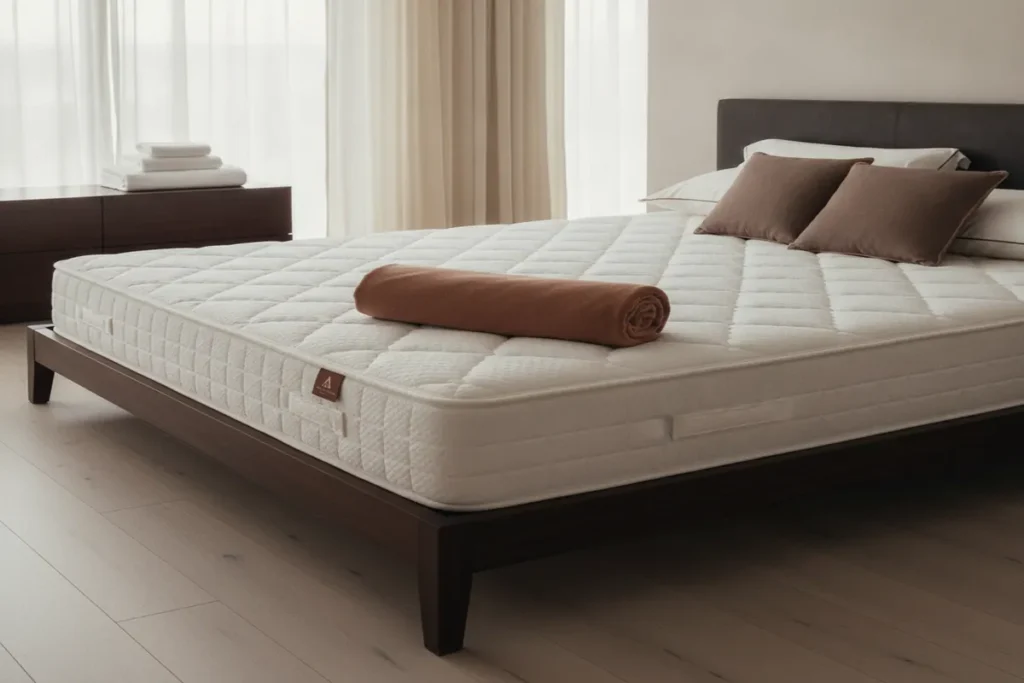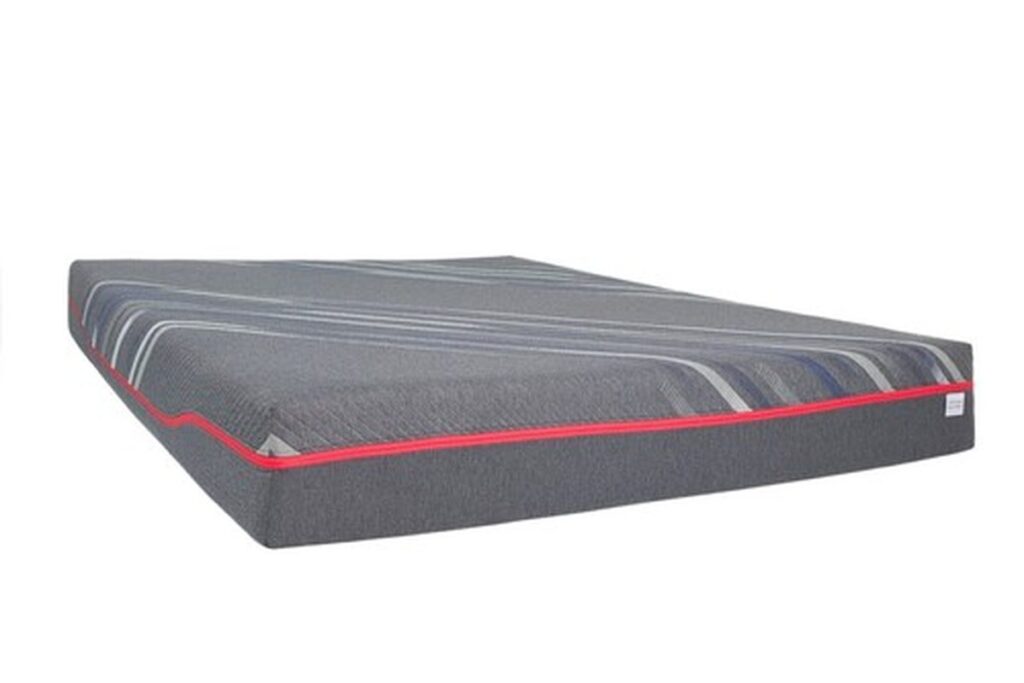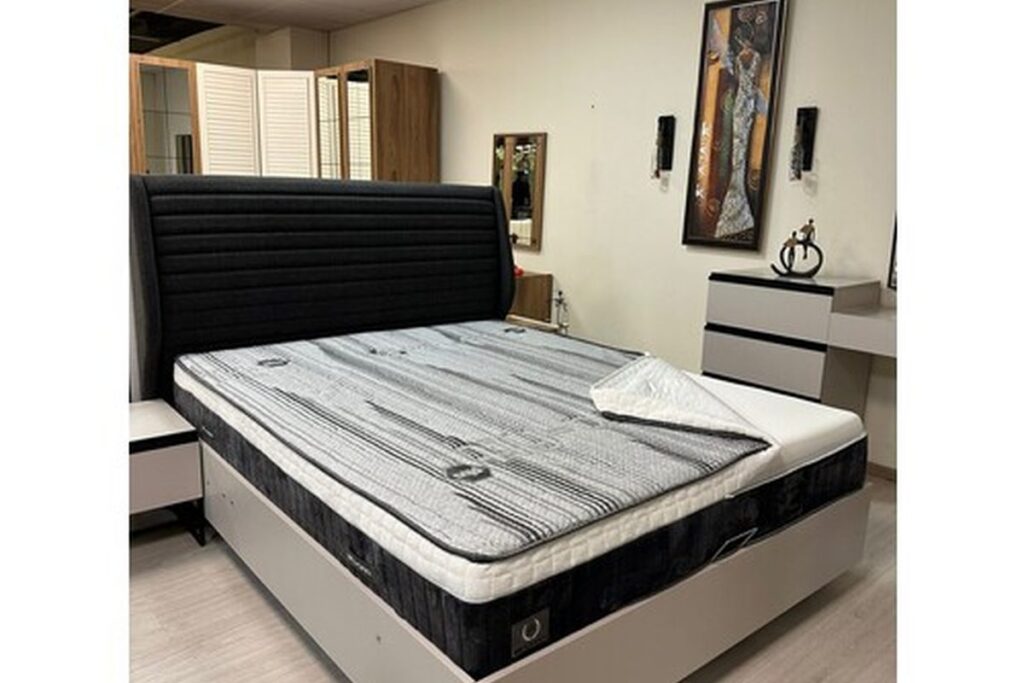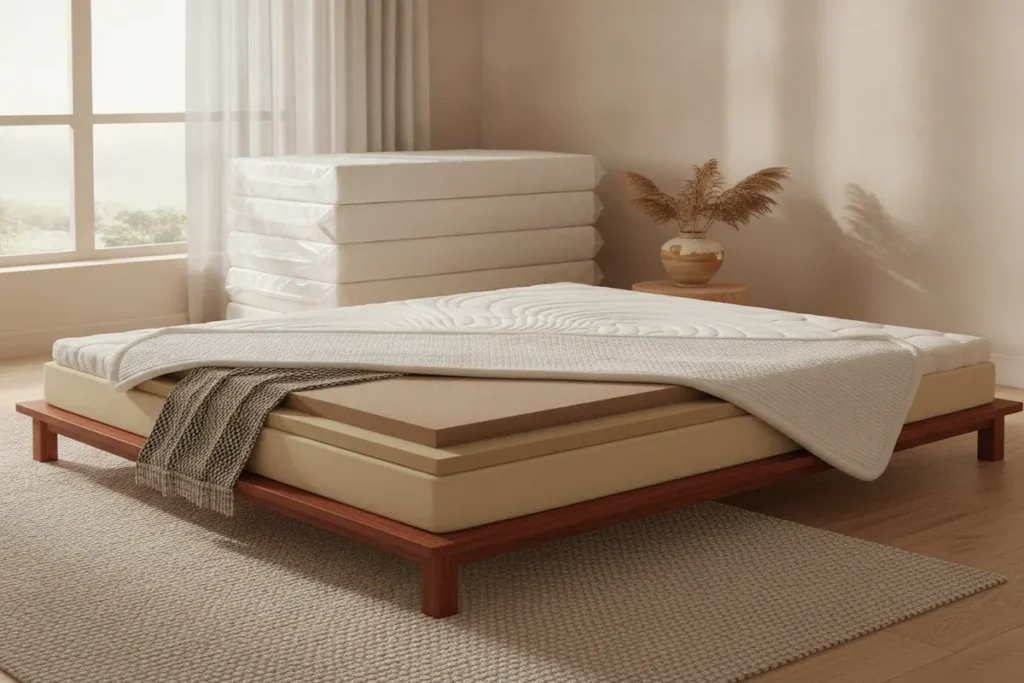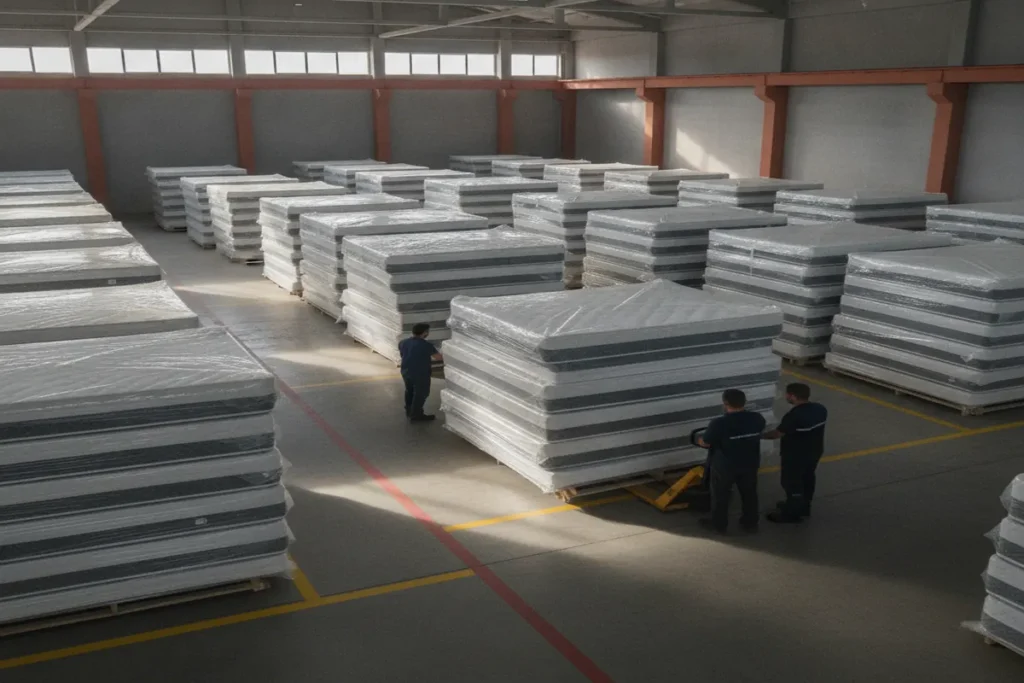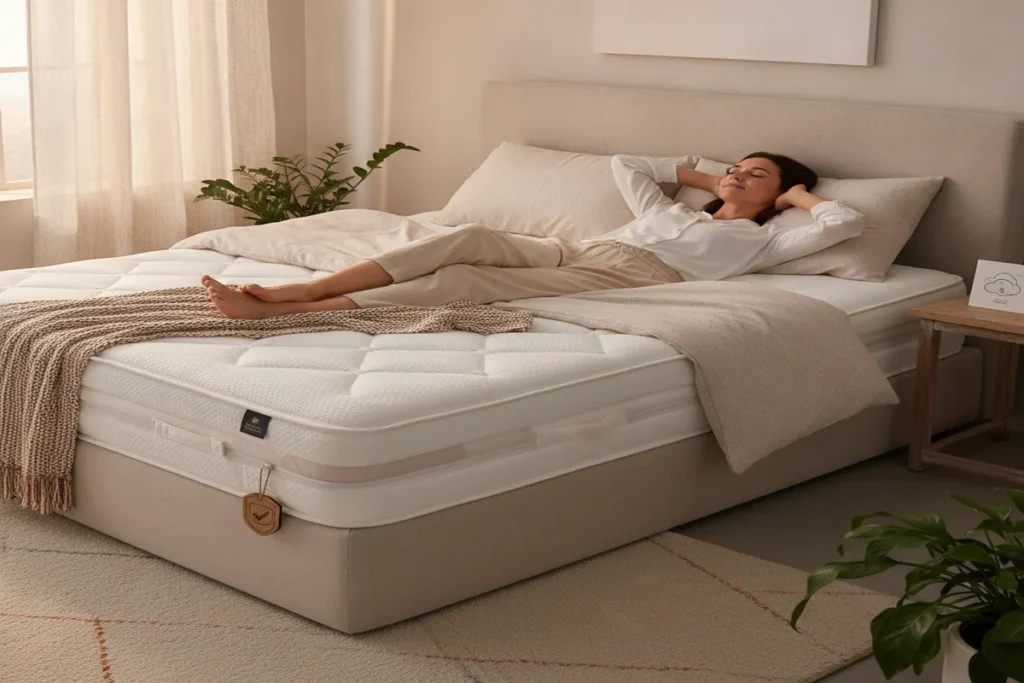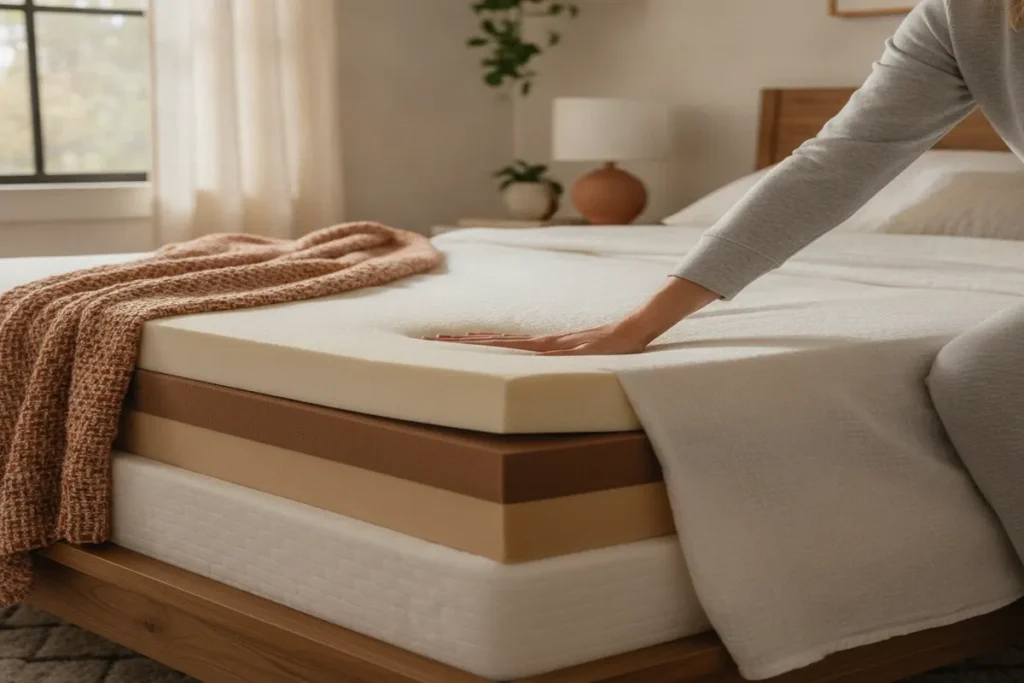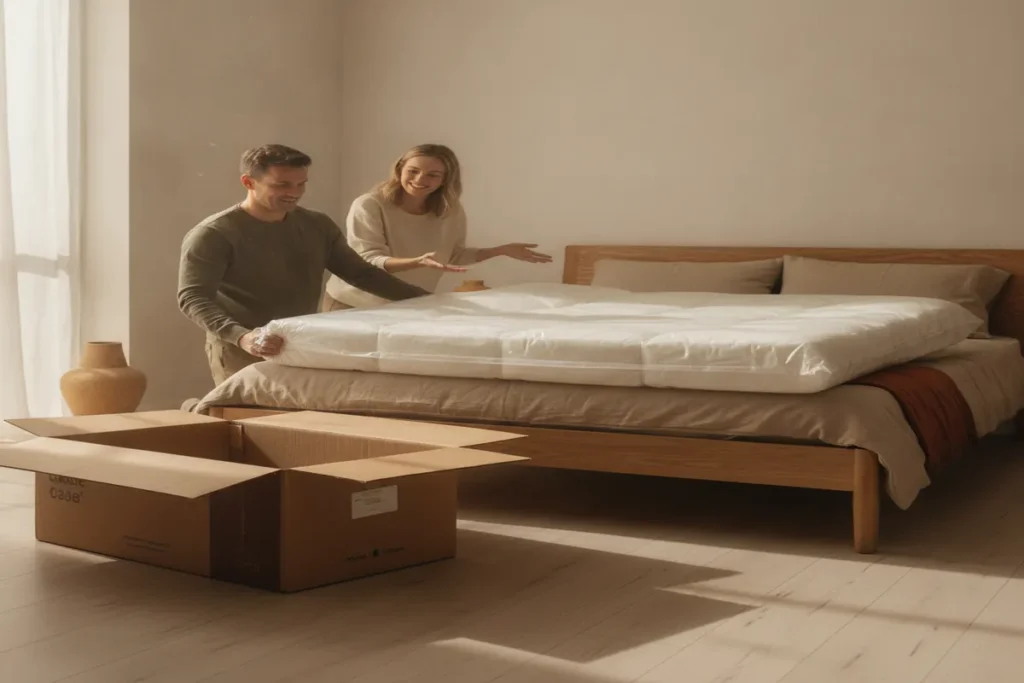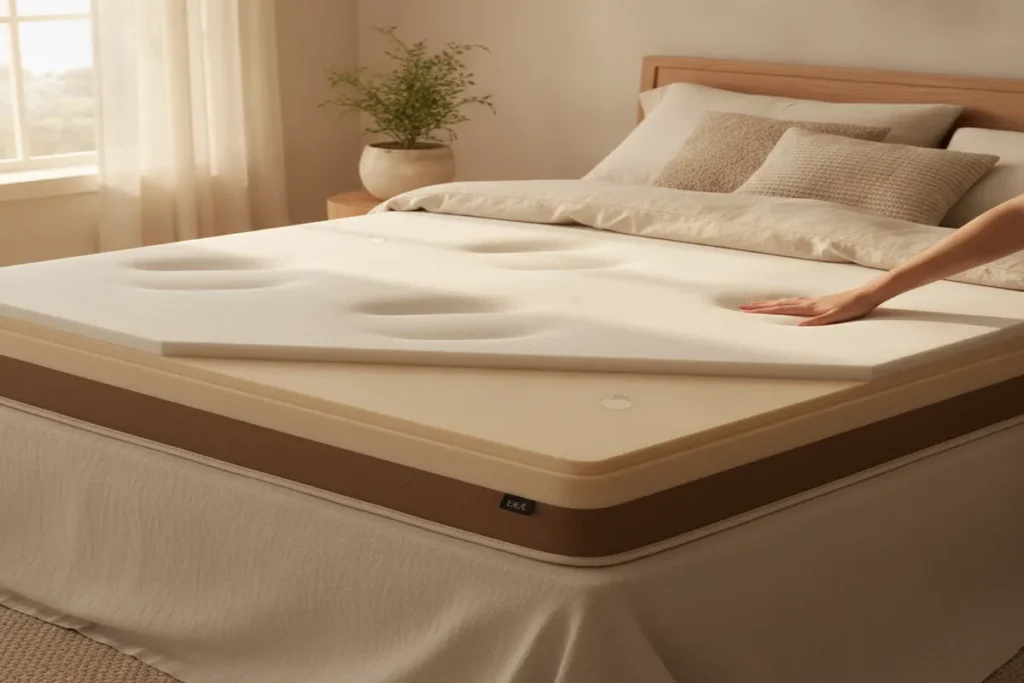

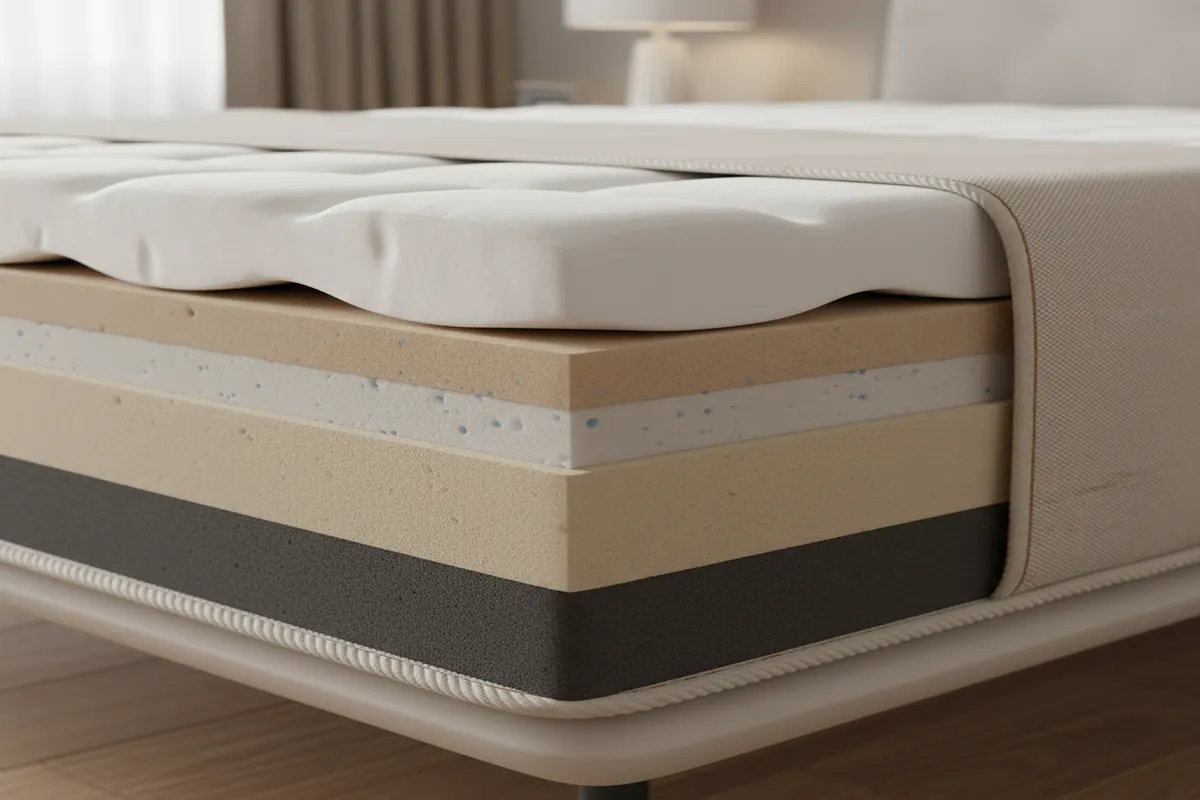
A foam mattress is a sleep surface constructed primarily from various types of foam, without traditional springs or coils, designed to provide contouring support and pressure relief. These mattresses cradle the body, distributing weight evenly to alleviate pressure points and reduce motion transfer. Common foam types include memory foam (viscoelastic), latex foam (natural or synthetic), and polyfoam (polyurethane foam), each offering distinct levels of firmness, responsiveness, and breathability to cater to diverse sleep preferences and needs.
Quick Summary
- Foam mattresses offer contouring support and pressure relief by adapting to body shape
- they are primarily made from memory foam, latex, or polyfoam, each providing distinct feels and benefits
- choosing the right foam type depends on personal preference for firmness, support, and temperature regulation
- these mattresses excel at isolating motion and alleviating pressure points
What Exactly Defines a Foam Mattress and How Does It Work?
At its core, a foam mattress distinguishes itself from traditional innerspring or hybrid models by its singular reliance on foam layers for both support and comfort. This design fundamentally changes how the mattress interacts with your body, offering a unique sleep experience centered on contouring and pressure distribution.
Here’s a breakdown of its defining characteristics and operational principles:
-
Absence of Springs: The most obvious differentiator is the lack of metal coils. Instead, various densities and types of foam layers are stacked to create the entire support system.
-
Contouring Support: Foam, particularly memory foam (also known as visco foam), excels at conforming precisely to the curves of your body. This personalized cradle helps align the spine, reducing stress on pressure points like shoulders, hips, and knees.
-
Motion Isolation: A significant benefit of foam construction is its ability to absorb movement. When one person shifts or gets out of bed, the motion is largely contained within their area, minimizing disturbance to a partner.
-
Pressure Relief: By distributing body weight over a larger surface area, foam mattresses reduce concentrated pressure on specific points, which can be particularly beneficial for individuals with joint pain, arthritis, or those who sleep on their side.
-
Material Versatility: The term “foam mattress” encompasses a broad category, utilizing materials like polyurethane foam (polyfoam), viscoelastic foam (memory foam), and natural or synthetic latex foam, often in combination to achieve specific feels and performance characteristics.
How it works is quite intuitive: your body heat and weight activate the foam, allowing it to soften and mold around you. Once the pressure is removed, the foam slowly returns to its original shape. This adaptive quality is what makes foam mattresses so effective at personalized comfort.
Exploring the Core Foam Mattress Materials: Beyond Just ‘Foam’
The world of foam mattresses is far more diverse than a single “foam” label suggests. The specific materials used dictate the mattress’s feel, durability, temperature regulation, and even its environmental footprint. Understanding these core types is crucial for making an informed decision.
Memory Foam (Viscoelastic Foam)
Memory foam is perhaps the most famous type of foam used in mattresses, renowned for its unique slow-response contouring. Developed by NASA, its viscoelastic properties mean it reacts to both heat and pressure, softening to cradle the body precisely.
-
Key Characteristics:
- Excellent Pressure Relief: Molds deeply to the body, distributing weight evenly.
- Superior Motion Isolation: Absorbs movement incredibly well, ideal for couples.
- Slow Response: Slowly returns to its original shape, creating a “hugged” feeling.
- Density Variation: Available in various densities, impacting firmness and durability. Higher density often means greater durability and pressure relief but can also lead to more heat retention.
-
Variations:
- Traditional Memory Foam: Can sometimes trap heat due to its dense, closed-cell structure.
- Open-Cell Memory Foam: Engineered with a more porous structure to improve airflow and reduce heat retention.
- Gel-Infused Memory Foam: Incorporates gel beads or swirls to draw heat away from the body, offering a cooler sleep surface. This is a popular innovation to address a common memory foam concern.
- Copper-Infused Memory Foam: Copper is naturally conductive and antimicrobial, helping to dissipate heat and keep the sleep surface fresh.
Latex Foam
Latex foam is derived from the sap of rubber trees (natural latex) or created synthetically. It offers a distinct feel that is often described as “bouncy” and “responsive,” contrasting with memory foam’s slow sink.
-
Key Characteristics:
- Responsive Support: Contours to the body but quickly springs back, making it easier to change positions.
- Excellent Durability: Known for its exceptional longevity, often outlasting other foam types.
- Breathability: Natural latex, especially Talalay latex, tends to be more open-celled and breathable than traditional memory foam.
- Hypoallergenic: Naturally resistant to dust mites, mold, and mildew, making it a good choice for allergy sufferers.
- Eco-Friendly Options: Natural latex is a sustainable and biodegradable material.
-
Manufacturing Processes:
- Dunlop Latex: Denser and more durable, often used for support cores. The sedimentation process results in a firmer bottom layer.
- Talalay Latex: Lighter, softer, and more consistent in density, often used for comfort layers. The vacuum-sealed molding process creates a more uniform, open-cell structure.
Polyfoam (Polyurethane Foam)
Polyfoam, or polyurethane foam, is the most common and least expensive type of foam found in mattresses. It forms the base layer of many foam and hybrid mattresses, providing foundational support.
-
Key Characteristics:
- Versatile: Can be manufactured in a wide range of densities and firmness levels.
- Cost-Effective: Generally the most affordable foam material.
- Supportive: High-density polyfoam offers robust support as a core layer.
- Less Responsive: Less conforming than memory foam and less bouncy than latex.
-
Usage:
- Often used as the support core of memory foam or latex mattresses.
- Can be found in comfort layers, though typically less durable and conforming than specialized foams.
Choosing between these materials often comes down to personal preference for feel, temperature, and budget. For those who love the “hug” and deep contouring, memory foam is ideal. For a more responsive, buoyant feel with excellent durability and natural properties, latex is a strong contender. Polyfoam serves as a versatile and economical base.
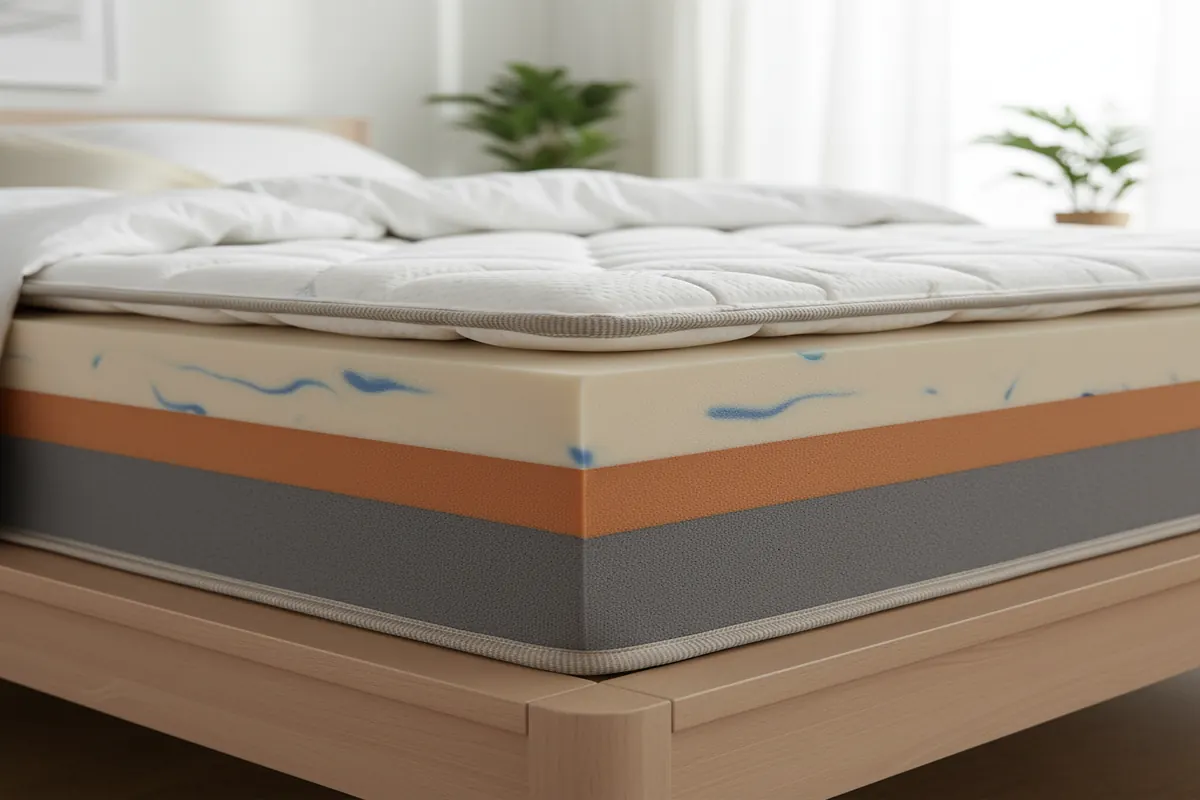
How Do Different Foam Types Impact Your Comfort and Support?
The choice of foam type profoundly influences the comfort and support profile of a mattress. It’s not just about firmness; it’s about how the mattress responds to your body, manages temperature, and holds up over time. Here’s how each major foam type contributes to your sleep experience:
Memory Foam: The Contouring Embrace
Memory foam excels at providing a deep, personalized cradle. This unique characteristic offers unparalleled pressure relief by distributing your body weight across a larger surface area.
-
Comfort Impact:
- “Hugging” Sensation: Sinks in slowly, conforming to every curve.
- Deep Pressure Relief: Ideal for side sleepers and those with joint pain, as it eliminates pressure points.
- Motion Isolation: Minimizes disturbances from a partner’s movements.
-
Support Impact:
- Spinal Alignment: Helps maintain natural spinal alignment by filling gaps between the body and the mattress.
- Supportive Density: Higher density memory foams offer more robust support and durability, though they can feel firmer initially.
-
Considerations: Can sometimes retain body heat, though advancements like gel foam or open-cell designs mitigate this.
Latex Foam: The Responsive Buoyancy
Latex foam offers a more responsive and buoyant feel compared to memory foam. It contours to the body but immediately springs back, providing a floating sensation rather than a deep sink.
-
Comfort Impact:
- “Floating” Feel: Supports without deep conforming, making it easier to move around.
- Moderate Pressure Relief: Still excellent at pressure distribution but without the deep hug of memory foam.
- Natural Breathability: Tends to sleep cooler, especially natural Talalay latex.
-
Support Impact:
- Zoned Support: Many latex mattresses feature zoned support systems, offering firmer support where needed (e.g., lumbar) and softer comfort elsewhere.
- Consistent Support: Maintains its supportive properties for a very long time due to its high durability.
-
Considerations: Can be more expensive than other foam types, and some people find its bounciness less appealing than the deep contour of memory foam.
Polyfoam: The Foundational Versatility
Polyfoam, while less specialized than memory or latex, is crucial for providing foundational support and can be used in comfort layers to achieve specific feels.
-
Comfort Impact:
- Neutral Feel: Doesn’t offer the deep contour of memory foam or the distinct bounce of latex.
- Varied Firmness: Can be manufactured from very soft to very firm, allowing for diverse comfort layers.
-
Support Impact:
- Core Support: High-density polyfoam is often used as the base layer in many foam mattresses, providing essential structural stability and preventing sagging.
- Transitional Layers: Medium-density polyfoam can act as a bridge between a soft comfort layer and a firm support core.
-
Considerations: Lower density polyfoam can degrade faster than other foam types, potentially leading to sagging over time. It’s generally less breathable than latex and can retain more heat than open-cell designs.
Ultimately, the “best” foam for your mattress depends on your personal preferences for feel, support needs, and sleep position. Side sleepers often gravitate towards memory foam for deep pressure relief, while back and stomach sleepers might prefer the more balanced support and responsiveness of latex or a firmer polyfoam.
Choosing the Right Foam Mattress: A Practical Decision Framework
Selecting the ideal foam mattress involves more than just picking a brand; it requires understanding your own sleep needs and matching them to the mattress’s characteristics. Here’s a practical framework to guide your decision, ensuring you find a mattress that delivers optimal comfort and support.
1. Identify Your Primary Sleep Position
Your preferred sleeping position is one of the most significant factors in determining the right mattress firmness and foam type.
-
Side Sleepers:
- Need: Excellent pressure relief for shoulders and hips.
- Recommendation: Softer to medium-firm mattresses, often featuring thick memory foam or softer Talalay latex comfort layers. These allow the shoulders and hips to sink in, keeping the spine aligned.
- Consider: A Visco Foam Mattress for its contouring capabilities.
-
Back Sleepers:
- Need: Balanced support that keeps the spine naturally aligned without excessive sinking or firmness.
- Recommendation: Medium-firm mattresses, potentially with a combination of memory foam and responsive polyfoam or latex. The mattress should support the natural curve of the lower back.
-
Stomach Sleepers:
- Need: Firmer support to prevent the hips from sinking too deeply, which can strain the lower back.
- Recommendation: Medium-firm to firm mattresses, often with a robust polyfoam or Dunlop latex core and thinner comfort layers. Avoid overly soft foams.
2. Consider Your Body Weight
Body weight influences how deeply you’ll sink into a mattress and how much support you’ll receive.
-
Lighter Individuals (under 130 lbs/59 kg): May find even medium-firm mattresses feel quite firm. Softer foams will provide more contouring and pressure relief.
-
Average Individuals (130-230 lbs/59-104 kg): Generally have the widest range of options. Medium-firm mattresses often provide the best balance of comfort and support.
-
Heavier Individuals (over 230 lbs/104 kg): Require firmer mattresses with higher density foams (e.g., high-density polyfoam, durable latex, or dense memory foam) to prevent excessive sinking and ensure adequate support and longevity.
3. Evaluate Foam Type and Construction
Revisit the core foam materials and consider their individual benefits and drawbacks for your specific needs.
-
Memory Foam (Visco Foam Mattress): Best for deep contouring, pressure relief, and motion isolation. Consider gel foam or open-cell options if heat retention is a concern.
-
Latex Foam (Latex Foam Mattress): Ideal for responsive support, durability, natural breathability, and hypoallergenic properties. Choose Dunlop for firmer support, Talalay for softer comfort.
-
Polyfoam: Often used as a supportive base layer or in transitional layers. Look for high-density polyfoam for durability.
4. Prioritize Temperature Regulation
If you tend to sleep hot, this is a critical factor.
- Cooling Options: Look for mattresses with gel-infused foam, open-cell memory foam, natural latex, or designs that incorporate cooling covers (e.g., phase-change materials) or airflow channels.
5. Consider Budget and Durability
Foam mattresses vary widely in price based on materials, construction, and brand.
-
Budget: Polyfoam is generally the most affordable. Memory foam varies, with advanced cooling features increasing cost. Latex is often the most expensive due to its natural origin and durability.
-
Durability: Latex is known for exceptional longevity. High-density memory foam and polyfoam also offer good durability. Inferior quality foams will break down faster.
6. Read Reviews and Trial Periods
Always leverage user reviews for real-world insights and prioritize mattresses that come with a generous in-home trial period. This allows you to test the mattress in your own environment for an extended period, which is crucial for determining long-term comfort.
Decision Checklist for Your Foam Mattress:
-
My primary sleep position is: _______________________ (Side/Back/Stomach/Combination)
-
My body weight category is: _______________________ (Light/Average/Heavy)
-
My preferred feel is: _______________________ (Deep contour/Responsive bounce/Neutral)
-
Temperature regulation is: _______________________ (Very important/Somewhat important/Not a concern)
-
My budget range is: _______________________
-
I have researched trial periods and return policies: _______________________ (Yes/No)
By systematically going through these criteria, you can narrow down your options and confidently choose a foam mattress that perfectly aligns with your unique sleep profile.
Common Pitfalls to Avoid When Buying a Foam Mattress
Navigating the market for a new foam mattress can be overwhelming, and it’s easy to fall prey to common misconceptions or overlook critical details. Avoiding these pitfalls will save you time, money, and ensure a more satisfying purchase.
-
Mistake 1: Focusing Solely on Firmness Ratings:
- Why it’s a pitfall: Firmness is subjective and not standardized across brands. A “medium-firm” from one company might feel like a “firm” from another. Moreover, firmness alone doesn’t account for the feel of the foam – a firm memory foam will feel different from a firm latex.
- How to avoid: Prioritize actual user reviews from people with similar body types and sleep positions. Look for ILD (Indentation Load Deflection) ratings if available, which offer a more objective measure of foam firmness. Most importantly, take advantage of generous sleep trials.
-
Mistake 2: Ignoring Foam Density:
- Why it’s a pitfall: Density (measured in pounds per cubic foot, PCF) is a key indicator of foam quality, durability, and support. Low-density foams (under 3.5 PCF for memory foam) are cheaper but break down faster, leading to premature sagging and a loss of support.
- How to avoid: Always inquire about the density of the foam layers, especially the comfort and support layers. Aim for memory foam densities of 4-5 PCF for comfort layers and 1.8+ PCF for polyfoam base layers for good durability.
-
Mistake 3: Overlooking Temperature Regulation Features:
- Why it’s a pitfall: Traditional memory foam can retain heat, leading to uncomfortable night sweats for some sleepers. Assuming all foam mattresses are “hot” or “cool” without checking specifics is a mistake.
- How to avoid: If you sleep hot, actively seek out mattresses featuring gel foam, open-cell memory foam, copper infusions, or natural latex. Also, consider the mattress cover materials, as breathable fabrics can aid in cooling.
-
Mistake 4: Not Understanding Motion Isolation Needs:
- Why it’s a pitfall: While foam mattresses generally excel at motion isolation, there can be differences between types. If you sleep with a partner who moves frequently, a mattress with poor motion isolation can severely impact your sleep quality.
- How to avoid: Memory foam typically offers the best motion isolation. Latex is good but more responsive. If sharing a bed, prioritize models specifically praised for their motion absorption.
-
Mistake 5: Neglecting the Foundation:
- Why it’s a pitfall: A foam mattress requires a solid, supportive foundation. Using an old, sagging box spring or a slatted base with wide gaps can compromise the mattress’s support, lead to premature sagging, and void your warranty.
- How to avoid: Ensure your bed base provides continuous, even support. This typically means a solid platform, a slatted base with slats no more than 2-3 inches apart, or a Bunkie board. Many manufacturers specify the exact type of foundation required.
-
Mistake 6: Skipping the Sleep Trial and Warranty Details:
- Why it’s a pitfall: A quick lie-down in a showroom isn’t enough to assess a mattress. It takes weeks for your body to adjust. Not understanding the warranty or return policy can leave you stuck with an unsuitable mattress.
- How to avoid: Choose retailers offering at least a 90-night sleep trial. Read the fine print on warranties (e.g., what constitutes a defect, minimum sag depth for claims) and return policies (e.g., return shipping fees, restocking fees).
By being aware of these common pitfalls, you can approach your foam mattress purchase with greater confidence and make a choice that truly enhances your sleep.
When Does a Foam Mattress Make the Most Sense for Your Sleep Needs?
While foam mattresses offer compelling benefits, they aren’t the universal solution for everyone. Understanding the specific scenarios and sleeper profiles where a foam mattress truly shines can help you determine if it’s the right choice for you.
Foam Mattresses Are an Excellent Choice If You:
-
Prioritize Pressure Relief:
- If you frequently wake up with aches and pains in your shoulders, hips, or lower back, the contouring properties of foam (especially memory foam) can provide significant relief by evenly distributing your body weight.
- Real-world example: A side sleeper experiencing hip pain on a traditional innerspring mattress might find immediate comfort on a medium-soft memory foam mattress that allows their hips to sink in gently.
-
Sleep with a Partner and Value Motion Isolation:
- The ability of foam to absorb motion means you’re less likely to be disturbed by a partner tossing, turning, or getting in and out of bed. This is a game-changer for light sleepers.
- Scenario: If one partner is an early riser and the other sleeps late, a foam mattress minimizes disruptions, allowing both to enjoy uninterrupted rest.
-
Prefer a “Hugging” or “Floating” Sensation:
- Memory foam offers a distinct “hug” as it slowly conforms to your body, creating a sense of being cradled. Latex foam provides a more buoyant, “floating” feel with quick responsiveness. If either of these appeals to you more than the traditional bounce of springs, foam is a strong candidate.
-
Suffer from Allergies:
- Many foam types, particularly natural latex, are inherently hypoallergenic and resistant to dust mites, mold, and mildew. This makes them a healthier choice for individuals prone to allergies or asthma.
-
Are Looking for a Quiet Sleep Surface:
- Unlike innerspring mattresses that can develop squeaks and creaks over time, foam mattresses are virtually silent, contributing to a peaceful sleep environment.
-
Need Targeted Support for Specific Conditions:
- For individuals with chronic pain, fibromyalgia, or recovering from injuries, the adaptive support of foam can be therapeutic, reducing pressure on sensitive areas.
When Another Mattress Type Might Be Better:
-
You Prefer a Traditional Bouncy Feel: If you love the springy, responsive feel of an innerspring mattress and feel “stuck” in foam, then a hybrid or traditional innerspring might be more suitable.
-
You Are a Very Hot Sleeper and Don’t Want to Compromise: While foam technology has advanced (gel foam, open-cell), some individuals still find foam mattresses too warm. If you consistently overheat and want the coolest possible sleep surface, certain innerspring or hybrid models with advanced airflow might be preferable.
-
You Have a Very Tight Budget (for high-quality options): While cheap polyfoam mattresses exist, high-quality memory foam or latex mattresses can be a significant investment. If your budget is extremely limited and you need durable support, a basic innerspring might offer more longevity at the lowest price points, though with less pressure relief.
By honestly assessing your sleep habits, preferences, and any specific needs, you can determine if the unique characteristics of a foam mattress align with your quest for better sleep.
Comparing Foam Mattress Types: A Quick Reference
Choosing between different foam types can be challenging, as each offers a unique set of benefits and potential drawbacks. This comparison table provides a side-by-side look at the primary foam mattress materials to help you quickly identify which might be best suited for your needs.
Important Note: The quality and specific construction of any foam mattress can significantly alter these general characteristics. Always look for detailed product specifications and read reviews.
Expert Insight
“The evolution of foam technology in mattresses has revolutionized sleep comfort, moving beyond simple cushioning to engineered solutions for specific needs. What truly sets a high-quality foam mattress apart isn’t just the ‘foam’ itself, but the deliberate layering and density choices that create a harmonious balance of support, pressure relief, and temperature regulation. Consumers often focus on memory foam, but understanding the nuanced differences with latex and even advanced polyfoams allows for a far more informed decision tailored to individual physiology and sleep preferences.”
— Industry experts confirm that thoughtful material selection and layering are paramount for optimal foam mattress performance.
Key Terms
-
Memory Foam (Visco Foam): A viscoelastic polyurethane foam that responds to body heat and pressure, slowly conforming to the body’s shape for personalized contouring and pressure relief.
-
Latex Foam: Foam derived from the sap of rubber trees (natural) or synthesized, known for its responsive, buoyant feel, durability, and natural breathability.
-
Polyfoam (Polyurethane Foam): A common, versatile, and cost-effective foam used in various densities for both comfort and support layers in mattresses.
-
Density: A measure of a foam’s weight per cubic foot (PCF), indicating its quality, durability, and firmness. Higher density generally means better durability and support.
-
ILD (Indentation Load Deflection): A measurement indicating the firmness of foam, representing the force needed to indent a foam sample by 25%. A higher ILD means firmer foam.
-
Gel Foam: Memory foam infused with gel beads or swirls to help dissipate heat and provide a cooler sleep surface.
How Can You Upgrade to More Comfortable Sleep with Sinyora Yatak?
At Sinyora Yatak, we understand that exceptional sleep begins with the right mattress. As specialists in crafting premium Turkish mattresses, we leverage decades of expertise to combine traditional quality with modern foam technology. If you’re ready to experience the unparalleled comfort and support that a meticulously engineered foam mattress can offer, Sinyora Yatak has a solution tailored for you.
Our collection features a diverse range of foam mattresses, including our renowned Visco Foam Mattress options, designed to cradle your body and alleviate pressure points, and Latex Foam Mattress selections for those who prefer a more responsive and naturally breathable sleep surface. We meticulously select high-density, durable foams to ensure longevity and consistent performance, addressing common concerns like heat retention with advanced materials.
Whether you’re a side sleeper seeking deep pressure relief, a back sleeper needing balanced support, or a couple desiring superior motion isolation, our expert team can guide you through our Mattress Collection to find your perfect match. Discover the difference that true craftsmanship and quality materials make. Shop All Products today and embark on your journey to truly restorative sleep with Sinyora Yatak – where comfort meets enduring Turkish quality. We also offer Mattress Wholesale in Turkiye and Ship Turkish Mattresses Internationally, bringing our superior sleep solutions to a global audience.
Frequently Asked Questions
Q: What is the main difference between memory foam and latex foam mattresses?
Q: Are foam mattresses good for back pain?
Q: Do foam mattresses sleep hot?
Q: How long does a foam mattress last?
Q: Can I use a foam mattress on any bed frame?
Q: How do I choose the right firmness for a foam mattress?
Help: FAQs · Sleep Science · Sleep Resources · Privacy Policy