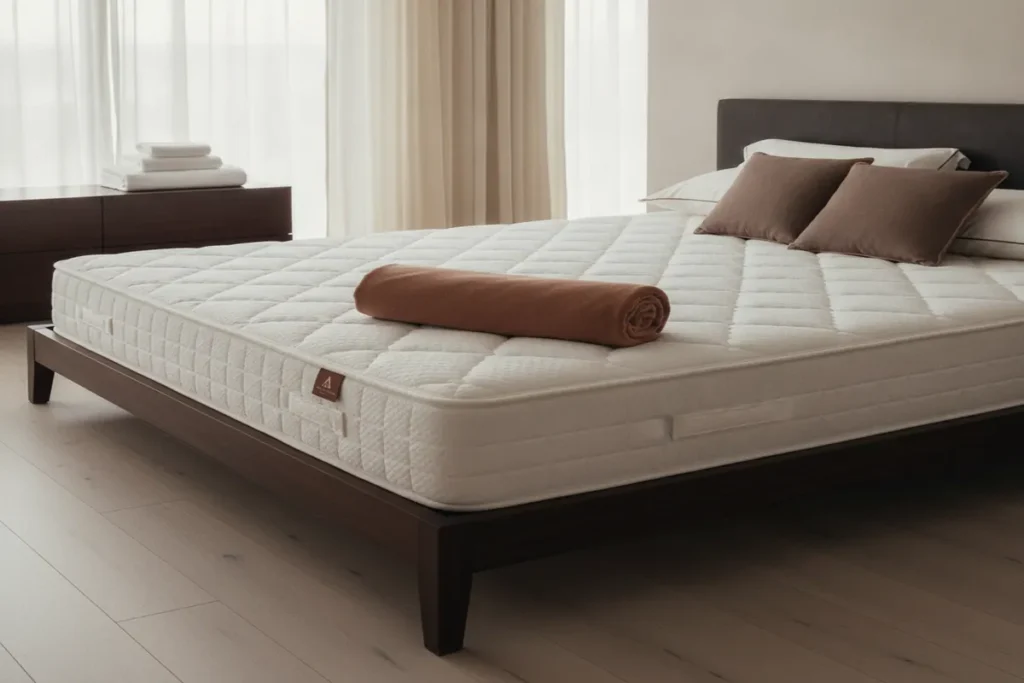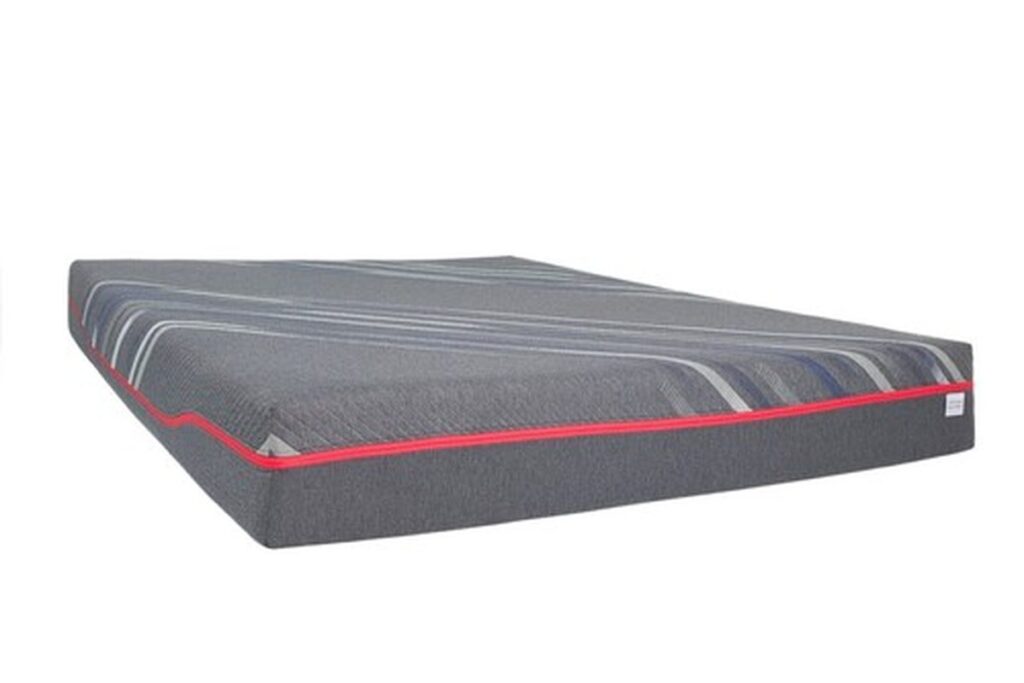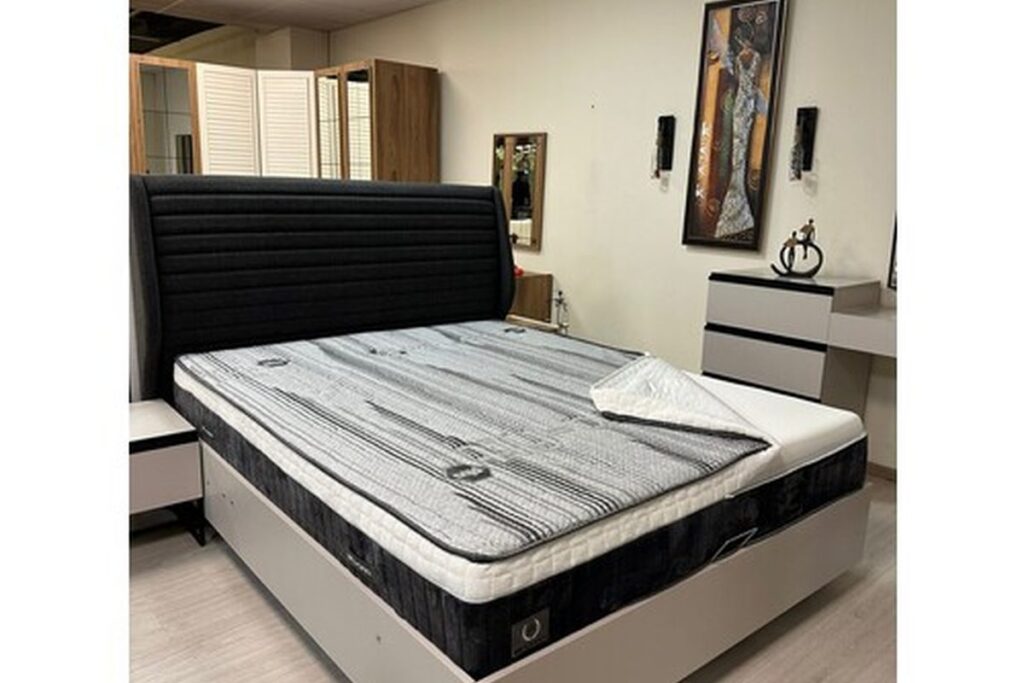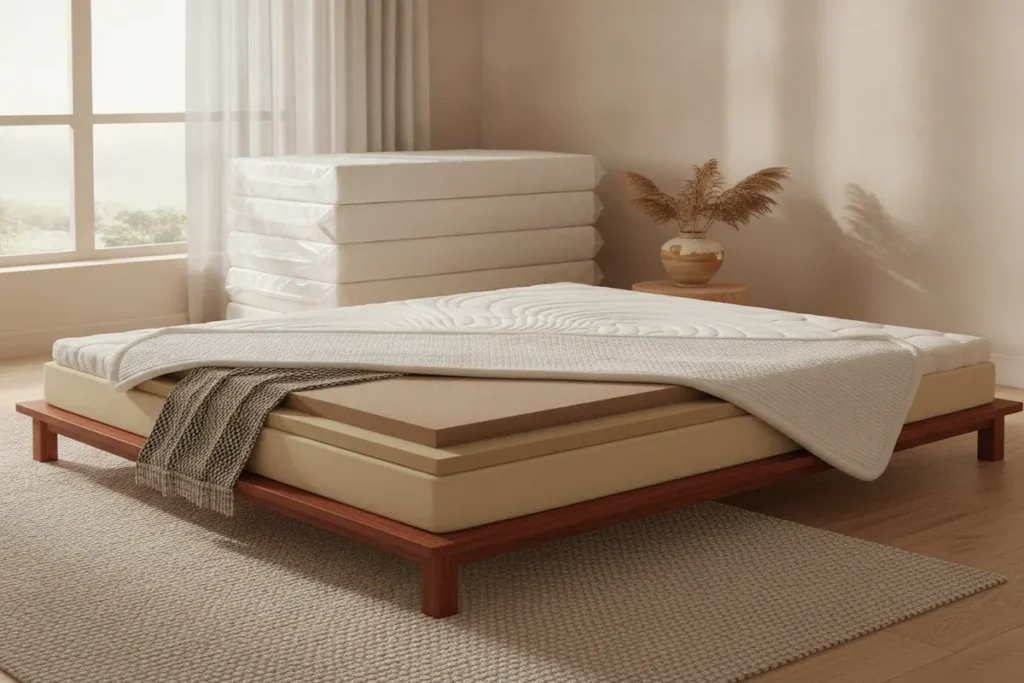

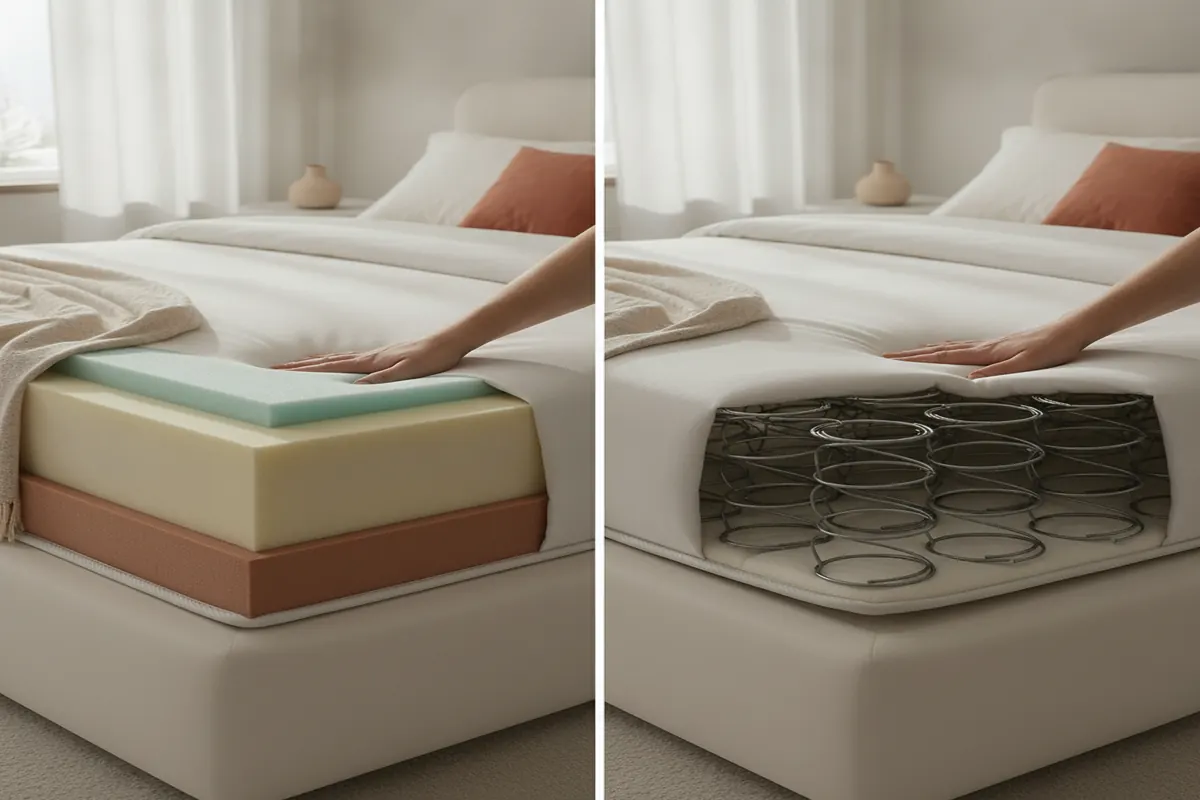
Choosing between a foam mattress and a Bonnel spring mattress hinges on your personal preference for support, comfort, and how you prioritize factors like motion isolation, temperature regulation, and budget. Foam mattresses, including memory foam and latex, excel at conforming to your body, offering superior pressure relief and minimizing motion transfer. Bonnel spring mattresses, a classic innerspring design, provide a firmer, more buoyant feel with better airflow, often at a more accessible price point, making them a durable choice for those seeking traditional support.
Quick Summary
- Foam mattresses offer superior contouring, pressure relief, and motion isolation, ideal for side sleepers and those with joint pain
- Bonnel spring mattresses provide robust, traditional support, better airflow, and a firmer feel, often at a lower price point
- choosing depends on personal preference for support, comfort, budget, and specific sleep requirements like back pain or motion transfer
- foam excels in personalized comfort, while Bonnel springs are known for their classic bounce and durability.
What are the Fundamental Differences Between Foam and Bonnel Spring Mattresses?
At their core, foam and Bonnel spring mattresses represent two distinct approaches to sleep support and comfort. Understanding their fundamental construction and material differences is the first step in deciding which is right for you. These distinctions impact everything from feel and support to durability and price.
Foam Mattress Construction and Characteristics
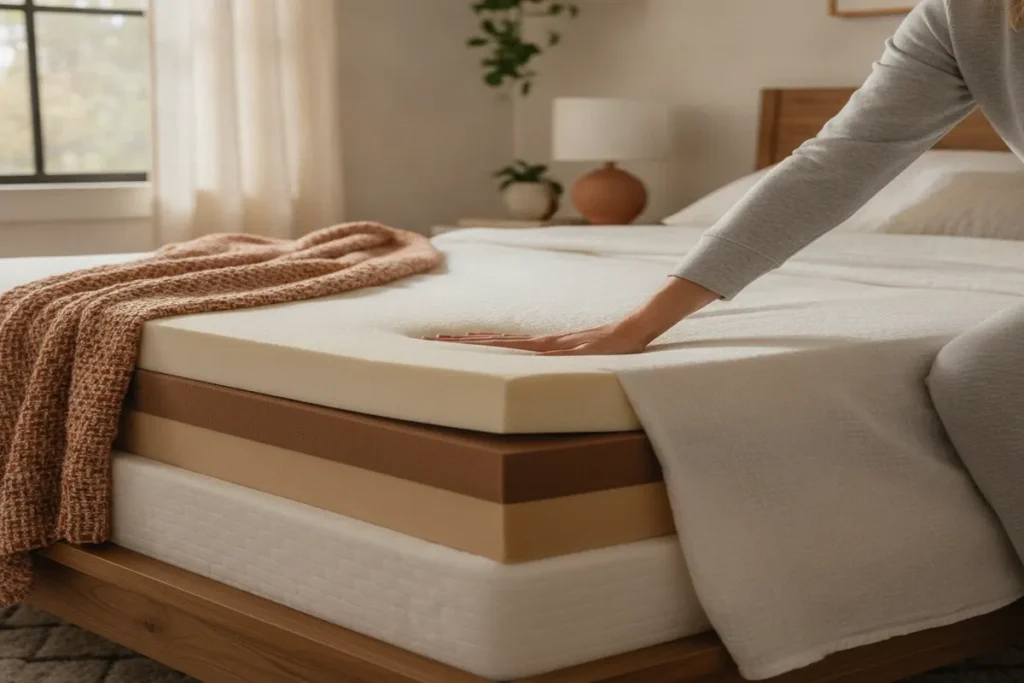
Foam mattresses are constructed from various layers of foam, each designed to provide specific benefits. The most common types include:
-
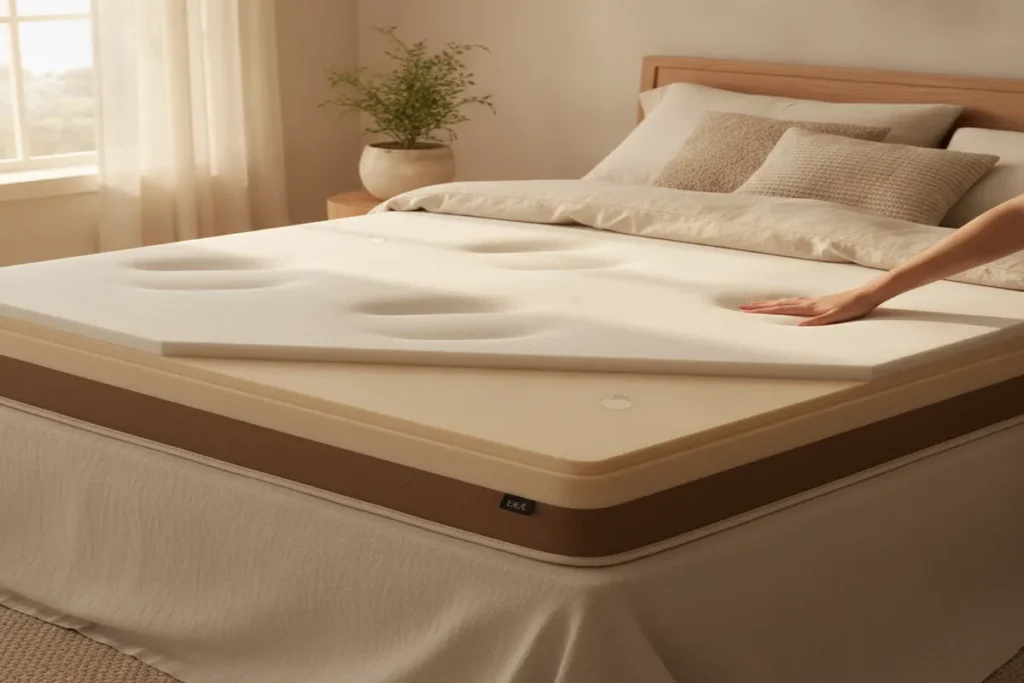
Memory Foam (Visco Foam Mattress): Developed by NASA, memory foam is viscoelastic, meaning it reacts to body heat and pressure to soften and mold precisely to your shape. This creates a cradling sensation, distributing body weight evenly and relieving pressure points. It’s known for excellent motion isolation.
-
Latex Foam (Latex Foam Mattress): Derived from rubber trees (natural latex) or synthetically produced, latex foam offers a bouncier, more responsive feel than memory foam. It provides buoyant support, good pressure relief, and often sleeps cooler due to its open-cell structure. Natural latex is also highly durable and hypoallergenic.
-
Polyurethane Foam (Sponge Topper Mattress): Often used as a base layer or comfort layer in less expensive foam mattresses, polyurethane foam is a petroleum-based product. It offers basic cushioning and support but typically has a shorter lifespan and less conforming ability than memory or latex foam.
Key Characteristics of Foam Mattresses:
-
Contouring and Pressure Relief: Molds closely to the body, alleviating pressure on hips, shoulders, and back.
-
Motion Isolation: Absorbs movement, preventing disturbances from a partner.
-
Hypoallergenic Properties: Less prone to dust mites and allergens, especially latex.
-
Durability: High-density foams, particularly latex and quality memory foam, can be very durable.
Bonnel Spring Mattress Construction and Characteristics
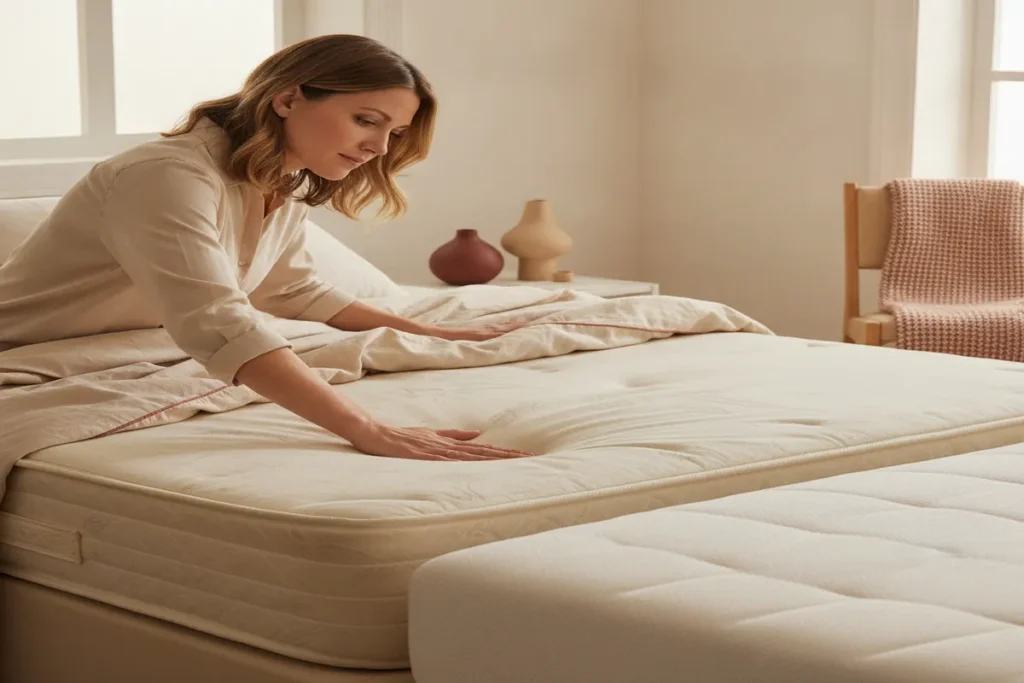
Bonnel spring mattresses, a type of innerspring mattress, utilize an interconnected steel coil system. These hourglass-shaped coils are wider at the top and bottom and narrower in the middle, linked together by helical wires. This creates a robust, uniform support system that has been a staple in bedding for decades.
Key Characteristics of Bonnel Spring Mattresses:
-
Traditional Support: Offers a firm, even sleeping surface with a classic buoyant feel.
-
Airflow: The open structure of the coil system allows for excellent air circulation, helping the mattress sleep cooler.
-
Edge Support: Often designed with reinforced edges to prevent sagging and expand the usable sleep surface.
-
Durability: The interconnected coil system is quite resilient and can withstand significant weight and use over time.
-
Affordability: Generally more budget-friendly than many foam or advanced spring systems like Pocket Coils Mattress.
Comparison Overview:
Which Mattress Type Offers Superior Support for Back Pain and Specific Sleep Needs?
When it comes to addressing specific sleep needs, particularly back pain, the choice between foam and Bonnel spring mattresses becomes more nuanced. Each offers distinct benefits that cater to different body types, sleeping positions, and pain points.
Support for Back Pain: A Critical Consideration
For individuals suffering from back pain, proper spinal alignment is paramount.
-
Foam Mattresses for Back Pain (especially Memory Foam):
- Contouring and Alignment: Memory foam excels at conforming to the natural curves of the spine, filling in the lumbar gap and providing targeted support. This helps maintain neutral spinal alignment, which is crucial for alleviating back pain. The even distribution of body weight reduces pressure points that can exacerbate discomfort.
- Pressure Relief: By cradling the body, foam mattresses reduce pressure on sensitive areas, allowing muscles to relax and recover.
- Considerations: Not all foam is equal. A foam mattress that is too soft might allow the hips to sink too far, misaligning the spine. Conversely, a mattress that is too firm might not contour enough, creating new pressure points. Medium-firm memory foam or latex is often recommended for back pain sufferers.
- Sinyora Yatak‘s Visco Foam Mattress can be an excellent option for those prioritizing spinal alignment and pressure relief.
-
Bonnel Spring Mattresses for Back Pain:
- Firm, Even Support: Bonnel springs provide a consistently firm and supportive surface across the entire mattress. This can be beneficial for those who prefer a more rigid feel and need overarching support rather than deep contouring.
- Potential Drawbacks: Because Bonnel springs are interconnected, they tend to move as a single unit. This means they may not offer the individualized contouring needed to support the unique curves of the spine as effectively as foam. For some, this can lead to pressure points or inadequate lumbar support, potentially worsening back pain over time.
- Best for: Individuals who find relief from a truly firm, traditional mattress and do not require significant pressure point relief or deep contouring.
Tailoring to Sleeping Positions
Your preferred sleeping position significantly influences which mattress type will offer optimal support and comfort.
-
Side Sleepers:
- Foam Mattresses (Ideal): Side sleepers need a mattress that can cushion their shoulders and hips while supporting their waist to keep the spine straight. Foam mattresses, especially memory foam or softer latex, excel at this by conforming deeply to these pressure points, preventing discomfort and misalignment.
- Bonnel Spring Mattresses (Less Ideal): The firmness and lack of deep contouring in Bonnel springs can create pressure points on the shoulders and hips for side sleepers, potentially leading to pain and discomfort.
-
Back Sleepers:
- Foam Mattresses (Excellent): Back sleepers benefit from foam’s ability to support the natural curvature of the spine, particularly the lumbar region, without letting the hips sink too far. A medium-firm foam mattress often provides the ideal balance of support and contouring.
- Bonnel Spring Mattresses (Good for Firmness Preference): For back sleepers who prefer a very firm surface, Bonnel springs can provide adequate support, preventing excessive sinkage. However, some may find the lack of lumbar contouring less comfortable than foam.
-
Stomach Sleepers:
- Foam Mattresses (Selectively Good): Stomach sleepers need a firmer mattress to prevent their hips from sinking too deeply, which can arch the back and cause pain. A firmer foam mattress, particularly a denser latex or a firm polyurethane foam, can work. Softer foams should be avoided.
- Bonnel Spring Mattresses (Good): The inherent firmness of Bonnel springs can be advantageous for stomach sleepers, keeping the body on a relatively flat plane and preventing hip sinkage. However, ensure it’s not too firm, which could cause pressure on the chest and shoulders.
Key Considerations for Specific Sleep Needs:
-
Motion Isolation: If you share a bed, foam mattresses (especially memory foam) are vastly superior at isolating motion. You won’t feel your partner tossing and turning. Bonnel spring mattresses, with their interconnected coils, transfer motion much more readily.
-
Temperature Regulation: Bonnel spring mattresses naturally have better airflow due to their open coil structure, making them generally cooler sleepers. Some memory foam can retain heat, though modern foam technologies and gel infusions aim to mitigate this. Latex foam typically sleeps cooler than traditional memory foam.
-
Weight Distribution: Foam mattresses excel at evenly distributing body weight, reducing localized pressure. Bonnel springs provide a more general, widespread support.
Ultimately, for back pain and nuanced sleep needs, foam mattresses often offer more targeted pressure relief and spinal alignment due to their conforming properties. However, those who specifically prefer a very firm, traditional, and buoyant feel might still find comfort in a Bonnel Spring Mattress.
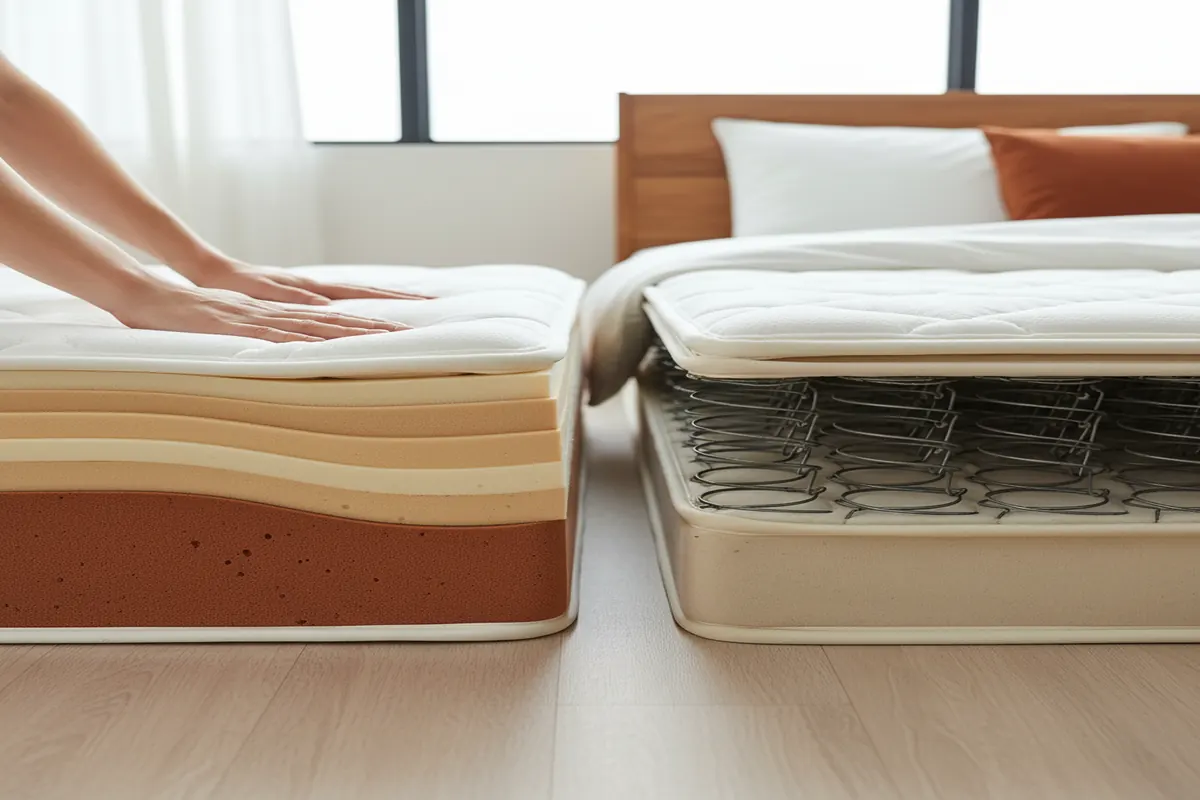
How Do Durability, Motion Isolation, and Temperature Regulation Compare?
Beyond the initial feel and support, long-term performance factors like durability, motion isolation, and temperature regulation play a crucial role in mattress satisfaction. These aspects directly impact your quality of sleep and the lifespan of your investment.
Durability and Lifespan
-
Foam Mattresses:
- Factors: The durability of a foam mattress largely depends on the density and quality of its foam layers. High-density memory foam (e.g., 5 lbs/cu ft or higher) and natural latex foam are incredibly durable and can last 10-15 years or more. Lower-density polyurethane foams, often found in cheaper models, will break down faster, leading to sagging and reduced support in 5-7 years.
- Wear Patterns: High-quality foam tends to maintain its integrity, but eventually, body impressions can form. Rotating the mattress regularly can help distribute wear.
- Sinyora Yatak’s high-quality foam mattresses are engineered for longevity, offering a robust sleep surface that resists premature sagging.
-
Bonnel Spring Mattresses:
- Factors: Bonnel spring mattresses are known for their robust, traditional durability. The interconnected steel coil system is resilient. The lifespan typically ranges from 7-10 years. Key factors affecting durability include the gauge (thickness) of the steel coils (lower gauge = thicker, more durable) and the quality of the upholstery layers above the springs.
- Wear Patterns: Over time, the springs can lose some of their tension, leading to a softer feel and potential sagging in high-use areas. Older Bonnel spring mattresses might also develop squeaks as the coils and their connections wear.
- Sinyora Yatak’s Bonnel Spring Mattress collection focuses on durable coil systems and quality padding for extended life.
Durability Takeaway: High-quality foam (especially latex) can match or exceed the durability of Bonnel springs. Cheaper foam will likely fail sooner. Bonnel springs offer consistent, sturdy durability but may develop noise.
Motion Isolation
-
Foam Mattresses (Superior): This is where foam mattresses truly shine, especially memory foam. Their viscoelastic properties mean that movement on one part of the bed is absorbed by the foam directly beneath it, preventing it from rippling across the surface. This makes foam mattresses an excellent choice for couples, as disturbances from a restless partner are significantly minimized.
-
Bonnel Spring Mattresses (Poor): Due to the interconnected nature of Bonnel coils, movement on one side of the bed is easily transferred to the other. When one person moves, the entire coil system reacts, creating a noticeable ripple effect. This can lead to frequent sleep disturbances for light sleepers sharing a bed.
Motion Isolation Takeaway: For couples, foam mattresses offer a vastly superior sleep experience by virtually eliminating motion transfer.
Temperature Regulation
-
Foam Mattresses:
- Traditional Memory Foam: Can be a heat trap. The dense, conforming nature of memory foam reduces airflow around the body, and its heat-reactive properties can cause it to absorb and retain body heat.
- Modern Foam Solutions: Manufacturers have addressed this with innovations like open-cell memory foam, gel infusions, copper infusions, and phase-change materials designed to dissipate heat. Latex foam, with its naturally open-cell structure, also sleeps cooler than traditional memory foam.
- Sinyora Yatak’s advanced foam mattresses often incorporate cooling technologies to ensure a comfortable sleep temperature.
-
Bonnel Spring Mattresses:
- Excellent Airflow: The open structure of the interconnected coil system allows for significant air circulation throughout the mattress. This natural ventilation helps to dissipate body heat and keep the sleeping surface cooler.
- Traditional Advantage: For those who tend to sleep hot, a Bonnel spring mattress often provides a noticeably cooler sleeping environment compared to traditional, dense foam.
Temperature Regulation Takeaway: Bonnel spring mattresses generally offer superior airflow and cooler sleep. While modern foam mattresses have made strides in temperature regulation, those prone to sleeping hot might still find Bonnel springs more comfortable.
Navigating the Cost: Foam vs. Bonnel Spring Mattress Price Comparison
Price is often a significant factor in mattress purchasing decisions. While both foam and Bonnel spring mattresses are available across various price points, understanding the typical ranges and what influences their cost can help you budget effectively and make an informed choice.
General Price Ranges and Influencing Factors
Factors Influencing Foam Mattress Prices:
-
Type of Foam: Natural latex is typically the most expensive, followed by high-density memory foam. Polyurethane foam is the most affordable.
-
Foam Density: Denser foams are more durable, offer better support, and cost more.
-
Thickness and Layers: Mattresses with more layers or thicker comfort layers generally come with a higher price tag.
-
Certifications: Certifications for natural materials (e.g., GOLS for organic latex) or low VOCs (e.g., CertiPUR-US) can add to the cost.
-
Cooling Technologies: Gel infusions, open-cell designs, and phase-change materials for temperature regulation often increase the price.
-
Brand and Origin: Reputable brands and mattresses from regions known for quality materials (like Turkish Foam Mattress) may cost more.
Factors Influencing Bonnel Spring Mattress Prices:
-
Coil Count: While not the sole indicator of quality, a higher coil count often signifies more support points and can increase cost.
-
Coil Gauge: Thicker steel coils (lower gauge numbers) are more durable and supportive, often found in higher-priced models.
-
Comfort Layers: The quality and thickness of the padding layers above the springs (e.g., foam, cotton, wool, cashmere) significantly impact comfort and price. A Cashmere Bed will naturally be more expensive due to its luxurious materials.
-
Edge Support: Reinforced edge support systems (e.g., foam encasement) can add to the cost but improve durability and usable sleep surface.
-
Fabric and Quilting: High-quality cover fabrics and intricate quilting can also influence the price.
-
Brand and Origin: As with foam, reputable brands and specific manufacturing quality (like Turkish Mattresses) can affect pricing.
Value for Money: What to Expect
-
For Budget-Conscious Buyers: Bonnel spring mattresses generally offer excellent value at the entry to mid-range. They provide reliable, durable support without the premium cost associated with advanced foam technologies. If your primary concern is an affordable, firm mattress that lasts, Bonnel springs are a strong contender.
-
For Investment in Comfort and Specific Needs: While foam mattresses can be more expensive, especially high-quality memory foam or latex, they often provide superior pressure relief, motion isolation, and contouring support. For individuals with back pain, joint issues, or those who share a bed, the added investment in a quality foam mattress often translates to a significant improvement in sleep quality and overall well-being.
-
Long-Term Costs: Consider the lifespan. A more expensive, high-quality foam mattress that lasts 12-15 years might have a lower annual cost than a cheaper Bonnel spring mattress that needs replacement after 7 years.
Sinyora Yatak’s Commitment to Value:
Sinyora Yatak offers a range of both foam and Bonnel spring mattresses, striving to provide exceptional quality and value across all price points. Whether you are looking for a cost-effective solution or a premium sleep experience, we focus on durable materials and expert craftsmanship. For those interested in Mattress Wholesale in Turkiye or Ship Turkish Mattresses Internationally, we ensure competitive pricing without compromising on the renowned quality of Turkish mattresses.
Common Mistakes to Avoid When Choosing Your Next Mattress
Selecting a new mattress is a significant investment in your health and well-being. Many buyers, however, fall prey to common pitfalls that can lead to dissatisfaction and wasted money. Being aware of these mistakes can help you make a more informed decision between a foam and Bonnel spring mattress.
1. Prioritizing Price Over Personal Comfort and Support
-
The Mistake: Choosing the cheapest option or the most expensive, assuming either guarantees the best fit, without considering your individual needs.
-
Why it’s a Mistake: A mattress that’s too cheap might compromise on material quality, leading to premature sagging and poor support. Conversely, an expensive mattress isn’t necessarily the right fit for your body or sleep style. A Bonnel spring mattress might be more affordable, but if you need deep pressure relief for side sleeping, it won’t be comfortable, regardless of price.
-
How to Avoid: Define your budget, but within that budget, prioritize features that address your specific sleep problems (e.g., back pain, sleeping hot, partner disturbance). Understand that value isn’t just about the upfront cost but also the quality of sleep and durability over time.
2. Not Understanding Your Own Sleep Needs and Preferences
-
The Mistake: Buying a mattress based on a friend’s recommendation or general reviews without assessing your own body type, sleeping position, and pain points.
-
Why it’s a Mistake: A firm Bonnel spring mattress might be perfect for a back sleeper who weighs more, but disastrous for a lightweight side sleeper. Similarly, memory foam, while great for pressure relief, might feel too enveloping for someone who prefers to sleep “on top” of their mattress.
-
How to Avoid:
- Identify Your Primary Sleeping Position: Are you a side, back, or stomach sleeper? (See also: Turkish Mattress for Side Sleepers)
- Note Any Pain Points: Do you wake up with back, neck, or hip pain?
- Consider Body Weight: Heavier individuals generally need firmer support to prevent excessive sinkage.
- Assess Temperature Preference: Do you tend to sleep hot or cold?
- Do You Share a Bed? Motion isolation becomes critical.
3. Overlooking the Importance of Trial Periods and Warranty
-
The Mistake: Purchasing a mattress without a clear understanding of the return policy or a sufficient in-home trial period.
-
Why it’s a Mistake: You can’t truly evaluate a mattress in a few minutes in a showroom. It takes weeks for your body to adjust to a new sleep surface and for the mattress to break in. A poor warranty can leave you unprotected if the mattress develops defects prematurely.
-
How to Avoid:
- Look for 90-120 Night Sleep Trials: Most reputable manufacturers offer this.
- Understand the Return Policy: Are there return fees? Do you need to keep the original packaging?
- Review the Warranty: A good mattress should come with at least a 10-year warranty covering manufacturing defects and significant sagging (e.g., deeper than 1 inch). Understand what voids the warranty (e.g., using an improper bed base). (See also: Warranty Information)
4. Ignoring the Bed Base Compatibility
-
The Mistake: Assuming any mattress will work on your existing bed base or foundation.
-
Why it’s a Mistake: An unsuitable base can compromise the support and durability of your new mattress, potentially voiding the warranty. Foam mattresses often require a solid or closely slatted foundation (slats no more than 2-3 inches apart) for even support. Bonnel spring mattresses are more forgiving but still benefit from a sturdy, supportive base.
-
How to Avoid: Always check the mattress manufacturer’s recommendations for compatible bases. Consider investing in a new Bed Base and Headboard if your old one isn’t suitable.
5. Neglecting to Read Customer Reviews and Expert Opinions
-
The Mistake: Relying solely on marketing claims or a single salesperson’s advice.
-
Why it’s a Mistake: While personal experience is key, aggregate customer reviews can highlight common issues or unexpected benefits. Expert reviews often provide objective comparisons and insights into construction quality.
-
How to Avoid: Read a variety of reviews from verified purchasers. Look for patterns in feedback regarding durability, comfort for specific body types, and customer service.
By actively avoiding these common mistakes, you’ll be much better equipped to select a mattress that genuinely meets your needs and provides years of comfortable, supportive sleep.
Your Decision Checklist: Key Factors Before Buying a Foam or Bonnel Spring Mattress
Making an informed choice between a foam and Bonnel spring mattress requires a structured approach. This checklist outlines the critical factors you should evaluate to ensure your new mattress perfectly aligns with your sleep needs and lifestyle.
1. Assess Your Personal Sleep Profile
-
Sleeping Position:
- Side Sleeper: Often benefits from contouring and pressure relief. Consider: Foam mattress (memory foam, softer latex).
- Back Sleeper: Needs balanced support for spinal alignment. Consider: Medium-firm foam or a supportive Bonnel spring with good comfort layers.
- Stomach Sleeper: Requires a firmer surface to prevent hip sinkage. Consider: Firmer foam (dense latex, firm polyfoam) or a firm Bonnel spring.
-
Body Weight:
- Lighter Individuals (<130 lbs): May find firm mattresses too hard; prefer softer options.
- Average Individuals (130-230 lbs): Most mattresses are designed for this range; focus on comfort preference.
- Heavier Individuals (>230 lbs): Need denser, more supportive materials to prevent sagging. Consider: High-density foam, thicker coil gauge Bonnel springs, or hybrid options.
-
Presence of Aches or Pains:
- Back Pain, Joint Pain, Arthritis: Prioritize pressure relief and spinal alignment. Consider: Conforming foam (memory foam, latex).
- No Specific Pains: Focus on general comfort and support.
2. Evaluate Performance Characteristics
-
Comfort & Feel:
- Do you prefer to sink into the mattress? Consider: Memory foam.
- Do you prefer to sleep “on top” of the mattress with some bounce? Consider: Latex foam or Bonnel spring.
- Do you like a firm, traditional feel? Consider: Bonnel spring.
-
Support:
- Do you need targeted contouring for curves? Consider: Foam mattress.
- Do you prefer robust, even support across the entire surface? Consider: Bonnel spring mattress.
-
Motion Isolation (for couples):
- Is minimizing partner disturbance crucial? Consider: Foam mattress (especially memory foam).
- Is motion transfer less of a concern? Consider: Bonnel spring mattress.
-
Temperature Regulation:
- Do you tend to sleep hot? Consider: Bonnel spring mattress, latex foam, or foam with advanced cooling features.
- Do you sleep cool or prefer warmth? Consider: Traditional memory foam.
-
Edge Support:
- Do you use the edge of the bed for sitting or sleeping? Check for reinforced edges in both foam and spring mattresses.
3. Consider Practical & Financial Aspects
-
Budget:
- Entry-level (under €400): Bonnel spring mattresses often offer better quality at this price point.
- Mid-range (€400-€1000): Good quality options in both foam and Bonnel springs.
- High-end (€1000+): Premium foam (natural latex, high-density memory foam) or high-quality Bonnel spring hybrids.
- (See also: How Much Does a Turkish Mattress Cost)
-
Durability & Lifespan:
- Are you looking for a long-term investment (10+ years)? Consider: High-density foam (latex, premium memory foam) or well-constructed Bonnel springs with good materials. (See also: Turkish Mattress Lifespan)
-
Maintenance:
- Do you prefer a low-maintenance mattress? Both types are generally low maintenance, but foam often benefits from not being flipped.
-
Weight of Mattress:
- Will you need to move the mattress frequently? Bonnel springs are typically lighter than dense foam mattresses.
-
Trial Period & Warranty:
- Ensure a minimum 90-night trial.
- Check for a 10-year minimum warranty.
- (See also: Return Policy, Warranty Information)
-
Bed Base Compatibility:
- Confirm your existing bed base is suitable or plan to purchase a new one. (See also: Bed Base and Headboard)
By systematically going through this checklist, you can confidently narrow down your options and select the mattress type that will provide you with years of comfortable, restorative sleep.
Expert Insight
“The evolution of mattress technology means consumers no longer have to sacrifice one benefit for another. While Bonnel springs remain a durable, cost-effective choice offering traditional support and excellent airflow, modern foam mattresses, particularly those with advanced memory foam or natural latex, excel in personalized contouring, pressure relief, and motion isolation. The key is to truly understand your own body’s needs and sleeping habits. What feels good for a few minutes in a showroom might not translate to restorative sleep over eight hours, which is why trial periods are so invaluable.” – Industry experts confirm that personalized assessment is crucial in mattress selection.
Key Terms
-
Bonnel Spring: An traditional innerspring mattress coil system featuring interconnected, hourglass-shaped steel coils that provide a firm, bouncy, and uniformly supportive sleep surface.
-
Memory Foam (Visco Foam): A viscoelastic polyurethane foam that responds to body heat and pressure, conforming closely to the sleeper’s shape to provide pressure relief and excellent motion isolation.
-
Latex Foam: A resilient foam derived from rubber tree sap (natural) or synthetic compounds, known for its buoyant support, durability, breathability, and hypoallergenic properties.
-
Motion Isolation: The ability of a mattress to absorb movement at the point of impact, preventing disturbances from transferring across the bed, crucial for couples.
-
Edge Support: The firmness and structural integrity of a mattress’s perimeter, which prevents sagging when sitting on the edge and increases the usable sleep surface.
How Can You Upgrade to More Comfortable Sleep with Sinyora Yatak?
At Sinyora Yatak, we understand that a good night’s sleep is not a luxury, but a necessity for a healthy, productive life. As a leading manufacturer of Turkish Mattresses, we combine centuries of craftsmanship with modern sleep science to offer a diverse range of mattresses designed to meet every individual’s unique needs. Whether you’re seeking the contouring embrace of a Visco Foam Mattress for unparalleled pressure relief, the responsive buoyancy of a Latex Foam Mattress for natural support and cooling, or the robust, traditional support of a Bonnel Spring Mattress, our collection is engineered for excellence.
Explore our Mattress Collection to discover options like the luxurious Cashmere Bed, the innovative Avant-Garde Bed, or the specialized Hotel Mattress series, all crafted with the highest quality materials and attention to detail that makes What Makes Turkish Mattresses Special. From our Sponge Topper Mattress for an instant comfort upgrade to our comprehensive Pillow Collection including Visco Pillow and Latex Pillow (Natural) for perfect neck support, Sinyora Yatak is your partner in creating the ideal sleep environment. We offer tailored solutions for Mattress Wholesale in Turkiye and Ship Turkish Mattresses Internationally, ensuring that superior comfort is accessible worldwide. Visit Shop All Products or Contact Us for Support to begin your journey to more comfortable, restorative sleep today.
Frequently Asked Questions
Q: Is a foam mattress or Bonnel spring mattress better for couples?
Q: Which type of mattress is more durable, foam or Bonnel spring?
Q: Do foam mattresses sleep hotter than Bonnel spring mattresses?
Q: Can a Bonnel spring mattress help with back pain?
Q: What is the typical price difference between foam and Bonnel spring mattresses?
Q: What kind of bed base do I need for a foam mattress versus a Bonnel spring mattress?
Help: FAQs · Sleep Science · Sleep Resources · Privacy Policy