
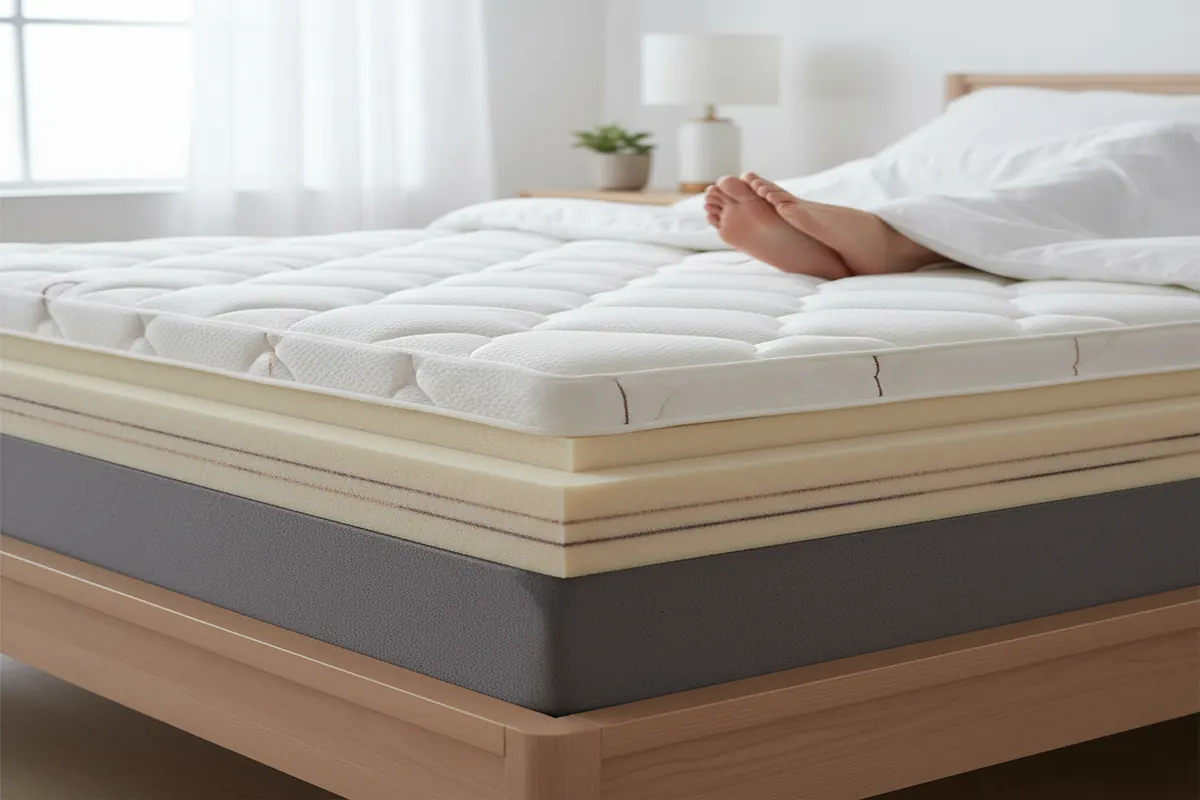
Foam mattresses are sophisticated sleep systems built from various types of foam, strategically layered to deliver specific benefits like contouring comfort, robust support, and pressure relief. The materials used, such as memory foam, latex, and polyurethane, along with their density and arrangement within the mattress’s construction, directly dictate its feel, durability, and overall performance. Understanding these elements is paramount for consumers seeking a mattress tailored to their individual sleep preferences and health requirements, ensuring a restorative and comfortable night’s rest.
Quick Summary
- Foam mattresses are engineered with distinct layers of materials like memory foam, latex, and polyurethane, each contributing to specific comfort, support, and durability characteristics
- the precise combination and density of these layers define the mattress’s feel and performance
- understanding these materials and construction methods is crucial for selecting a mattress that provides optimal pressure relief, motion isolation, and proper spinal alignment for your individual sleep needs
- quality construction ensures longevity, temperature regulation, and consistent support over time, directly impacting sleep health and overall well-being
What Exactly Are Foam Mattress Materials and How Are They Constructed?
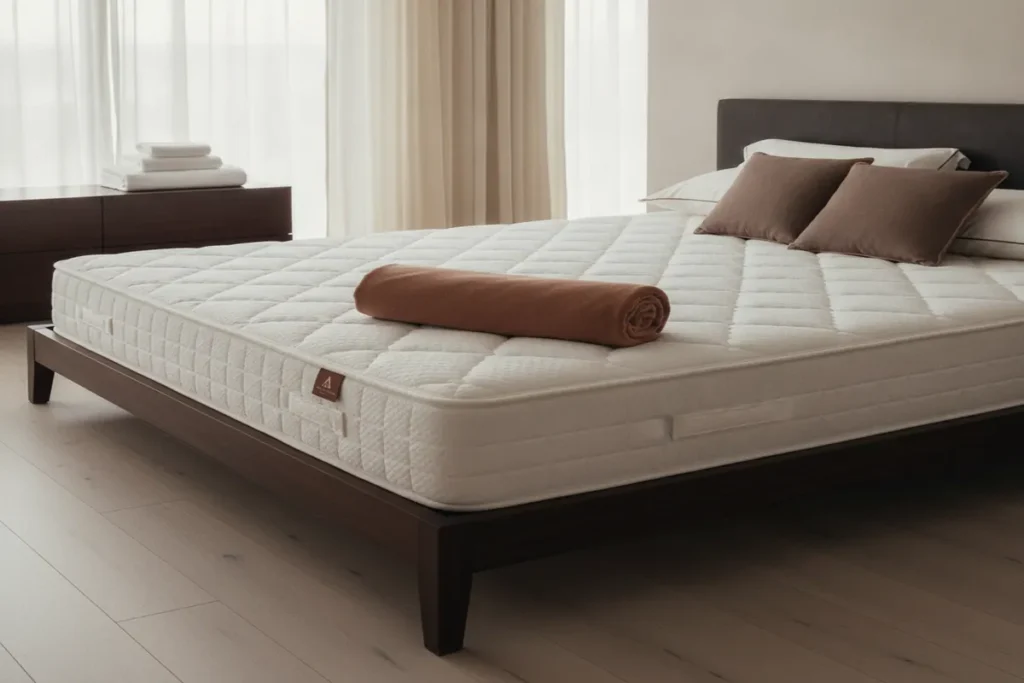
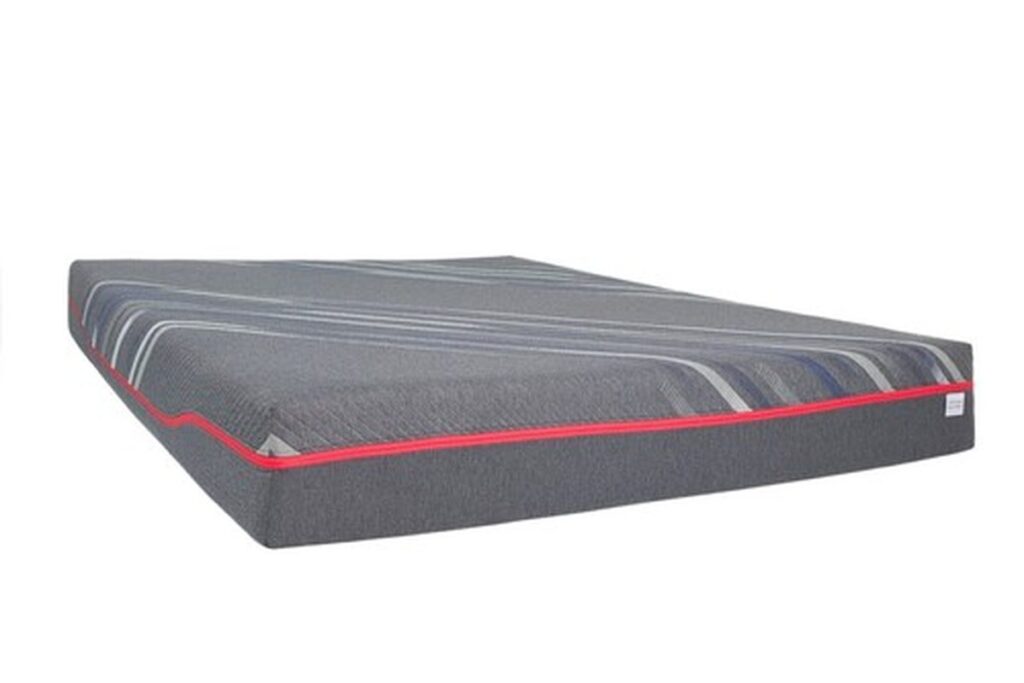
At its core, a foam mattress is a multilayered sleep surface where each component plays a critical role in the overall sleep experience. Unlike traditional spring mattresses, foam beds rely entirely on the properties of different foam types to provide support, comfort, and pressure relief. The precise foam mattress materials and construction are what differentiate a generic bed from a truly specialized sleep solution.
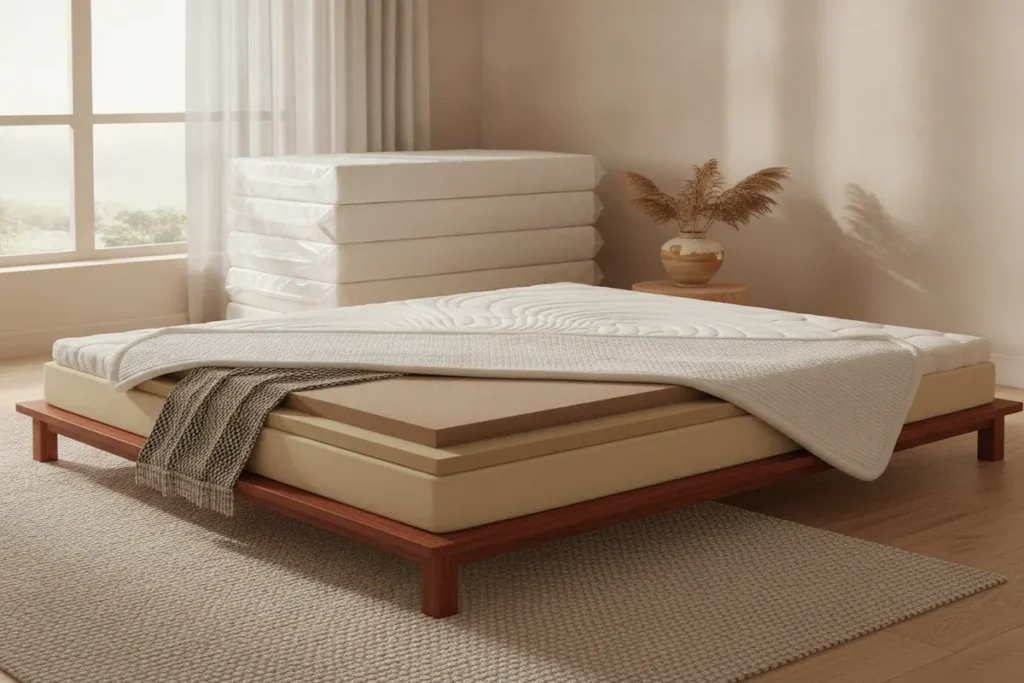
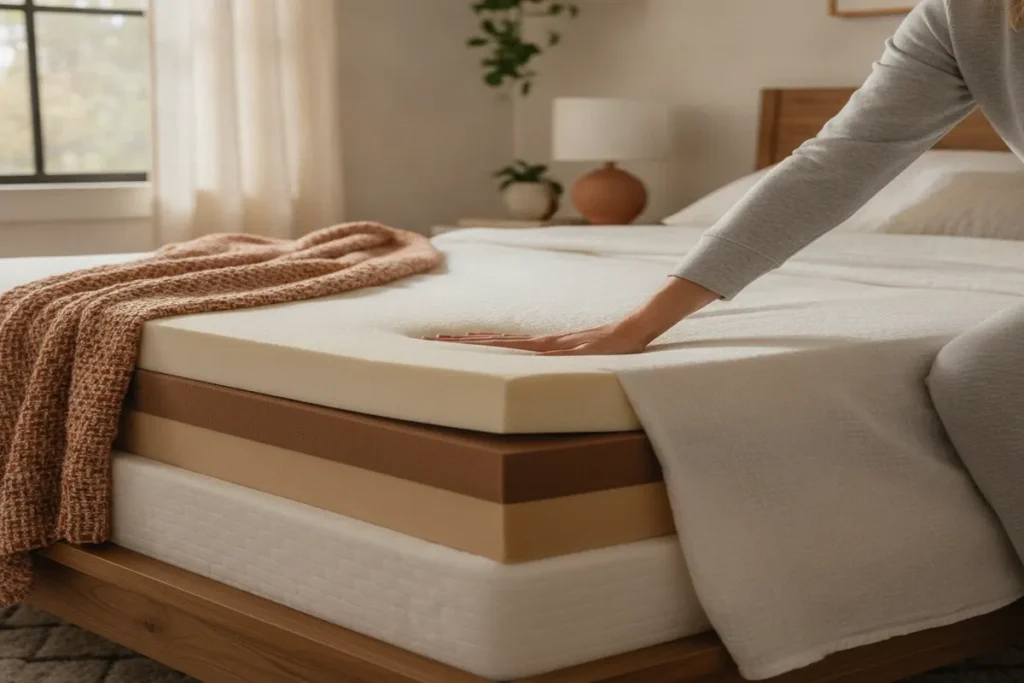
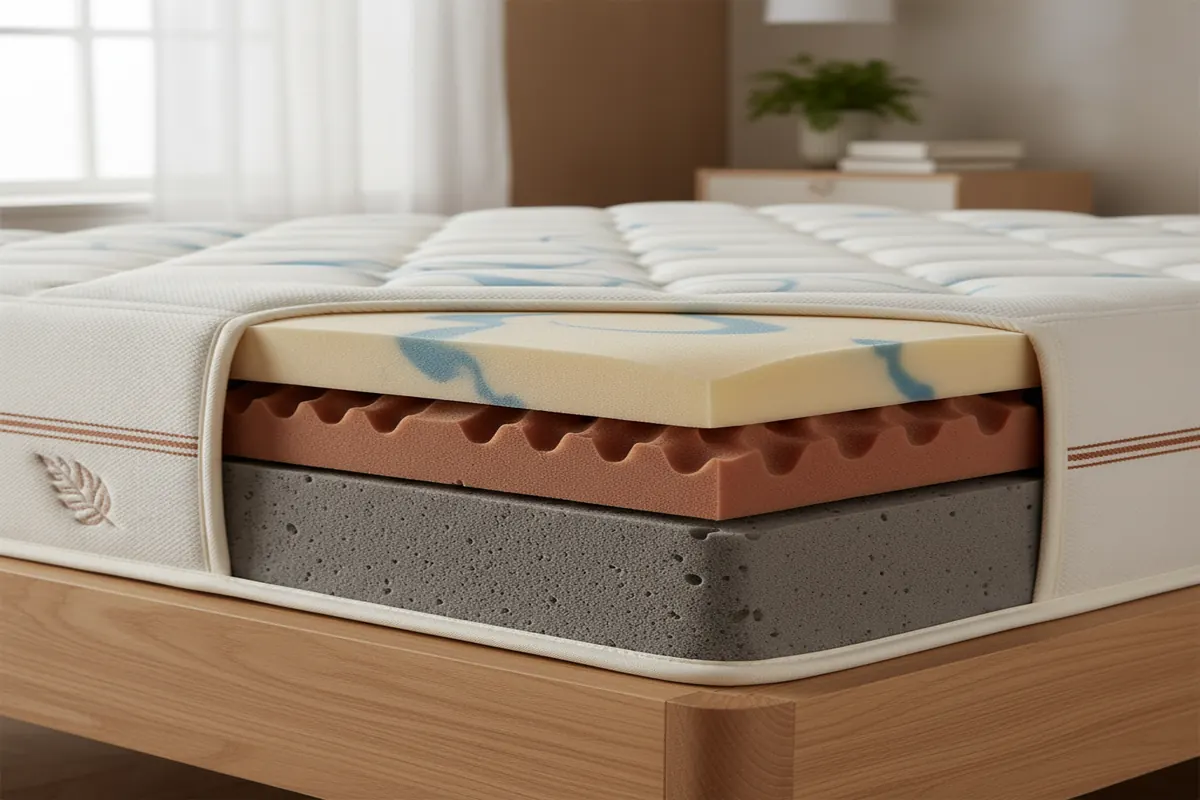
The typical construction of a foam mattress involves several distinct layers, each engineered for a specific function:
-
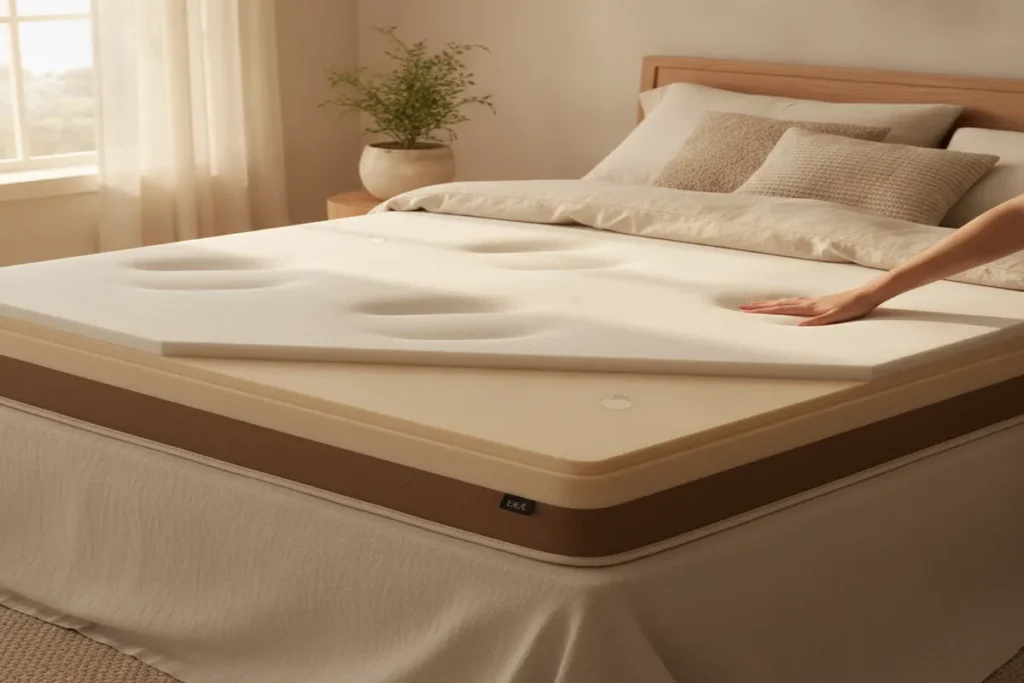
Comfort Layer: This is the topmost layer, designed to cradle the body, relieve pressure points, and provide immediate softness. It’s often made from softer, lower-density foams like memory foam or plush latex. Its primary role is to conform to the body’s curves, distributing weight evenly and minimizing pressure on joints.
-
Transition Layer: Situated between the comfort and support layers, the transition layer acts as a buffer. It prevents sleepers from “bottoming out” on the firmer support core and helps distribute weight more evenly across the mattress. Materials here are typically denser than the comfort layer but softer than the support core, offering a gradual firmness transition.
-
Support Core: This is the foundation of the mattress, providing structural integrity, deep compression support, and ensuring proper spinal alignment. The support core is usually made from high-density polyurethane foam (polyfoam) or firmer latex, designed to be resilient and prevent sagging over time. This layer is crucial for the mattress’s durability and its ability to support heavier body weights effectively.
-
Base Layer (Optional but Common): Sometimes a thin, extra-firm layer of polyfoam or a non-slip fabric is added at the very bottom to provide additional stability and ensure the mattress stays put on the bed base.
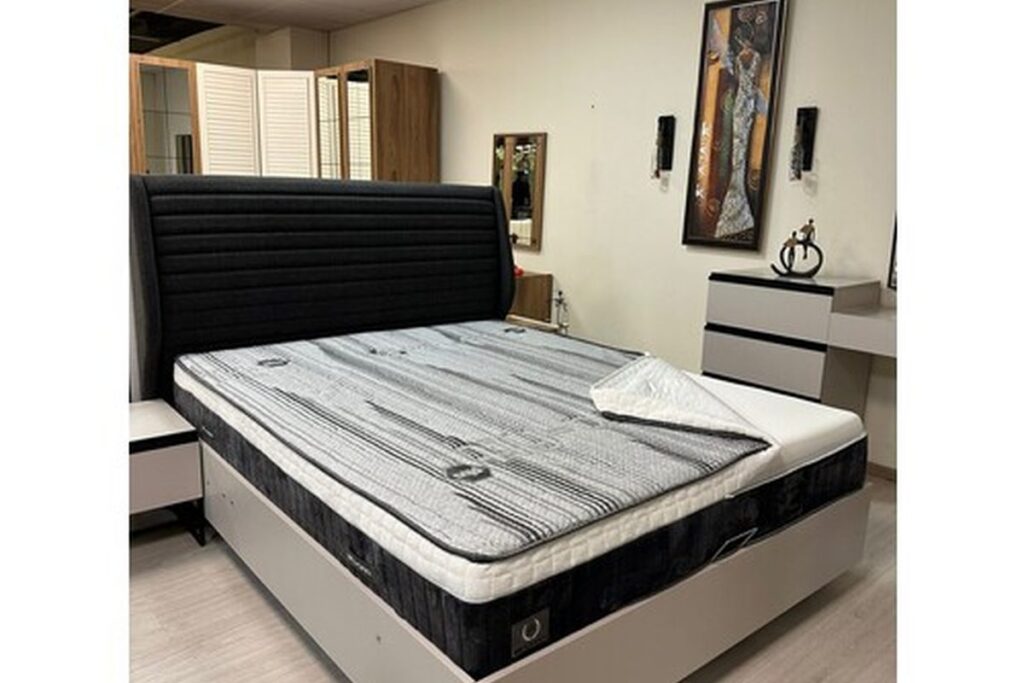
The synergy between these layers is what defines a foam mattress. For instance, a Sinyora Yatak Visco Foam Mattress meticulously combines these layers to achieve a balance of contouring comfort and robust support, catering to diverse sleeper needs.
Understanding the Core Foam Mattress Materials: Types, Properties, and Sinyora Yatak’s Approach
The choice of foam materials is the single most critical factor influencing a mattress’s feel, performance, and longevity. Each type of foam brings a unique set of properties to the table, and understanding these distinctions is key to making an informed purchase.
Memory Foam (Viscoelastic Polyurethane Foam)
Memory foam, often referred to as Visco Foam, is a type of polyurethane foam that has been treated with chemicals to give it viscoelastic properties. This means it reacts to heat and pressure, softening and contouring precisely to the shape of your body.
- Key Properties:
- Viscoelasticity: Slowly recovers its original shape after compression, creating a distinct “hug” sensation.
- Pressure Relief: Excellent at distributing body weight evenly, alleviating pressure points in shoulders, hips, and knees.
- Motion Isolation: Absorbs movement incredibly well, making it ideal for couples as you won’t feel your partner shifting.
- Temperature Sensitivity: Traditionally, memory foam can retain body heat, though modern formulations often incorporate open-cell structures, gel infusions, or other cooling technologies to mitigate this.
Sinyora Yatak’s Visco Foam Mattress line leverages advanced memory foam technology to provide superior pressure relief and contouring support. We focus on materials that offer optimal density for durability while integrating features that enhance breathability.
Latex Foam (Natural, Synthetic, and Blended)
Latex foam is renowned for its responsiveness, durability, and natural properties. It can be derived from rubber trees (natural latex) or synthesized from petrochemicals (synthetic latex), with blends also available. The two primary processing methods are Dunlop and Talalay, which result in slightly different feels.
- Key Properties:
- Responsiveness: Bounces back quickly, providing a more “on top of the bed” feel compared to memory foam’s “in the bed” sensation.
- Durability: One of the most durable mattress materials, often lasting 15-20 years or more.
- Breathability: Naturally more breathable than traditional memory foam due to its open-cell structure. Talalay latex, in particular, has an even more aerated structure.
- Hypoallergenic: Natural latex is inherently resistant to dust mites, mold, and mildew, making it an excellent choice for allergy sufferers.
- Support: Offers buoyant, consistent support across the entire surface.
Sinyora Yatak offers high-quality Latex Foam Mattresses and Latex Toppers, emphasizing natural latex for its eco-friendly profile and exceptional comfort properties. Our Latex Pillow (Natural) also extends these benefits to head and neck support.
Polyurethane Foam (Polyfoam)
Polyurethane foam, or polyfoam, is the most common and versatile foam used in mattresses. It forms the backbone of many foam mattress constructions, particularly in support cores and transition layers. Its properties are largely determined by its density.
- Key Properties:
- Versatility: Can be manufactured in a wide range of densities and firmness levels, from soft and plush to very firm and supportive.
- Cost-Effective: Generally less expensive to produce than memory foam or latex, making it a common choice for base layers.
- Support: High-density polyfoam provides excellent deep compression support and is crucial for the overall structural integrity of the mattress.
- Responsiveness: More responsive than memory foam but less bouncy than latex.
While polyfoam doesn’t offer the same specialized contouring as memory foam or the natural springiness of latex, its role in mattress construction is indispensable for providing robust and stable support.
Here’s a comparison of these core foam types:
How Does Foam Mattress Construction Impact Comfort, Support, and Durability?
The architecture of a foam mattress – how different types and densities of foam are layered – profoundly influences its performance across key metrics like comfort, support, and long-term durability. It’s not just about the individual materials, but how they interact.
Impact on Comfort
Comfort in a foam mattress is largely determined by the top layers. A softer comfort layer, often made of lower-density memory foam or plush latex, allows for immediate pressure relief and a feeling of sinking in. The thickness of this layer is also crucial; a thicker comfort layer provides more cushioning but might compromise support for some sleepers.
-
Layering for Desired Feel:
- Plush Feel: Thicker, softer top layers combined with a gradual transition to firmer support.
- Medium Feel: Balanced comfort and support layers, often with a slightly firmer comfort layer.
- Firm Feel: Thinner, firmer comfort layers and robust support layers, minimizing sinkage.
-
Targeted Pressure Relief: Some mattresses incorporate zoned foam layers, where different sections have varying firmness levels to provide targeted pressure relief for heavier areas like hips and shoulders, while offering softer support for lighter areas.
Impact on Support
The support core is the backbone of any foam mattress. High-density foams in the support core prevent sagging and ensure proper spinal alignment, which is critical for preventing back pain and promoting healthy posture.
-
Density is Key: The density of the foam (measured in pounds per cubic foot, PCF) in the support core directly correlates with its ability to provide deep compression support. Higher density foam generally means better support and greater durability.
-
Spinal Alignment: A well-constructed foam mattress will keep your spine in a neutral position, regardless of your sleep position. This is achieved by allowing heavier parts of the body (hips, shoulders) to sink in just enough, while lighter areas are adequately supported. This is particularly important for Turkish Mattress for Side Sleepers, who need specific contouring for their shoulders and hips.
Impact on Durability
Durability refers to how long a mattress maintains its supportive and comfortable properties before showing signs of sagging or wear. This is primarily influenced by the quality and density of the foams used throughout the construction.
-
High-Density Foams: Mattresses with higher density foam in all layers, especially the support core, tend to last longer. They are less prone to breaking down and developing permanent body impressions.
-
Material Quality: Natural latex generally offers the longest lifespan, followed by high-quality memory foam and high-density polyfoam. Lower-quality, low-density foams will degrade much faster.
-
Cover Material: The mattress cover, often made from durable fabrics like cotton, Tencel, or even cashmere in Sinyora Yatak’s Cashmere Bed, also contributes to the overall longevity and protection of the foam layers.
-
Proper Base: Using the correct bed base and headboard ensures the mattress is adequately supported, preventing premature sagging and extending its lifespan.
Key Construction Elements and Their Impact:
-
Layer Thickness: Dictates overall feel, cushioning, and depth of contouring.
-
Foam Density: Directly impacts support, durability, and resistance to sagging.
-
ILD (Indentation Load Deflection): Measures foam firmness; higher ILD means firmer foam.
-
Open-Cell Structure: Enhances airflow, crucial for temperature regulation.
-
Zoning: Provides targeted support and pressure relief for different body parts.
-
Edge Support: Prevents roll-off and increases usable sleep surface; often achieved with denser foam perimeter.
Choosing the Right Foam Mattress: Key Factors and What to Check Before You Buy
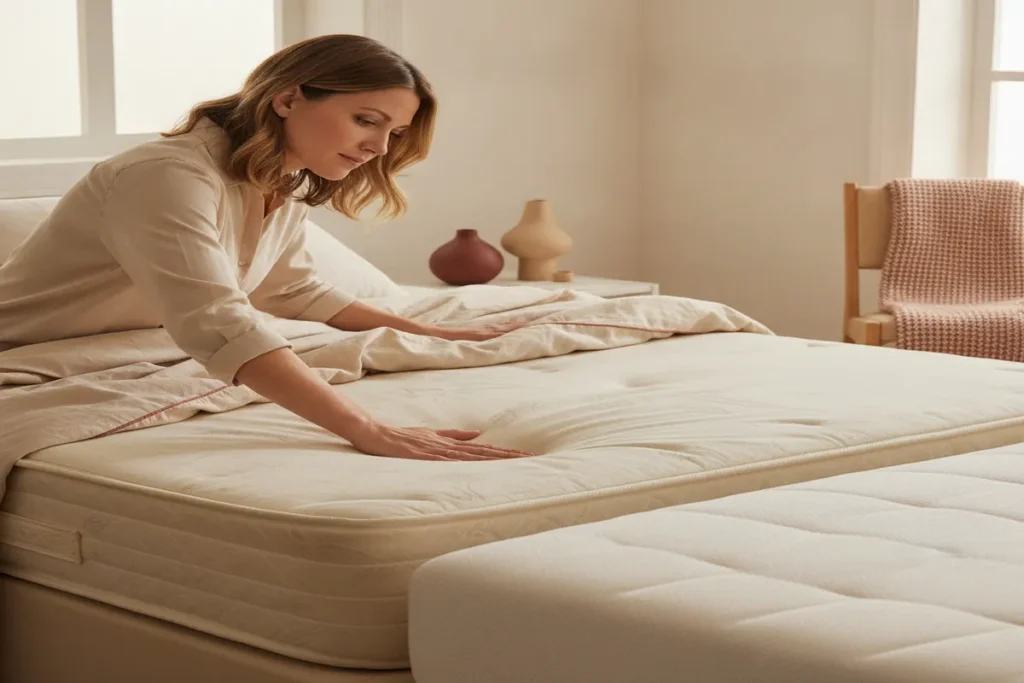
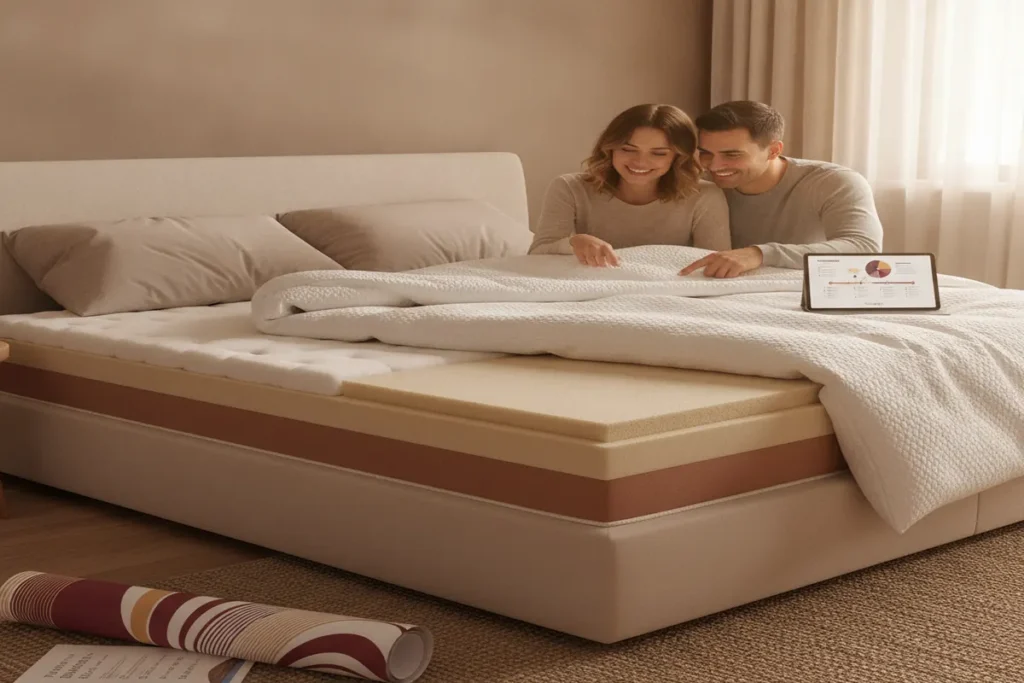
Selecting the ideal foam mattress requires careful consideration of personal preferences, physical needs, and the specific characteristics of the mattress itself. A thoughtful approach ensures you invest in a sleep solution that truly enhances your rest.
Here are the key factors to consider and what to check before making your purchase:
1. Your Primary Sleep Position
Your preferred sleep position is perhaps the most critical factor in determining the right foam mattress firmness and contouring.
-
Side Sleepers: Need significant pressure relief at the shoulders and hips to keep the spine aligned. A medium-soft to medium firmness, often with a thicker memory foam or plush latex comfort layer, is ideal. (Consider Sinyora Yatak’s Turkish Mattress for Side Sleepers).
-
Back Sleepers: Require a balance of support and contouring to maintain the natural curve of the spine. A medium-firm mattress that allows for slight sinkage at the hips while supporting the lumbar region is usually best.
-
Stomach Sleepers: Need a firmer surface to prevent the hips from sinking too deeply, which can strain the lower back. A firm to medium-firm mattress is recommended, often with thinner comfort layers.
2. Body Weight and Type
Body weight influences how deeply you’ll sink into a mattress and how much support you need.
-
Lighter Individuals (under 130 lbs): May find even “medium” mattresses too firm and might prefer softer options to experience adequate contouring and pressure relief.
-
Average Individuals (130-230 lbs): Have the widest range of options, with medium to medium-firm mattresses often being a good fit.
-
Heavier Individuals (over 230 lbs): Need a mattress with a high-density support core and durable comfort layers (e.g., high-density polyfoam, firm latex, or dense memory foam) to prevent premature sagging and ensure sufficient support.
3. Firmness Preference and Feel
Firmness is subjective, but it’s crucial for comfort. Do you prefer to feel “in” the bed (like memory foam) or “on top” of it (like latex)?
-
Test Firmness: If possible, try mattresses in person. If buying online, rely on detailed firmness ratings (1-10 scale), customer reviews, and generous trial periods.
-
“Medium-Firm” Misconception: Be aware that “medium-firm” can vary significantly between brands.
4. Temperature Regulation Needs
If you tend to sleep hot, pay close attention to cooling features.
-
Look for: Open-cell memory foam, gel infusions, copper infusions, phase-change materials, or naturally breathable latex.
-
Avoid: Older, dense, closed-cell memory foams if overheating is a major concern.
5. Allergies and Sensitivities
For those with allergies, certain materials are better choices.
-
Natural Latex: Naturally hypoallergenic and resistant to dust mites, mold, and mildew.
-
Certifications: Look for certifications like CertiPUR-US (for polyurethane foams) or OEKO-TEX (for textiles), which ensure foams are free from harmful chemicals and heavy metals.
6. Budget and Value
While cost is a factor, prioritize value and long-term durability over the lowest price. A higher initial investment in a quality foam mattress often pays off in terms of lifespan and consistent comfort (consider Turkish Mattress Lifespan and How Much Does a Turkish Mattress Cost).
Pre-Purchase Evaluation Checklist:
-
Material Breakdown: Clearly understand what types of foam are in each layer (memory foam, latex, polyfoam).
-
Density Ratings: Ask for the density (PCF) of each foam layer, especially the support core, as this indicates durability.
-
ILD Ratings: Understand the firmness of individual layers for a better sense of the overall feel.
-
Certifications: Verify third-party certifications for material safety and environmental standards.
-
Trial Period: Ensure the brand offers a substantial in-home trial period (e.g., 90-120 nights) to truly assess comfort.
-
Warranty: Review the warranty information (e.g., 10-20 years) for coverage against defects and sagging.
-
Return Policy: Understand the return policy and any associated fees or conditions.
-
Bed Base Compatibility: Confirm that your existing bed base and headboard are suitable for a foam mattress (e.g., slatted bases with narrow gaps or solid platforms).
Common Mistakes to Avoid When Selecting a Foam Mattress
Navigating the vast market of foam mattresses can be daunting, and it’s easy to fall prey to common pitfalls that lead to buyer’s remorse. As experts at Sinyora Yatak, we’ve identified several recurring mistakes that consumers make. Avoiding these can save you time, money, and ensure a better night’s sleep.
1. Prioritizing Price Over Quality and Durability
The allure of a cheap mattress is strong, but often, a lower price tag means lower quality materials. Mattresses made with low-density foams will break down faster, sag prematurely, and lose their supportive properties, leading to discomfort and the need for early replacement. This is a false economy.
- How to Avoid: Invest in a mattress with proven, high-density foams in its core construction. While the initial cost might be higher, the extended lifespan and consistent performance of a quality mattress, like those found in the Sinyora Yatak Mattress Collection, offer superior long-term value. Always check the Turkish Mattress Lifespan information provided by reputable brands.
2. Ignoring Foam Density and ILD Ratings
Many consumers focus solely on “memory foam” or “latex” labels without delving into the specifics of foam density (PCF) and Indentation Load Deflection (ILD). These metrics are crucial indicators of a foam’s quality, support, and durability.
- How to Avoid:
- Density (PCF): For memory foam, aim for 3.5 PCF or higher in comfort layers and 4.0 PCF or higher in transition/support layers. For polyfoam support cores, 1.8 PCF or higher is generally good.
- ILD: This measures firmness. A lower ILD means softer foam, a higher ILD means firmer. Match ILD to your firmness preference and body type. Don’t hesitate to ask manufacturers for these specifications.
3. Neglecting Your Primary Sleep Position
Choosing a mattress that doesn’t align with your dominant sleep position is a recipe for discomfort and potential pain. A side sleeper on an overly firm mattress will experience pressure points, while a stomach sleeper on a too-soft bed will likely suffer from lower back strain.
- How to Avoid: Be honest about how you primarily sleep. If you’re a side sleeper, actively seek out mattresses designed for Turkish Mattress for Side Sleepers that offer ample pressure relief. If you switch positions, look for a responsive foam that adapts quickly.
4. Overlooking the Importance of a Trial Period and Warranty
A mattress is a significant investment, and you need time to determine if it’s the right fit. A quick lie-down in a showroom isn’t enough. Similarly, a weak warranty signals a lack of manufacturer confidence in their product.
- How to Avoid: Only purchase from brands offering a substantial in-home trial period (e.g., 90-120 nights). This allows your body to adjust. Thoroughly read the Warranty Information and Return Policy to understand coverage, prorated terms, and return procedures.
5. Assuming All “Memory Foam” or “Latex” is the Same
The terms “memory foam” and “latex” are broad categories. There are significant differences in quality, composition (e.g., natural vs. synthetic latex), and manufacturing processes that affect performance.
- How to Avoid: Dig deeper. Is the memory foam open-cell, gel-infused, or traditional? Is the latex natural Dunlop, natural Talalay, synthetic, or a blend? Reputable brands like Sinyora Yatak will provide clear details about their specific foam types, such as our Visco Foam Mattress and Latex Foam Mattress.
6. Forgetting About the Bed Base
The mattress needs proper support from underneath. Placing a high-quality foam mattress on an old, sagging box spring or an incompatible slatted base can negate its benefits and lead to premature wear.
- How to Avoid: Ensure your Bed Base and Headboard are suitable for a foam mattress. Foam mattresses typically require a solid platform or a slatted foundation with slats no more than 2-3 inches apart to provide even support and allow for airflow. Refer to the manufacturer’s Care and Maintenance guidelines.
Unpacking the Value: What Are the Benefits of Modern Foam Mattress Designs?
Modern foam mattress designs have revolutionized the sleep industry, moving far beyond the simple “sponge” mattresses of the past. Today’s sophisticated foam mattress materials and construction offer a host of benefits that significantly enhance comfort, support, and overall sleep quality.
Here are the primary advantages of investing in a well-designed foam mattress:
-
Superior Pressure Relief: This is arguably the most celebrated benefit of foam, particularly memory foam and latex. These materials contour precisely to the body’s curves, distributing weight evenly and virtually eliminating pressure points on sensitive areas like hips, shoulders, and lower back. This leads to reduced tossing and turning and can alleviate aches and pains.
-
Exceptional Motion Isolation: Foam mattresses are masters at absorbing motion. When one partner moves, the other is far less likely to feel it. This makes foam mattresses an excellent choice for couples, ensuring undisturbed sleep even with restless partners. This is a significant advantage over traditional spring mattresses.
-
Customized Support and Spinal Alignment: Through strategic layering of different foam types and densities, foam mattresses can provide targeted support where it’s needed most. They adapt to your unique body shape, maintaining proper spinal alignment throughout the night, which is crucial for preventing back pain and promoting healthy posture.
-
Hypoallergenic and Allergen Resistant: Many foam mattresses, especially those featuring natural latex, are inherently resistant to common allergens like dust mites, mold, and mildew. This makes them a healthier sleep environment for individuals with allergies or asthma. Even synthetic foams often come with certifications (like CertiPUR-US) ensuring they are made without harmful chemicals.
-
Durability and Longevity: High-quality foam mattresses, especially those with dense latex or premium memory foam cores, are designed to last. They resist sagging and maintain their supportive properties for many years, often outperforming less durable innerspring alternatives. With proper Care and Maintenance, a Sinyora Yatak mattress can provide comfort for a decade or more.
-
Variety of Firmness Options: Thanks to the versatility of foam, manufacturers can create mattresses ranging from ultra-plush to extra-firm, and everything in between. This allows consumers to find the perfect firmness level to match their personal preference and specific sleep needs, whether they prefer the deep hug of a Visco Foam Mattress or the responsive bounce of a Latex Foam Mattress.
-
Quiet Operation: Unlike spring mattresses that can develop squeaks and creaks over time, foam mattresses are inherently silent. There are no metal components to rub together, ensuring a peaceful and quiet sleep environment.
Navigating the Market: How Much Does a Quality Foam Mattress Cost, and Where Can You Buy One?
Understanding the cost of a quality foam mattress and knowing where to purchase it effectively are crucial steps in your buying journey. The market offers a wide spectrum of options, influenced by materials, brand reputation, and sales channels.
How Much Does a Quality Foam Mattress Cost?
The price of a foam mattress can vary significantly, ranging from a few hundred to several thousand dollars, depending on several factors:
-
Materials Used: Natural latex mattresses are typically the most expensive due to the cost of raw materials and processing. High-density memory foam also commands a higher price than standard polyfoam.
-
Construction Complexity: Mattresses with multiple specialized layers, zoning, or advanced cooling technologies will naturally be more expensive.
-
Brand Reputation and Research & Development: Established brands with a history of innovation and quality, like Sinyora Yatak, invest heavily in R&D and premium materials, which can reflect in the price.
-
Size: Larger sizes (Queen, King, California King) will always cost more than smaller ones (Twin, Full).
-
Certifications: Mattresses with extensive third-party certifications for material safety and environmental impact may have a slightly higher price point.
General Price Ranges (International Market, Queen Size Estimate):
-
Entry-Level Polyfoam/Basic Memory Foam: $300 – $800
-
Mid-Range Quality Memory Foam/Blended Latex: $800 – $1,800 (This is where many quality Sinyora Yatak foam mattresses, like our Visco Foam Mattress, often fall, offering excellent value.)
-
Premium Natural Latex/Advanced Hybrid Foams: $1,800 – $4,000+ (Our Latex Foam Mattress would typically be in this range, reflecting its superior materials and durability.)
It’s important to view the price in context of the mattress’s expected lifespan. A higher-priced, durable mattress that lasts 15 years might be more cost-effective per year than a cheaper one that needs replacing every 5-7 years. Refer to our How Much Does a Turkish Mattress Cost guide for more specific insights on our products.
Where Can You Buy Foam Mattresses Online?
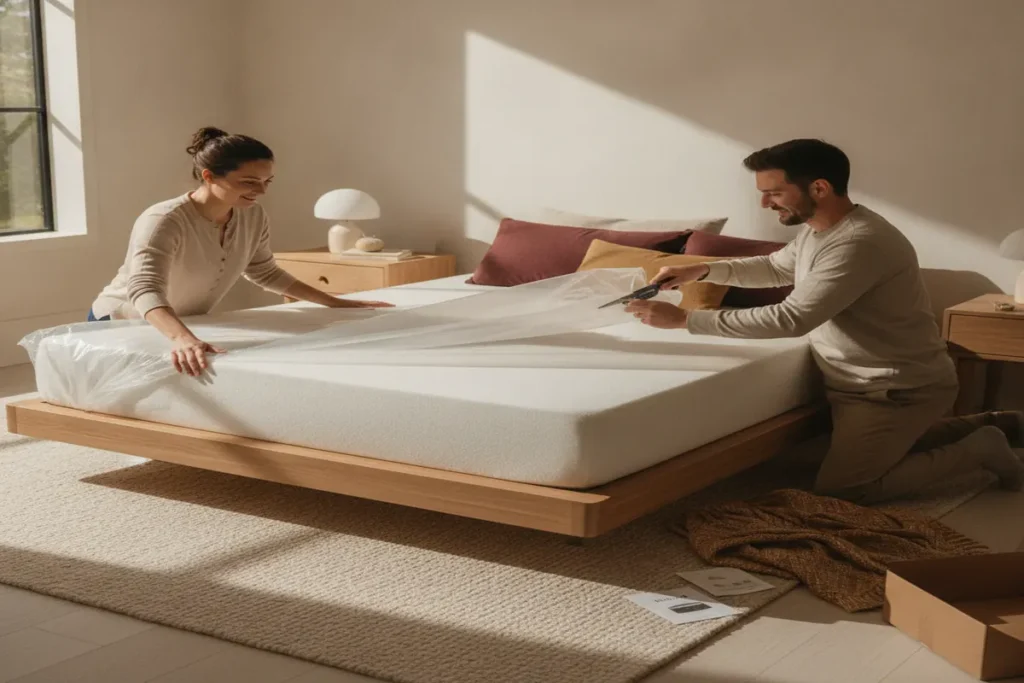
The online marketplace has become the dominant channel for purchasing mattresses, offering convenience, competitive pricing, and a vast selection.
-
Direct-to-Consumer (DTC) Brands: Many reputable brands, including Sinyora Yatak, operate primarily online, shipping directly to your door. This model often cuts out retail markups, offering better value.
- Advantages: Wider selection, often better prices, generous trial periods, convenient delivery, and direct access to customer support.
- Disadvantages: Inability to physically test the mattress before purchase (though trial periods mitigate this), potential for more involved returns.
-
Online Retailers/Marketplaces: Large e-commerce platforms also carry a variety of brands.
- Advantages: One-stop shopping, often competitive pricing.
- Disadvantages: Less direct brand support, varying return policies depending on the seller.
Steps for Buying a Foam Mattress Online:
-
Research Thoroughly: Read expert reviews, customer testimonials, and detailed product descriptions. Pay attention to foam types, densities, and construction details.
-
Understand Your Needs: Revisit your sleep position, body type, firmness preference, and any specific concerns (e.g., back pain, sleeping hot).
-
Check Certifications: Look for CertiPUR-US, OEKO-TEX, or GOLS/GOTS (for organic latex) to ensure material safety and quality.
-
Review Trial Period & Warranty: Ensure the brand offers a risk-free trial (e.g., 100 nights) and a comprehensive warranty (at least 10 years). Understand the terms of both.
-
Compare Prices & Value: Don’t just pick the cheapest. Compare features, materials, and expected lifespan across similar options.
-
Read the Fine Print: Understand shipping costs, delivery options, and return procedures.
-
Contact Customer Service: Reach out with any questions before purchasing. A responsive and knowledgeable Contact Us for Support team is a good sign.
Sinyora Yatak simplifies this process by offering a curated selection of high-quality foam mattresses, including our Foam Mattress collection, directly to customers worldwide. We pride ourselves on What Makes Turkish Mattresses Special, combining traditional craftsmanship with modern foam technology, and providing clear information on our Buying Guides, Shipping Turkish Mattresses Internationally, and comprehensive Customer Service. You can Shop All Products directly from our website.
Expert Insight
“The true genius of a foam mattress lies not just in the individual quality of its materials, but in the intelligent synergy of their layered construction. A perfectly engineered foam mattress will dynamically adapt to the sleeper’s unique contours, providing buoyant support where needed and gentle pressure relief elsewhere. This delicate balance, achieved through careful selection of densities and foam types, is what separates a truly restorative sleep system from a merely adequate one. It’s an art and a science, focused entirely on enhancing human well-being.”
— Industry experts confirm that thoughtful material layering is paramount for optimal sleep performance.
Key Terms
-
Viscoelasticity: The property of memory foam that allows it to deform slowly under pressure and heat, then gradually return to its original shape. This creates the characteristic “hug” and contouring feel.
-
Density (PCF): A measure of how much material is packed into a given volume of foam, expressed in pounds per cubic foot. Higher density generally indicates greater durability, support, and material quality.
-
ILD (Indentation Load Deflection): A measure of foam firmness. It represents the force (in pounds) required to indent a 4-inch thick foam sample by 25% using a 50-square-inch circular indenter. A lower ILD means softer foam, while a higher ILD indicates firmer foam.
-
Open-Cell Foam: A type of foam structure where the individual cells are interconnected, allowing air to flow more freely through the material. This enhances breathability and helps dissipate heat, addressing a common concern with traditional foams.
-
Motion Isolation: The ability of a mattress to absorb movement at one point on its surface without transferring that movement to other areas. This is a key benefit of foam mattresses, especially for couples.
How Can You Upgrade to More Comfortable Sleep with Sinyora Yatak?
At Sinyora Yatak, we believe that exceptional sleep is not a luxury, but a fundamental pillar of health and well-being. Our commitment to superior foam mattress materials and construction stems from decades of expertise in crafting Turkish mattresses that stand out for their quality, durability, and unparalleled comfort. We meticulously source premium foams, including advanced Visco Foam Mattress options and natural Latex Foam Mattress varieties, to create sleep systems that adapt to your body, relieve pressure, and provide optimal spinal support.
Whether you’re a side sleeper seeking specific contouring, a back sleeper needing robust lumbar support, or simply someone looking to upgrade to a mattress built to last, our Mattress Collection offers a diverse range of solutions. Experience the difference that thoughtful engineering and Turkish craftsmanship make. Explore our Buying Guides to find your perfect match, learn What Makes Turkish Mattresses Special, and discover why customers worldwide choose Sinyora Yatak for their most important investment – their sleep. With Ship Turkish Mattresses Internationally and a dedicated Customer Service team, your journey to better sleep starts here.
Frequently Asked Questions
Q: How long does a foam mattress typically last?
Q: Do foam mattresses sleep hot?
Q: What is “off-gassing” and is it harmful?
Q: Can I use a foam mattress on any bed base?
Q: How do I clean and care for my foam mattress?
Q: Are foam mattresses good for back pain?
Help: FAQs · Sleep Science · Sleep Resources · Privacy Policy