
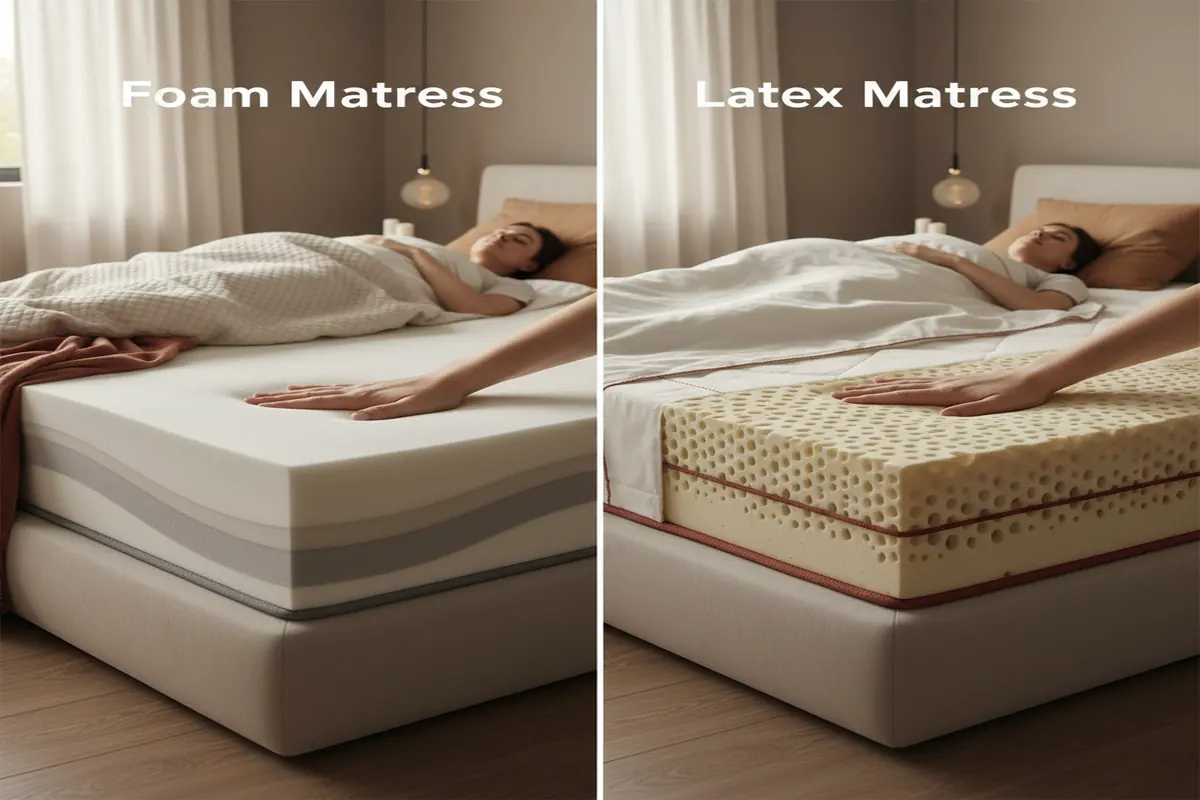
Choosing between a foam mattress and a latex mattress involves understanding distinct differences in feel, support, and material properties. While foam, particularly memory foam, excels at conforming closely to your body for deep pressure relief and motion isolation, often with a slow-response, sinking sensation, latex offers a more buoyant, responsive feel, superior durability, and often better temperature regulation due to its open-cell structure. Your ideal choice hinges on personal preference for firmness, desired level of contouring, sensitivity to heat, budget, and environmental considerations.
Quick Summary
- Foam mattresses offer contouring pressure relief and motion isolation, ideal for side sleepers and couples
- Latex mattresses provide responsive bounce, durability, and natural breathability, excellent for combination sleepers and those seeking eco-friendly options
- Memory foam often retains more heat and has a slow response
- Natural latex is highly durable, hypoallergenic, and cooler
Which is Better: Memory Foam Mattress or Latex Mattress for Your Sleep Needs?
When it comes to selecting a new mattress, the “better” option between foam and latex is entirely subjective, depending on individual preferences, sleep style, and specific health considerations. Both materials offer distinct advantages, making them suitable for different types of sleepers. Understanding these core differences is the first step in making an informed decision.
Here’s a snapshot of who typically benefits most from each:
-
Memory Foam Mattresses (Visco Foam Mattress):
- Ideal for: Side sleepers, individuals with joint pain, couples sensitive to motion transfer, and those who enjoy a “hugging” or “sinking in” sensation.
- Key Benefits: Exceptional pressure point relief by contouring precisely to the body’s curves. Superior motion isolation, meaning you won’t feel your partner move during the night. Can alleviate pressure on hips, shoulders, and lower back.
- Considerations: Can sometimes sleep warmer due to its dense structure, though modern designs often incorporate cooling technologies (e.g., gel infusions, open-cell foams). May have a slower response time, making it feel like you’re “stuck” when changing positions.
- Sinyora Yatak offers advanced Visco Foam Mattress options designed for optimal comfort and support.
-
Latex Mattresses (Latex Foam Mattress):
- Ideal for: Combination sleepers (who change positions frequently), back and stomach sleepers, those seeking a more responsive and buoyant feel, individuals with allergies, and eco-conscious buyers.
- Key Benefits: Excellent support that pushes back against your weight, promoting spinal alignment without the deep sink. Highly durable with a longer lifespan. Naturally hypoallergenic, resistant to dust mites and mold. Generally sleeps cooler due to its open-cell structure and natural breathability.
- Considerations: Can be firmer and more expensive than many foam options. While responsive, it still offers pressure relief, just with a different feel than memory foam. May feel too firm for some side sleepers if not paired with a softer comfort layer.
- Explore Sinyora Yatak’s Latex Foam Mattress collection for naturally supportive and breathable sleep solutions.
Ultimately, the best way to determine which is better for you is to consider your primary sleep concerns and preferences. Do you crave deep contouring and zero motion transfer, or do you prefer a responsive, buoyant surface that makes changing positions effortless?
Understanding the Fundamental Differences: Foam Mattress vs. Latex Mattress Construction and Materials
The core distinction between foam and latex mattresses lies in their fundamental materials and manufacturing processes, which directly impact their feel, performance, and environmental footprint. While both are considered “foam” in a broad sense, their properties are vastly different.
Memory Foam: The Science of Viscoelasticity
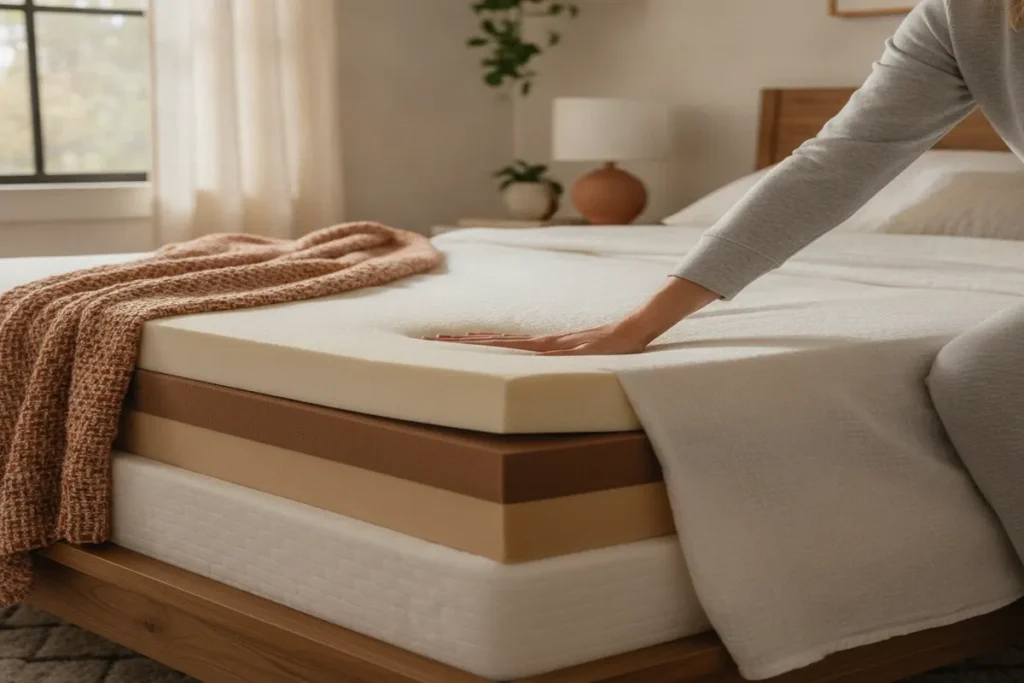
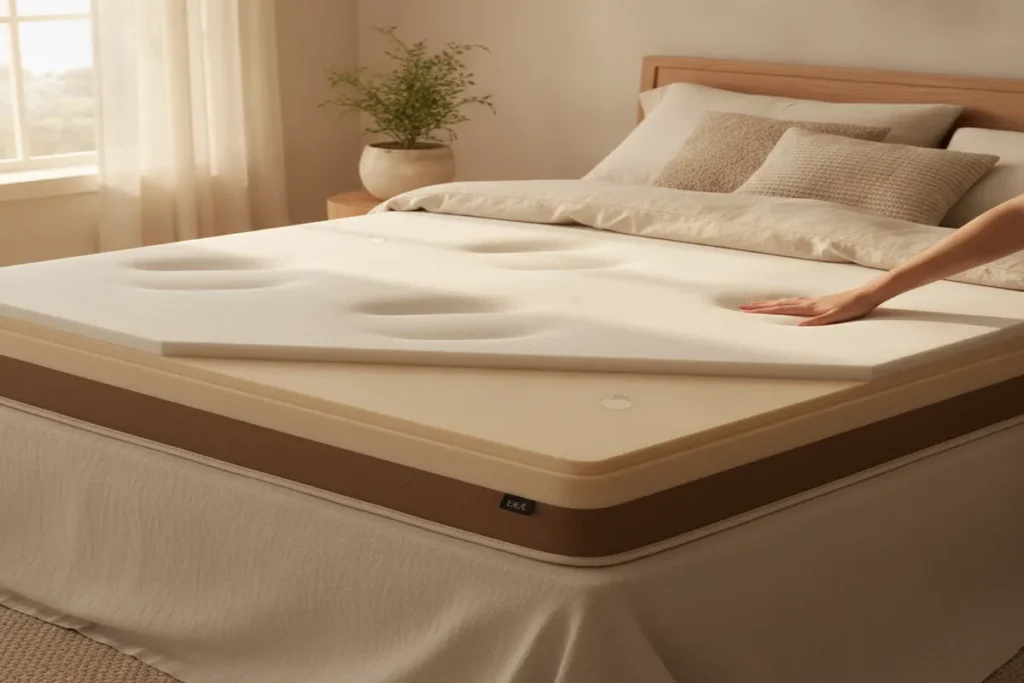
Memory foam, also known as viscoelastic foam, is a synthetic material developed by NASA. Its defining characteristic is its ability to soften and conform to body heat and pressure, then slowly return to its original shape once the pressure is removed. This “memory” effect is what gives it its unique hugging sensation and superior pressure relief.
-
Composition: Primarily made from polyurethane with added chemicals to enhance its density and viscosity.
-
Manufacturing: Polyurethane foam is created through a chemical reaction, then molded or poured into mattress layers. Density varies significantly, impacting firmness, durability, and cost.
-
Types:
- Traditional Memory Foam: The original formulation, known for excellent contouring but often prone to heat retention.
- Open-Cell Memory Foam: Engineered with a more open internal structure to improve airflow and reduce heat buildup.
- Gel-Infused Memory Foam: Contains gel beads or swirls designed to absorb and dissipate heat, offering a cooler sleep surface.
- Plant-Based Memory Foam: Incorporates natural plant oils to reduce petroleum content, aiming for a more eco-friendly profile and sometimes improved breathability.
Latex: Nature’s Resilient Alternative
Latex for mattresses is derived from the sap of the rubber tree (Hevea brasiliensis). It’s known for its exceptional elasticity, durability, and natural resilience, offering a buoyant feel that responds quickly to movement.
-
Composition: Natural latex is harvested from rubber trees, making it a renewable resource. Synthetic latex is petroleum-based, mimicking the properties of natural latex. Blended latex combines both.
-
Manufacturing Processes:
- Dunlop Latex: The more traditional method. Liquid latex sap is frothed, poured into a mold, and then baked. Sediment settles at the bottom, making Dunlop latex typically denser and firmer at the bottom layers, and slightly less consistent in feel than Talalay.
- Talalay Latex: A more complex process. Liquid latex is partially poured into a mold, then vacuum-sealed to expand the latex, flash-frozen, and then baked. This creates a more consistent, lighter, and often softer foam with an open-cell structure, enhancing breathability.
-
Types:
- Natural Latex: Made from 100% rubber tree sap. Certified natural latex (GOLS certified) is highly sought after for its purity and eco-friendliness.
- Synthetic Latex: Made from petrochemicals, often styrene-butadiene rubber (SBR). Less expensive, but lacks some of the natural properties of pure latex.
- Blended Latex: A mixture of natural and synthetic latex, offering a balance of properties and price point.
To provide a clear side-by-side view, here’s a comparison table summarizing these fundamental differences:
Understanding these distinctions is crucial for aligning your mattress choice with your personal values and practical needs.
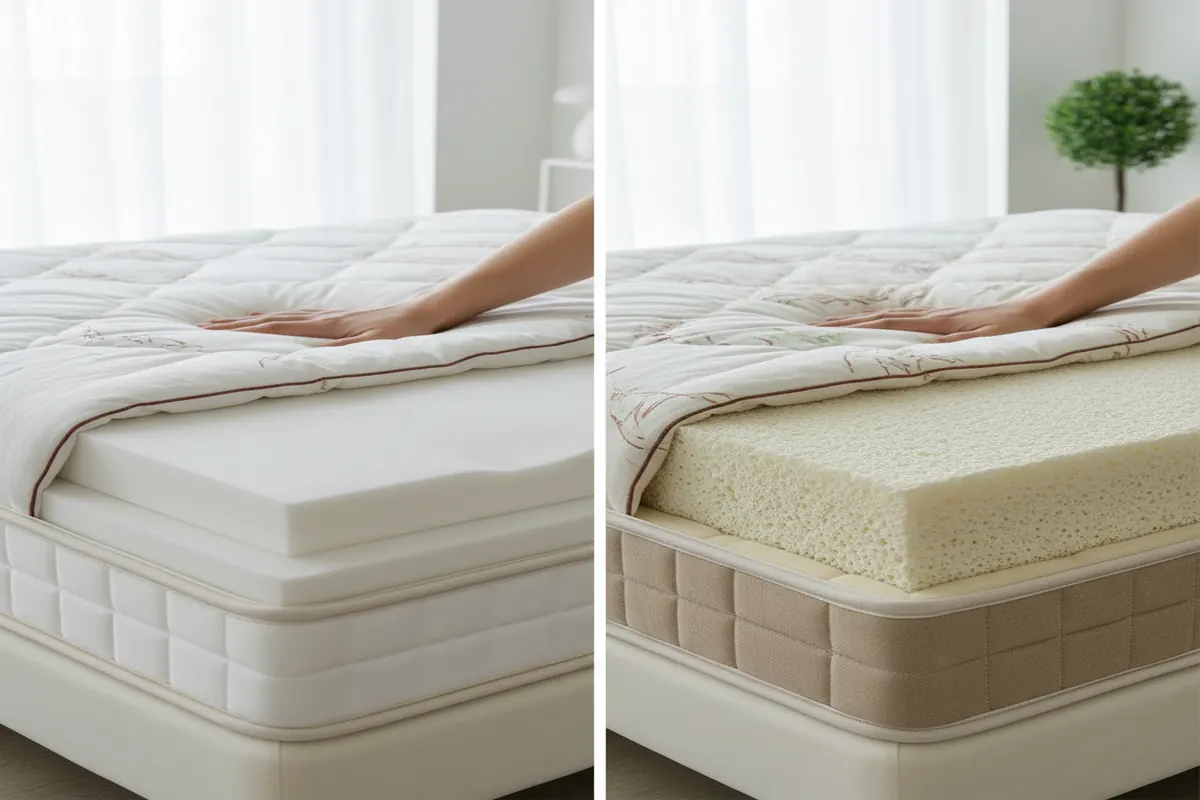
Foam Mattress vs. Latex Mattress for Back Pain: Which Offers Superior Support?
For individuals suffering from back pain, choosing the right mattress is paramount. Both foam and latex mattresses can offer significant relief, but they do so through different mechanisms of support and pressure distribution. The “superior” option often comes down to the specific type of back pain and personal preference for how support is delivered.
How Memory Foam Addresses Back Pain
Memory foam’s primary benefit for back pain is its ability to offer highly customized pressure relief and spinal alignment.
-
Contouring Support: Memory foam softens under body heat and weight, molding precisely to the unique curves of your spine. This personalized contouring fills in the lumbar curve, preventing gaps and maintaining the natural ‘S’ shape of the spine.
-
Even Weight Distribution: By distributing body weight evenly across the surface, memory foam eliminates pressure points that can exacerbate back pain, particularly in the shoulders, hips, and lower back.
-
Pressure Point Relief: For conditions like sciatica, herniated discs, or arthritis, memory foam can cradle sensitive areas, reducing strain and discomfort.
-
Motion Isolation for Undisturbed Sleep: If movement from a partner disrupts sleep, leading to muscle tension and worsened back pain, memory foam’s excellent motion isolation can ensure a more stable sleep surface.
Who it’s best for: Individuals with chronic localized pain, side sleepers needing deep pressure relief at the shoulders and hips, and those who prefer a “hugged” feeling that can soothe aching joints. Our Visco Foam Mattress options are engineered to provide this targeted support.
How Latex Addresses Back Pain
Latex mattresses provide a more buoyant and responsive support that can be highly effective for back pain, especially for those who need consistent push-back.
-
Responsive Support: Unlike memory foam’s sinking sensation, latex offers a gentle push-back that keeps the spine in a neutral alignment. This prevents the feeling of “bottoming out” and provides a more consistent support system.
-
Zoned Support: Many latex mattresses are designed with different firmness zones, providing targeted support for the shoulders, hips, and lumbar region, which can be highly beneficial for overall spinal health.
-
Natural Elasticity: The inherent elasticity of latex allows it to adapt to movements quickly, making it easier to change positions without disturbing spinal alignment, which is crucial for combination sleepers or those with stiffness.
-
Durability and Consistent Support: Latex maintains its supportive properties over a longer period compared to many foam options, meaning consistent back pain relief for years.
Who it’s best for: Back and stomach sleepers who need firm, even support to prevent the hips from sinking too far, combination sleepers who change positions frequently, and individuals who prefer a more “on top of the mattress” feel. Sinyora Yatak’s Latex Foam Mattress range prioritizes this resilient, ergonomic support.
Key Considerations for Back Pain Sufferers:
-
Firmness Level: While support is key, firmness is also crucial. A mattress that’s too soft can allow the spine to fall out of alignment, while one that’s too firm can create pressure points. Both foam and latex come in various firmness levels.
-
Spinal Alignment: Regardless of material, the goal is to maintain a neutral spinal alignment. Look for mattresses that keep your ears, shoulders, and hips in a straight line when lying on your side, or your ears, shoulders, and hips aligned when lying on your back.
-
Trial Period: The only way to truly know if a mattress will alleviate your back pain is to sleep on it. Utilize generous trial periods to test the mattress in your home.
In summary, for back pain, memory foam offers superior pressure point relief and contouring, while latex provides more generalized, buoyant, and responsive support. Both are excellent choices, but your preference for feel and specific type of pain will guide your decision.
Beyond the Basics: Key Factors to Consider When Choosing Your Ideal Mattress
Deciding between a foam and latex mattress goes beyond just the feel. Several critical factors influence long-term satisfaction, sleep quality, and the overall value of your investment. As experienced specialists, we guide our customers through these considerations to ensure they make the best choice.
1. Durability and Lifespan
-
Latex: Generally considered the most durable mattress material, especially natural latex. High-quality natural latex mattresses can last 10-20 years or even longer, resisting sagging and impressions exceptionally well. This longevity often justifies its higher initial cost.
-
Memory Foam: Durability varies significantly with density and quality. A high-density memory foam mattress can last 7-10 years, while lower-density or poorer quality foams may show signs of wear, such as sagging or body impressions, in 5-7 years.
2. Temperature Regulation
-
Memory Foam: Traditional memory foam is known for heat retention because its dense, closed-cell structure can trap body heat. However, advancements have led to cooling technologies.
- What to look for: Open-cell memory foam, gel infusions, copper infusions, or phase-change materials are designed to dissipate heat. Our Visco Foam Mattress options often incorporate these cooling features.
-
Latex: Natural latex is inherently more breathable than traditional memory foam due to its open-cell structure and pinholes created during manufacturing. It allows for better airflow, making it a cooler sleep surface. Talalay latex, with its more consistent open-cell structure, often excels in this area.
3. Motion Isolation
-
Memory Foam: This is where memory foam truly shines. Its viscoelastic properties absorb motion incredibly well, making it an excellent choice for couples. You’re unlikely to feel your partner tossing and turning.
-
Latex: Offers very good motion isolation, but typically not to the same degree as memory foam. There’s a slight bounce, so while major movements are dampened, you might still feel subtle shifts from a partner.
4. Off-Gassing and Odor
-
Memory Foam: New memory foam mattresses often release a “new mattress smell” or off-gassing due to the volatile organic compounds (VOCs) used in their manufacturing. This is generally harmless and dissipates within a few days to weeks in a well-ventilated room.
-
Latex: Natural latex mattresses have minimal to no off-gassing. They might have a faint, sweet, rubbery smell initially, which is natural and quickly fades. Synthetic and blended latex may have more off-gassing, but still generally less than memory foam.
5. Eco-Friendliness and Hypoallergenic Properties
-
Latex: Natural latex is a highly sustainable and renewable resource, making it an excellent choice for environmentally conscious consumers. It’s also naturally resistant to dust mites, mold, and mildew, making it an ideal option for allergy sufferers.
-
Memory Foam: Being petroleum-based, traditional memory foam has a larger environmental footprint. However, plant-based foams and those certified by programs like CertiPUR-US (ensuring absence of harmful chemicals) are better options. Memory foam is not inherently hypoallergenic, but some brands treat their foams to be resistant to allergens.
6. Price Point
-
Memory Foam: Generally, memory foam mattresses are available across a wide price range, from budget-friendly to luxury, depending on density, brand, and added features (cooling, layers).
-
Latex: Natural latex mattresses tend to be at the higher end of the price spectrum due to the material cost and specialized manufacturing. Synthetic and blended latex can be more affordable. While the initial investment might be higher, the superior durability often translates to better long-term value.
- Consider How Much Does a Turkish Mattress Cost for an overview of pricing within our collections.
Decision Framework Checklist:
To help you navigate these factors, ask yourself these questions:
-
What is my primary sleep position? (Side, back, stomach, combination)
-
Do I sleep hot or cold? (Prioritize cooling features if hot)
-
Am I sensitive to smells or chemicals? (Natural latex may be better)
-
How important is motion isolation for me and my partner? (Memory foam excels)
-
What is my budget, and how long do I expect the mattress to last? (Latex offers longer durability)
-
Are environmental certifications important to me? (Look for GOLS for latex, CertiPUR-US for foam)
-
Do I prefer a “sinking in” or “on top” feel? (Foam vs. Latex)
-
Do I have specific allergies or sensitivities? (Natural latex is often hypoallergenic)
By carefully evaluating these points, you can narrow down your options and confidently choose the mattress that best suits your lifestyle.
Common Pitfalls to Avoid When Buying a Foam or Latex Mattress
Even with a clear understanding of the differences, buyers often make common mistakes that can lead to dissatisfaction. As Sinyora Yatak, we believe in empowering our customers with practical advice to avoid these pitfalls and ensure a truly comfortable sleep experience.
1. Focusing Solely on “Firmness” Ratings
Many people equate “firm” with “supportive,” but this isn’t always accurate. A mattress can be firm but not provide adequate support for your spine, leading to discomfort. Conversely, a softer mattress can still be supportive if it properly aligns your spine.
-
Mistake: Choosing the firmest option available, assuming it’s best for back pain.
-
Solution: Focus on support (spinal alignment) and pressure relief (comfort) rather than just firmness. A medium-firm mattress is often ideal for a wide range of sleepers, providing a balance of both. Your body weight and sleep position also play a crucial role in determining the right firmness.
2. Ignoring the Importance of a Trial Period
A few minutes in a showroom cannot replicate a full night’s sleep. Your body needs time to adjust to a new mattress, and it takes several weeks to truly assess if it’s the right fit.
-
Mistake: Buying a mattress without a generous in-home trial period.
-
Solution: Always choose a mattress with a risk-free trial period, ideally 90 nights or more. This allows you to test the mattress in your own sleep environment and return or exchange it if it’s not working for you.
3. Neglecting Your Bed Base or Foundation
The performance of even the best foam or latex mattress can be compromised by an unsuitable bed base. Old, sagging box springs or slatted bases with wide gaps can cause premature wear and inadequate support.
-
Mistake: Placing a new foam or latex mattress on an old, unsupportive foundation.
-
Solution: Ensure your bed base provides solid, even support. For foam and latex mattresses, a solid platform bed or a slatted foundation with slats no more than 2-3 inches apart is typically recommended. This prevents sagging and maintains the integrity of the mattress.
- Explore our range of Bed Base and Headboard options designed to complement our mattresses.
4. Overlooking Certifications and Transparency
In the mattress industry, certifications provide crucial information about the materials used, environmental impact, and absence of harmful chemicals.
-
Mistake: Buying a mattress without checking for relevant certifications.
-
Solution: For foam mattresses, look for CertiPUR-US certification, which ensures the foam is made without ozone depleters, PBDE flame retardants, mercury, lead, heavy metals, formaldehyde, and phthalates, and has low VOC emissions. For natural latex, seek GOLS (Global Organic Latex Standard) certification to guarantee organic purity and sustainable sourcing. This transparency builds trust and ensures you’re investing in a healthy product.
5. Not Considering Your Body Weight and Sleep Position
These two factors significantly influence how a mattress feels and performs for you.
-
Mistake: Assuming a mattress suitable for a lightweight side sleeper will also be ideal for a heavier back sleeper.
-
Solution:
- Side Sleepers: Generally need softer mattresses (or comfort layers) to cushion pressure points like shoulders and hips.
- Back Sleepers: Often do well with medium-firm options that support the natural curve of the spine.
- Stomach Sleepers: Typically require firmer mattresses to prevent the hips from sinking too deeply, which can strain the lower back.
- Heavier Individuals: May need thicker, denser, and firmer mattresses (whether foam or latex) to provide adequate support and prevent premature sagging.
- Our Turkish Mattress for Side Sleepers guide provides more specific advice.
By being aware of these common mistakes, you can approach your mattress purchase with greater confidence and make a choice that genuinely supports your sleep health for years to come.
Expert Insight
“The choice between a foam and latex mattress is often a deeply personal one, almost like choosing between a firm handshake and a gentle embrace. While memory foam offers unparalleled pressure point relief and motion isolation, ideal for those who love to sink in, natural latex provides a more responsive, buoyant support that’s excellent for combination sleepers and those prioritizing durability and natural materials. Our experience at Sinyora Yatak has shown that the ‘best’ mattress isn’t about one material being inherently superior, but about matching the mattress’s inherent properties to the individual’s unique sleep profile, preferences, and long-term health goals.”
Key Terms
-
Viscoelasticity: The property of memory foam that allows it to deform under pressure and slowly return to its original shape, creating its characteristic “sinking” and “hugging” feel.
-
Off-gassing: The release of volatile organic compounds (VOCs) from new mattresses, particularly those made with synthetic foams, which can produce a noticeable odor.
-
Dunlop Latex: A traditional method of processing natural latex, resulting in a denser, often firmer foam with a slightly less consistent feel compared to Talalay.
-
Talalay Latex: A more refined method of processing natural latex, involving vacuum-sealing and freezing, which produces a lighter, more consistent, and often softer foam with an open-cell structure for enhanced breathability.
-
Motion Isolation: A mattress’s ability to absorb movement, preventing disturbances from transferring across the bed. Highly valued by couples.
A short comparison to help you make a better decision.
How Can You Upgrade to More Comfortable Sleep with Sinyora Yatak?
At Sinyora Yatak, we understand that a truly comfortable sleep is an investment in your well-being. Whether you lean towards the contouring embrace of a premium foam mattress or the resilient support of a natural latex option, our extensive collections are crafted with the finest Turkish craftsmanship and materials to meet diverse sleep needs.
We invite you to explore our thoughtfully designed Mattress Collection, featuring both advanced Foam Mattress and Latex Foam Mattress options, each engineered for superior comfort, durability, and support. From the pressure-relieving qualities of our Visco Foam Mattress to the natural breathability and longevity of our Latex Foam Mattress, we offer solutions tailored to every preference.
Beyond mattresses, enhance your sleep sanctuary with our complementary Pillow Collection and Topper Collection, including Latex Topper and Visco Topper options, designed to fine-tune your comfort. Experience the Sinyora Yatak difference – a commitment to quality, innovation, and restful sleep for customers worldwide.
Ready to transform your sleep?
-
Shop All Products and discover your perfect mattress today.
-
For personalized guidance or to inquire about Ship Turkish Mattresses Internationally, please Contact Us for Support. Our expert team is here to assist you in finding the ideal sleep solution.
Frequently Asked Questions
Q: How long do foam and latex mattresses typically last?
Q: Do foam and latex mattresses smell when new?
Q: Are latex mattresses truly natural and eco-friendly?
Q: Which mattress type is better for side sleepers: foam or latex?
Q: Can I use a foam or latex mattress on any bed frame?
Q: How do I clean and maintain a foam or latex mattress?
Help: FAQs · Sleep Science · Sleep Resources · Privacy Policy