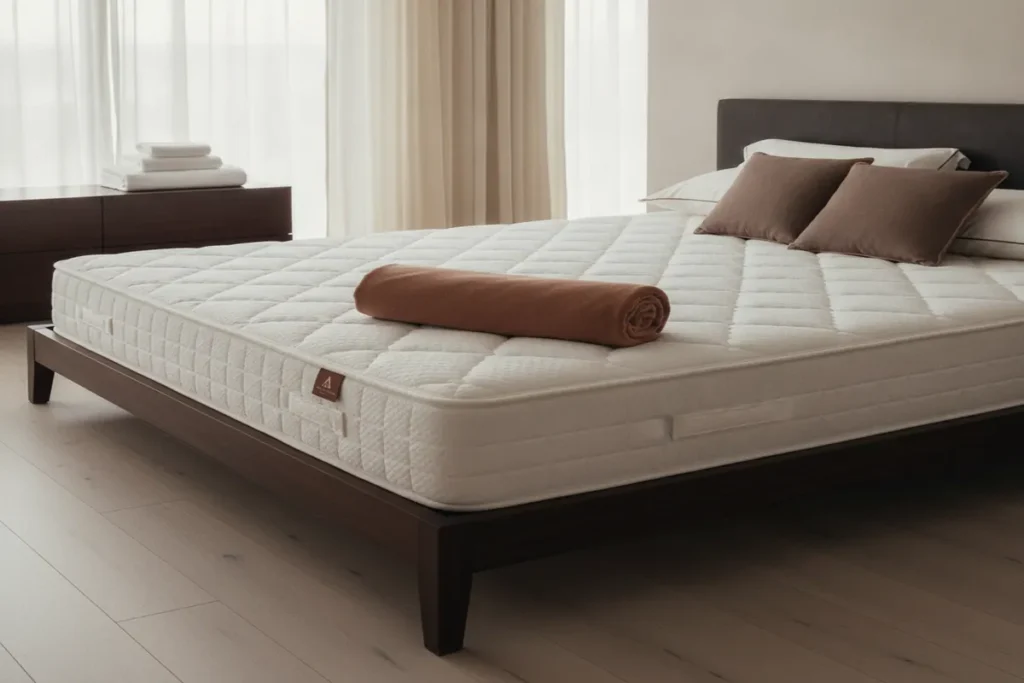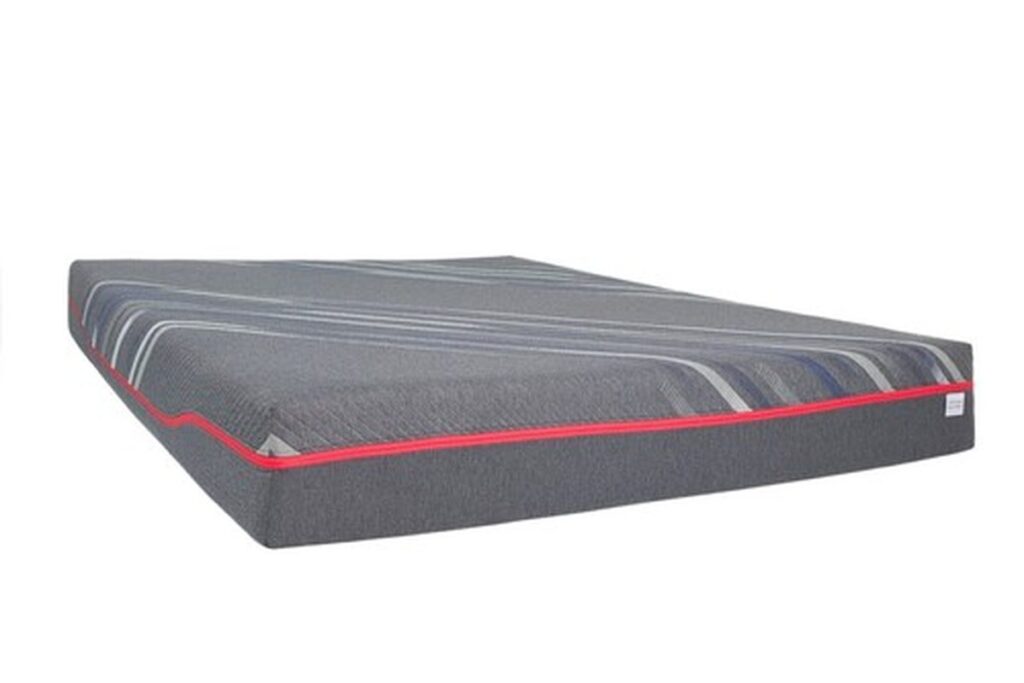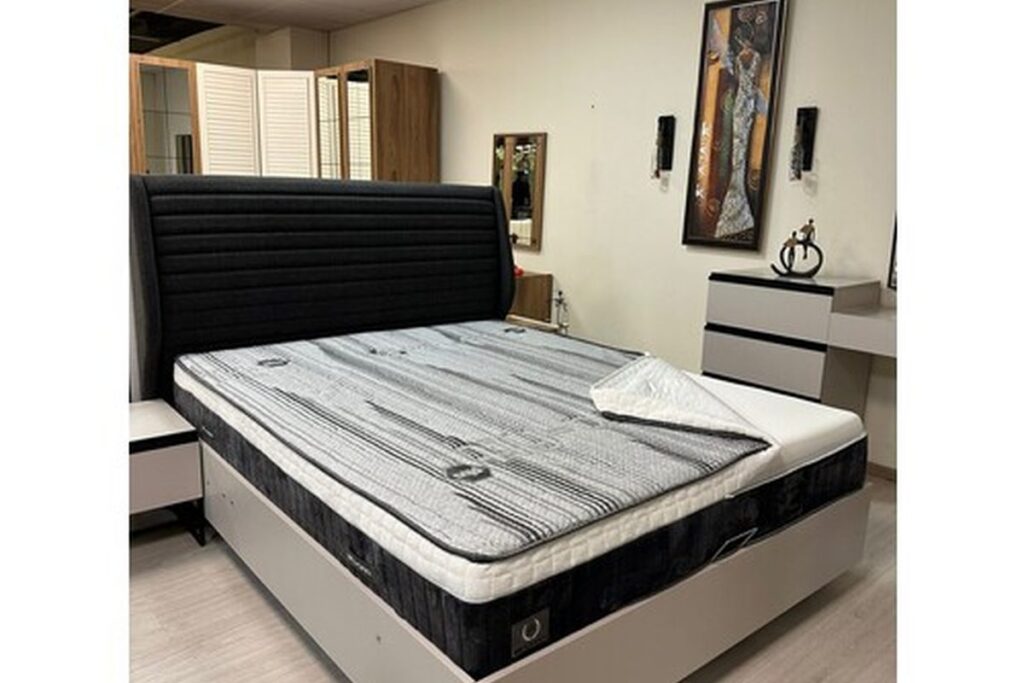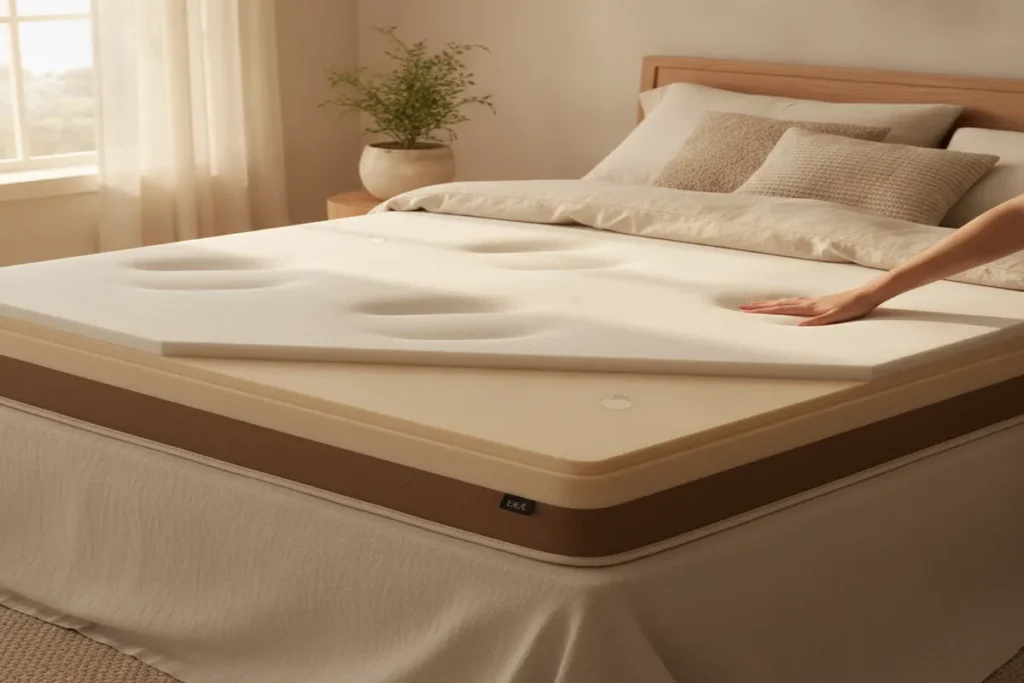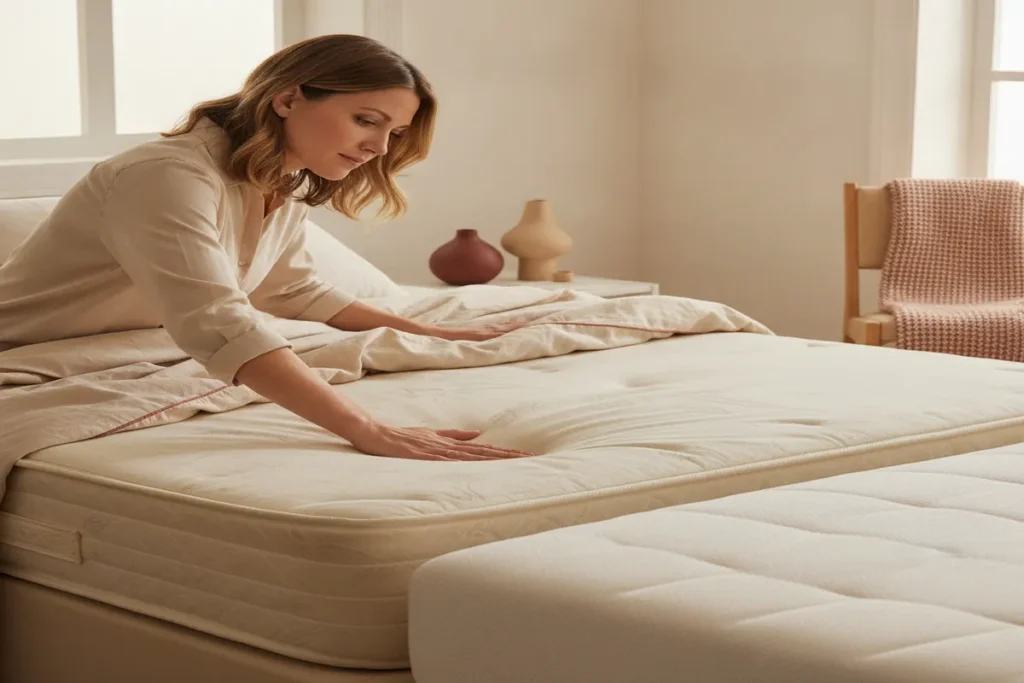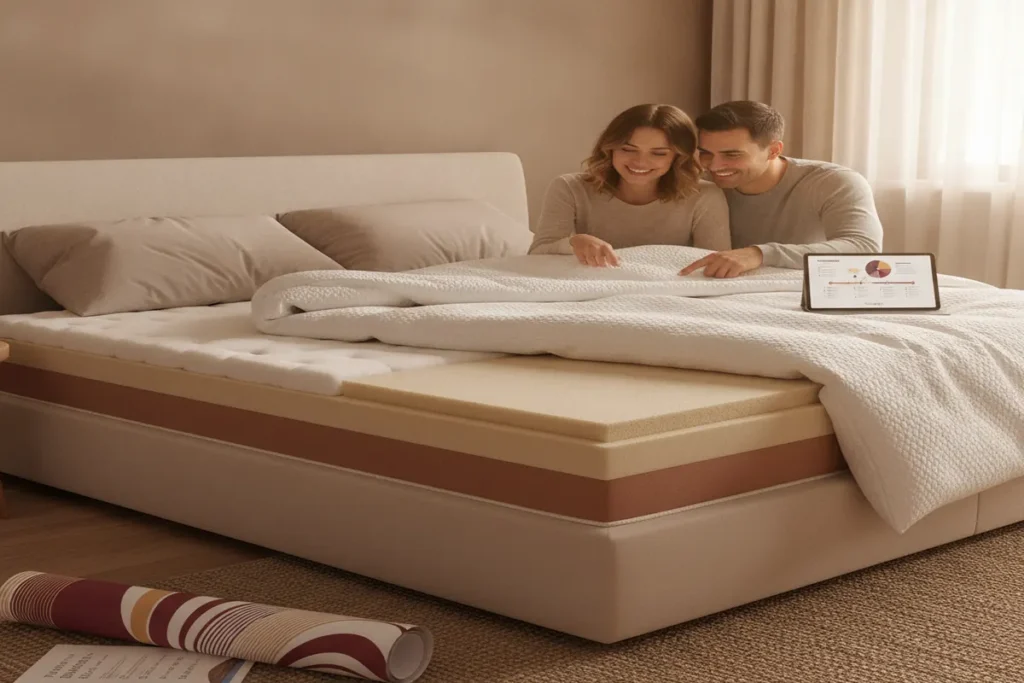

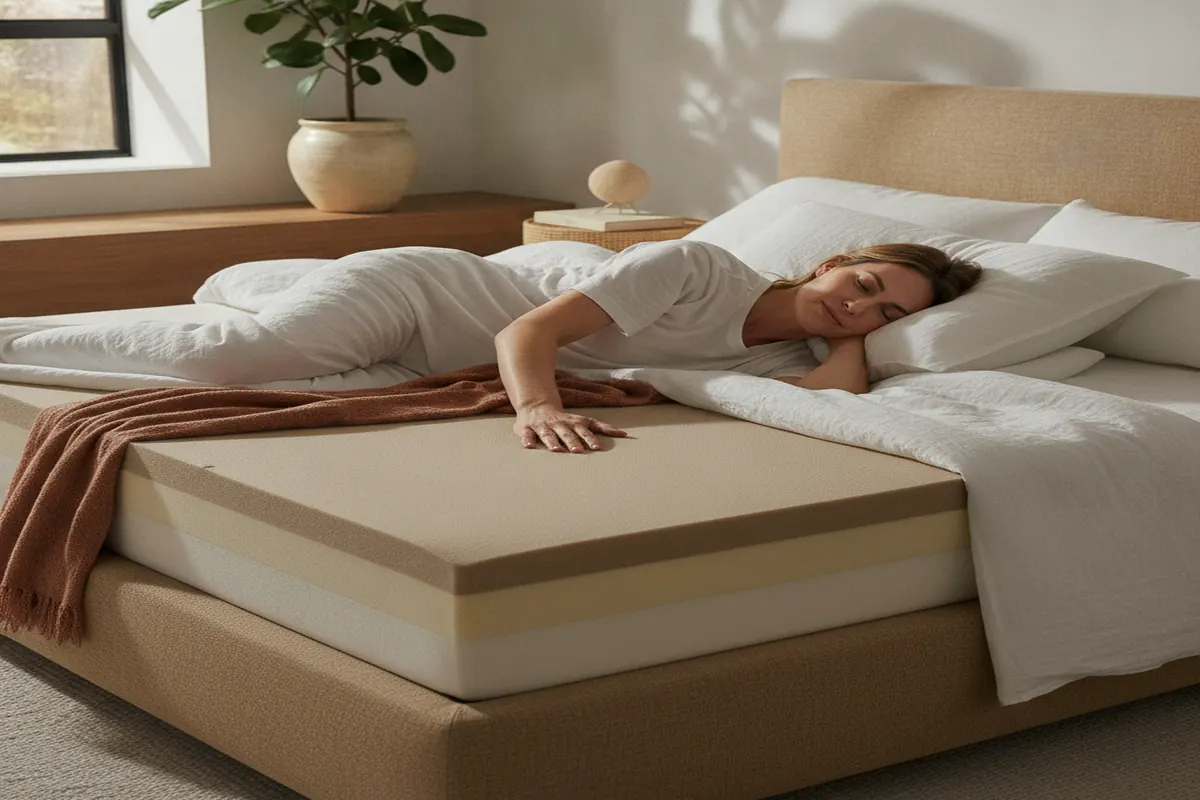
Choosing the right foam mattress is crucial for achieving restorative sleep, supporting spinal alignment, and ensuring long-term comfort and health. It involves understanding various foam types like memory foam, latex, and high-density polyfoam, and then aligning their unique properties – such as contouring, responsiveness, and breathability – with your individual sleep preferences, body weight, and any specific support needs. A well-chosen foam mattress can significantly alleviate pressure points, reduce motion transfer, and contribute to overall well-being, making it a foundational investment in your daily life.
Quick Summary
- Understand different foam types (memory, latex, polyfoam) and their unique benefits
- Prioritize support, comfort, and durability based on your sleep position and body type
- Evaluate density and ILD for firmness and longevity
- Avoid common buying mistakes like overlooking trial periods and warranties
How to Choose the Right Foam Mattress for Your Best Sleep?
Selecting the ideal foam mattress is more than just picking a soft surface; it’s about making an informed decision that impacts your nightly rest and long-term health. The “right” mattress is subjective, tailored to your unique body, sleep habits, and preferences. It’s a delicate balance between supportive firmness, pressure-relieving comfort, and enduring quality. When you choose correctly, you invest in years of restorative sleep, reduced aches, and improved energy levels. Conversely, a poor choice can lead to discomfort, disrupted sleep, and even chronic pain.
Here’s why choosing the right foam mattress matters profoundly:
-
Optimal Spinal Alignment: A good foam mattress supports the natural curve of your spine, preventing sagging or excessive arching. This alignment reduces back pain and stiffness.
-
Pressure Point Relief: Foam’s ability to contour to your body distributes weight evenly, alleviating pressure on sensitive areas like hips, shoulders, and knees, which is especially beneficial for side sleepers.
-
Reduced Motion Transfer: Foam mattresses excel at isolating motion, meaning you’re less likely to be disturbed by a partner’s movements during the night.
-
Durability and Longevity: High-quality foam, particularly from reputable manufacturers like Sinyora Yatak, is engineered to retain its shape and supportive properties for many years, offering excellent value.
-
Hypoallergenic Properties: Many foam types, especially natural latex, are naturally resistant to dust mites, mold, and mildew, making them a healthier choice for allergy sufferers.
-
Improved Sleep Quality: Ultimately, a comfortable and supportive mattress leads to deeper, more uninterrupted sleep, which directly translates to better mood, cognitive function, and overall health.
Understanding Foam Mattress Types: Which One is Right for You?
The world of foam mattresses is diverse, offering distinct materials, each with unique characteristics that cater to different needs. Understanding these differences is the first critical step in choosing the right foam mattress. From the cloud-like embrace of memory foam to the buoyant support of latex, and the foundational stability of polyfoam, your choice significantly impacts your sleep experience.
Memory Foam Mattresses: The Contouring Comfort
Memory foam, or viscoelastic foam, is renowned for its ability to soften and conform to your body in response to heat and pressure. This creates a custom cradle that distributes your weight evenly, alleviating pressure points. It’s an excellent choice for those seeking deep contouring and superior motion isolation.
-
Pros:
- Exceptional pressure relief, ideal for side sleepers and those with joint pain.
- Excellent motion isolation, minimizing disturbances from a partner.
- Conforms closely to the body, providing a “hugged” sensation.
-
Cons:
- Can retain body heat, though newer open-cell or gel-infused versions mitigate this.
- Slower response time, making it harder to change positions.
- May have an initial “off-gassing” odor (usually dissipates quickly).
-
Best For: Side sleepers, individuals with chronic pain, couples, those who prefer a deeply conforming feel.
Latex Foam Mattresses: Responsive Support with a Natural Touch
Latex foam is celebrated for its buoyancy, responsiveness, and durability. Available in natural, synthetic, or blended forms, natural latex (derived from rubber trees) is particularly popular for its eco-friendly credentials and hypoallergenic properties. It offers a more “on top of the mattress” feel compared to memory foam.
-
Pros:
- Highly durable and long-lasting.
- Responsive and bouncy, making it easier to move around.
- Excellent breathability, sleeping cooler than traditional memory foam.
- Naturally hypoallergenic and resistant to dust mites.
-
Cons:
- Can be heavier and more expensive, especially natural latex.
- Less contouring than memory foam, offering a different type of pressure relief.
-
Best For: Back and stomach sleepers, hot sleepers, allergy sufferers, those seeking an eco-friendly option, individuals who prefer a responsive feel.
Polyfoam Mattresses: Versatile and Supportive
Polyfoam, or polyurethane foam, is a synthetic foam often used as a base layer in many foam mattresses due to its stability and cost-effectiveness. High-density polyfoam can also be used in comfort layers, offering a firmer, more generalized support than memory or latex foam.
-
Pros:
- Good foundational support.
- More affordable than memory or latex foam.
- Versatile, can be engineered to various firmness levels.
-
Cons:
- Generally less durable than latex or high-density memory foam.
- Less contouring and pressure relief compared to specialized foams.
-
Best For: Budget-conscious buyers, guest rooms, those needing a firm base, or as a support layer beneath other foams.
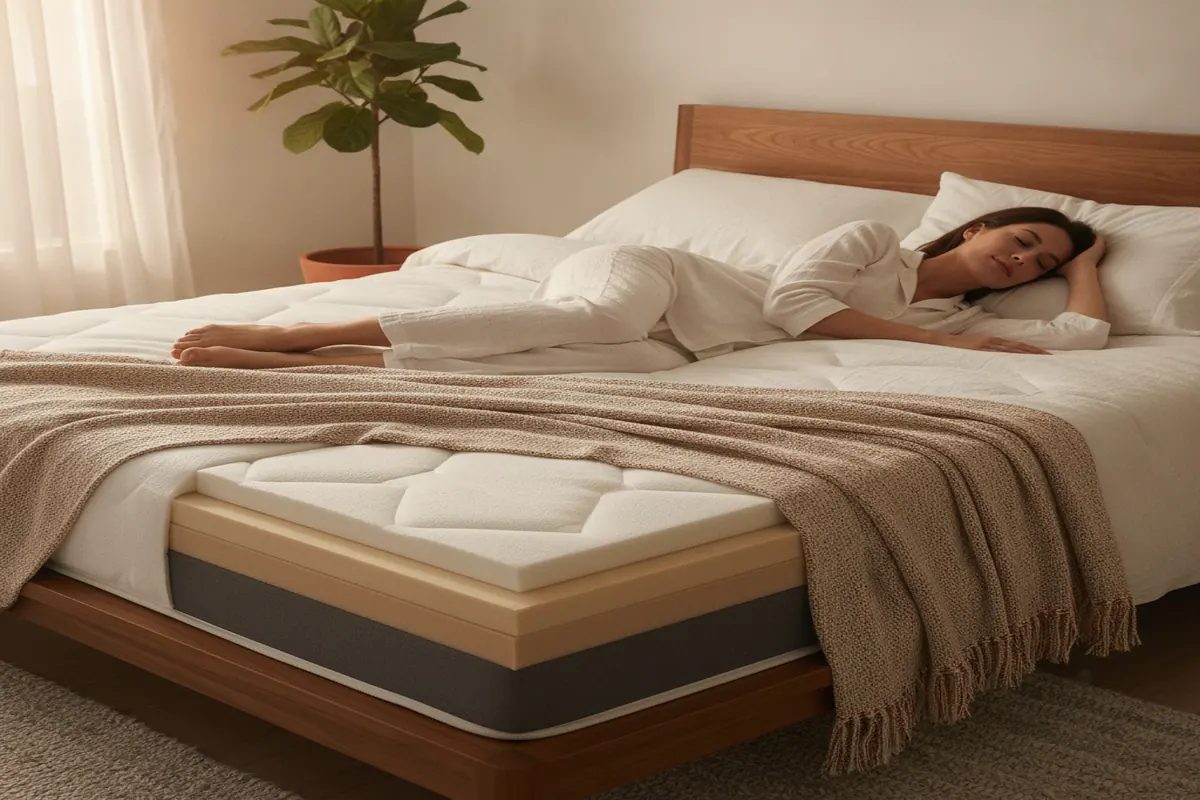
Here’s a comparison of the main foam types:
Key Criteria for Choosing the Right Foam Mattress
Beyond understanding foam types, several critical criteria will guide you in choosing a foam mattress that truly meets your individual needs. These factors collectively determine the comfort, support, and longevity of your investment.
-
Firmness Level: This is perhaps the most subjective yet crucial factor. Firmness is typically rated on a scale of 1 to 10 (1 being extremely soft, 10 being extremely firm).
- Side Sleepers: Often require softer to medium-firm mattresses (3-6) to allow hips and shoulders to sink in, maintaining spinal alignment and relieving pressure points.
- Back Sleepers: Usually prefer medium-firm to firm mattresses (5-7) for a balance of support and contouring that keeps the spine naturally aligned.
- Stomach Sleepers: Generally need firmer mattresses (6-8) to prevent their hips from sinking too deeply, which can strain the lower back.
- Heavier Individuals: Often benefit from firmer mattresses (7-9) or those with higher density foam to ensure adequate support and prevent premature sagging.
- Lighter Individuals: May find comfort on softer mattresses (3-5) as they don’t exert enough pressure to activate the support layers of firmer beds.
-
Foam Density (Durability & Support): Density is measured in pounds per cubic foot (PCF) and is a key indicator of a foam’s quality, durability, and support.
- Low Density (under 3.5 PCF): Less durable, quicker to break down, generally softer.
- Medium Density (3.5 – 5.0 PCF): Good balance of comfort and durability, common in quality mattresses.
- High Density (over 5.0 PCF): Most durable, offers superior support and longevity, less prone to impressions. Sinyora Yatak often utilizes high-density foams in its Mattress Collection for enhanced durability.
-
Indentation Load Deflection (ILD) / Indentation Force Deflection (IFD) (Firmness): ILD/IFD measures how much force it takes to compress a foam sample by 25% of its original thickness. A higher ILD indicates a firmer foam.
- Lower ILD (10-20): Very soft
- Medium ILD (20-30): Medium firmness
- Higher ILD (30+): Firm to very firm
- This metric is more technical but can be useful for comparing foams from different manufacturers if available.
-
Breathability and Temperature Regulation: Foam mattresses, especially traditional memory foam, have a reputation for sleeping hot. Look for features designed to mitigate this:
- Open-Cell Foam: Engineered with a more porous structure to allow better airflow.
- Gel Infusions: Gel beads or swirls within the foam absorb and dissipate heat.
- Copper Infusions: Copper is a natural conductor that helps draw heat away from the body.
- Phase-Change Materials: Fabrics or foams treated with PCM can absorb and release heat to maintain a consistent temperature.
- Latex Foam: Naturally more breathable and sleeps cooler due to its open-cell structure.
-
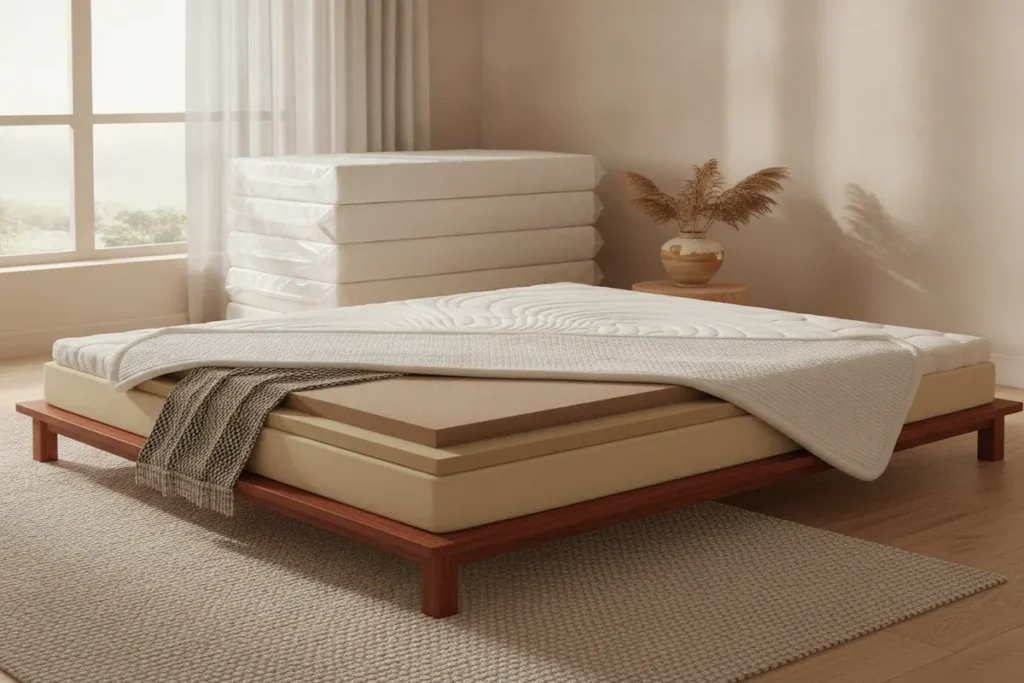
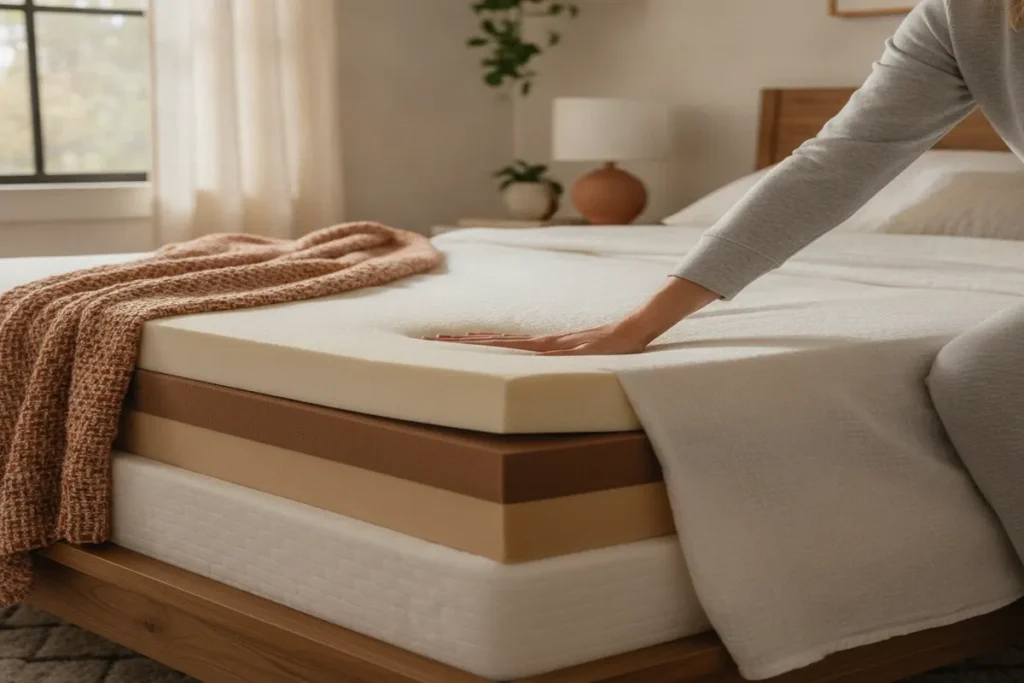
Thickness of Comfort and Support Layers: A well-designed foam mattress typically has multiple layers.
- Comfort Layer: The top layer(s) are usually softer, lower density foams (like memory foam or soft latex) designed for pressure relief and contouring.
- Support Layer (Base Layer): The bottom layer is typically a high-density polyfoam or firmer latex, providing the foundational support and durability for the entire mattress. The thickness and composition of these layers are crucial for balanced comfort and support.
-
Edge Support: Important for those who use the entire surface of the mattress or sit on the edge. Strong edge support prevents the feeling of rolling off and extends the usable sleep surface. This is often achieved with firmer foam perimeters or specific construction techniques.
Common Pitfalls When Selecting a Foam Mattress and How to Avoid Them
Even with all the information available, it’s easy to make mistakes when choosing a foam mattress. Being aware of these common pitfalls can save you from buyer’s remorse and ensure you make a choice you’ll be happy with for years to come.
-
Ignoring Your Sleep Position: This is one of the most frequent errors. A mattress that’s perfect for a side sleeper (softer) will likely be detrimental to a stomach sleeper (needs firmer).
- Avoid It: Clearly identify your dominant sleep position (side, back, stomach, combination) and research firmness recommendations specifically for that position. Don’t just go by what feels good for a few minutes.
-
Overlooking Body Weight: Mattress performance is highly dependent on the sleeper’s weight. A mattress that feels firm to a lighter person might feel soft and unsupportive to a heavier individual.
- Avoid It: Consider your and your partner’s body weights. Heavier individuals generally need firmer, higher-density foams to prevent sagging and ensure longevity. Lighter individuals might prefer softer options to get adequate pressure relief.
-
Prioritizing Price Over Quality: While budget is a factor, opting for the cheapest foam mattress can lead to rapid deterioration, poor support, and a short lifespan.
- Avoid It: View a mattress as a long-term investment in your health. Look for certifications (e.g., CertiPUR-US for foam, GOLS for organic latex) and reputable brands like Sinyora Yatak, known for their Turkish Foam Mattress quality. Understand that higher density often means higher quality and durability.
-
Not Testing the Mattress Properly (or at all): Lying on a mattress for 5 minutes in a showroom isn’t enough. Online purchases require a generous trial period.
- Avoid It: If buying in-store, spend at least 15-20 minutes on the mattress in your typical sleep position. If buying online, ensure the company offers a risk-free trial period (e.g., 90-120 nights) and understand their Return Policy before purchasing.
-
Forgetting About Motion Isolation (for couples): If you share a bed, a bouncy mattress can lead to disturbed sleep every time your partner moves.
- Avoid It: Memory foam and latex foam are generally excellent at motion isolation. Pay attention to reviews or test it with a partner if possible.
-
Ignoring Warranty and Customer Service: A robust warranty protects your investment, and good customer service is invaluable if issues arise.
- Avoid It: Always check the Warranty Information and understand what it covers (e.g., indentations, manufacturing defects). Research the company’s reputation for Customer Service and ease of contact.
-
Not Considering Off-Gassing: Some new foam mattresses can emit a chemical smell (VOCs) when first unboxed. While generally harmless, it can be unpleasant.
- Avoid It: Look for CertiPUR-US certified foams, which are made without harmful chemicals and have low VOC emissions. Plan to air out your new mattress in a well-ventilated room for a few days before sleeping on it.
Matching Foam Mattresses to Different Sleep Needs and Body Types
The “best” foam mattress is a personalized choice, heavily influenced by your unique physiology and sleep habits. Recognizing how different foam properties interact with various body types and sleep positions is crucial for finding your perfect match.
For Side Sleepers
Side sleepers need significant pressure relief at the shoulders and hips to prevent misalignment and pain.
-
Ideal Foam: Softer to medium-firm memory foam mattress or softer latex foam mattress.
-
Why: Memory foam excels at contouring deeply, cradling pressure points. Softer latex offers buoyant pressure relief without the deep sink.
-
Considerations: Look for a thicker comfort layer (3-4 inches) of responsive foam. Good Visco Pillow or Latex Pillows Neck Support are also vital for proper head and neck alignment.
-
Sinyora Yatak Recommendation: Our Turkish Mattress for Side Sleepers are specifically engineered with targeted pressure relief zones and plush comfort layers.
For Back Sleepers
Back sleepers require a balance of support and contouring to maintain the natural S-curve of the spine, preventing the lower back from arching or sagging.
-
Ideal Foam: Medium-firm memory foam or latex foam.
-
Why: These foams provide gentle contouring to fill the lumbar curve while offering robust support to keep the spine aligned.
-
Considerations: A mattress that is too soft will cause the hips to sink too deeply, while one that is too firm will not provide enough contouring.
-
Sinyora Yatak Recommendation: Consider our Visco Foam Mattress options, which offer excellent spinal support tailored for back sleepers.
For Stomach Sleepers
Stomach sleepers need a firmer surface to prevent their hips from sinking too far into the mattress, which can lead to an uncomfortable arch in the lower back and potential pain.
-
Ideal Foam: Medium-firm to firm latex foam or high-density polyfoam with a thin comfort layer.
-
Why: These foams offer a more “on top of” feel, providing the necessary support to keep the body in a relatively flat plane.
-
Considerations: Avoid overly soft mattresses that allow the midsection to sink.
-
Sinyora Yatak Recommendation: Our firmer Foam Mattress options or those with a robust Construction Mattress base can provide the necessary support.
For Combination Sleepers
Combination sleepers change positions frequently throughout the night and need a mattress that is responsive enough to allow easy movement without sacrificing support or pressure relief.
-
Ideal Foam: Medium-firm latex foam or a hybrid mattress with a foam comfort layer over Pocket Coils Mattress.
-
Why: Latex’s responsiveness makes it easy to shift positions, while still offering excellent comfort. Hybrids combine the best of both worlds.
-
Considerations: Look for a balanced feel that is neither too soft nor too firm.
For Heavier Individuals (Over 230 lbs)
Heavier individuals need more robust support and higher-density foams to prevent premature sagging and ensure adequate spinal alignment.
-
Ideal Foam: Firm, high-density latex foam or high-density memory foam (5 PCF or higher), often paired with a strong support core.
-
Why: Higher density foams are more durable and resist compression better, providing consistent support over time.
-
Considerations: Pay close attention to the base layer’s construction and overall mattress thickness (often 10 inches or more).
-
Sinyora Yatak Recommendation: Explore our more robust Sponge Topper Mattress options or those designed with extra support, which often feature high-density foams for superior longevity.
For Lighter Individuals (Under 130 lbs)
Lighter individuals may not exert enough pressure to fully activate the support layers of very firm mattresses, leading to inadequate pressure relief.
-
Ideal Foam: Softer to medium-soft memory foam or softer latex foam.
-
Why: These foams allow lighter bodies to sink just enough to experience pressure relief and contouring without bottoming out.
-
Considerations: A mattress that is too firm can feel like sleeping on a board.
The Importance of Durability and Support in Your Foam Mattress Selection
When choosing a foam mattress, durability and support are not just buzzwords; they are fundamental pillars that dictate the long-term value, comfort, and health benefits of your purchase. A mattress might feel great initially, but if it lacks these qualities, its performance will quickly diminish, leading to discomfort and the need for premature replacement.
Why Durability Matters: A Long-Term Investment
Durability refers to a mattress’s ability to maintain its shape, comfort, and supportive properties over time. For foam mattresses, this is primarily dictated by the density of the foam.
-
Longevity: A durable foam mattress, like those crafted with high-quality materials by Sinyora Yatak, means your investment lasts longer. Instead of needing replacement every 3-5 years, a high-quality foam mattress can comfortably last 7-10 years, or even longer for latex. This translates to significant cost savings over time.
-
Consistent Comfort: A durable mattress resists sagging and developing permanent body impressions. This ensures that the comfort and support you experience on day one remain consistent throughout its lifespan, preventing discomfort or pressure points that arise from worn-out areas.
-
Hygienic Benefits: As mattresses age and break down, they can become breeding grounds for dust mites and allergens. A durable mattress maintains its integrity, offering a cleaner, healthier sleep environment for longer.
When evaluating durability, always inquire about the foam’s density (PCF) and the overall construction quality. Turkish mattresses, for instance, are often known for their robust build and high-quality materials, making them a durable choice. Learn more about Turkish Mattress Lifespan on our blog.
Why Support is Non-Negotiable: Your Spinal Health
Support is the mattress’s ability to keep your spine in a neutral, aligned position, regardless of your sleep posture. It’s distinct from firmness, though often related. A mattress can be soft yet supportive, or firm and unsupportive if the underlying layers aren’t designed correctly.
-
Spinal Alignment: Proper support prevents the spine from curving unnaturally, which is a primary cause of back pain, neck stiffness, and other musculoskeletal issues. A well-supported spine allows muscles to relax fully, facilitating deeper, more restorative sleep.
-
Pressure Relief: While comfort layers provide initial pressure relief, the underlying support layers ensure that your body weight is evenly distributed, preventing any single point from bearing excessive pressure. This is crucial for preventing numbness, tingling, and discomfort.
-
Posture Correction: Over time, consistent sleep on a supportive mattress can help correct poor sleep posture habits, promoting overall better body mechanics during waking hours.
-
Energy and Well-being: Waking up without aches and pains is directly linked to a supportive mattress. This translates to increased energy, better mood, and improved concentration throughout your day.
Sinyora Yatak emphasizes the importance of a robust support core in all its foam mattresses, ensuring that whether you choose a Visco Foam Mattress or a Latex Foam Mattress, you receive the foundational support necessary for truly healthy sleep. For those curious about material differences, our Turkish Foam Mattress vs Spring guide offers further insights into how different constructions deliver support.
Practical Steps: A Checklist for Your Foam Mattress Buying Journey
Navigating the options for foam mattresses can feel overwhelming, but a structured approach can simplify the process. Use this checklist as your comprehensive guide to ensure you consider all critical aspects before making your final decision.
-
Assess Your Current Sleep Needs:
- What is your primary sleep position (side, back, stomach, combination)?
- Do you experience any specific pains (lower back, neck, shoulders)?
- Do you sleep hot or cold?
- Do you share your bed, and does motion transfer bother you?
- What is your and your partner’s approximate body weight?
-
Research Foam Mattress Types:
- Memory Foam: For deep contouring, pressure relief, motion isolation.
- Latex Foam: For responsive bounce, natural materials, cooler sleep, durability.
- High-Density Polyfoam: For foundational support, firmer feel, budget-friendliness.
- Consider: Do you prefer the “hug” of memory foam or the “float” of latex?
-
Determine Your Ideal Firmness Level:
- Soft (3-4): Primarily for lighter side sleepers.
- Medium-Soft (4-5): For average-weight side sleepers, lighter back sleepers.
- Medium-Firm (5-7): Most versatile, good for back sleepers, combination sleepers, average-weight individuals.
- Firm (7-8): For stomach sleepers, heavier back sleepers, those who prefer robust support.
- Very Firm (8-9): For heavier individuals, specific medical needs.
-
Evaluate Foam Quality and Construction:
- Density: Look for medium to high-density foams (3.5 PCF+ for memory foam, 4.0 PCF+ for polyfoam, 4.5 PCF+ for latex) for better durability.
- Layers: Understand the thickness and type of each layer (comfort vs. support).
- Certifications: Check for CertiPUR-US (for polyfoam, memory foam) or GOLS/GOTS (for organic latex/textiles) to ensure safety and quality.
- Edge Support: Is it adequate if you use the edges of the bed?
-
Consider Temperature Regulation Features:
- If you sleep hot, look for open-cell memory foam, gel infusions, copper, phase-change materials, or naturally breathable latex.
-
Review Manufacturer Policies:
- Sleep Trial: Ensure a generous trial period (e.g., 90-120 nights) to test the mattress at home.
- Warranty: Understand the terms and duration of the warranty (e.g., 10-20 years) and what it covers.
- Return Policy: Know the process and any associated fees for returns.
- Delivery: What are the delivery options and costs?
-
Set Your Budget:
- Foam mattresses vary widely in price. Determine a realistic budget, but remember that a higher-quality mattress is a long-term investment. Sinyora Yatak offers excellent value, and you can explore How Much Does a Turkish Mattress Cost for insights.
-
Read Reviews and Expert Opinions:
- Look for reviews from people with similar sleep preferences and body types. Pay attention to comments on durability, heat retention, and off-gassing.
- Consult expert buying guides and independent mattress review sites.
-
Don’t Forget Accessories:
- A new mattress might require a new Bed Base and Headboard for proper support.
- Consider a Mattress Topper if you want to fine-tune the feel without replacing the whole mattress (e.g., Visco Topper, Latex Topper).
- Invest in a quality pillow that complements your new mattress and sleep position (e.g., Visko Pillows Neck Support, Latex Pillow (Natural)).
By systematically working through this checklist, you can confidently navigate the complexities of foam mattress selection and make a choice that leads to years of comfortable, supportive sleep.
Expert Insight
“The true value of a foam mattress isn’t just in its initial comfort, but in its ability to maintain that comfort and crucial spinal support over its entire lifespan. Many consumers focus solely on the ‘feel’ in the first few minutes, but a real expert understands that the density of the foam and the quality of its construction are the silent guardians of its long-term performance and your sleep health. Always ask about the foam’s specifications, not just its marketing name.”
— Industry experts confirm that focusing on foam density and material quality is paramount for mattress longevity and consistent support.
Key Terms
-
Foam Mattress: A mattress primarily constructed from various types of foam, such as memory foam, latex foam, or polyurethane foam, without traditional innerspring coils.
-
Memory Foam (Viscoelastic Foam): A type of polyurethane foam that responds to body heat and pressure, conforming closely to the sleeper’s shape for pressure relief and motion isolation.
-
Latex Foam: A resilient foam derived from rubber tree sap (natural) or synthetic materials, known for its buoyancy, durability, and breathability.
-
Polyfoam (Polyurethane Foam): A versatile, petroleum-based foam used in various densities for both comfort and support layers in mattresses.
-
ILD (Indentation Load Deflection): A measurement indicating the firmness of foam; specifically, the amount of force (in pounds) required to compress a 4-inch thick foam sample by 25%. Higher ILD means firmer foam.
-
Foam Density: Measured in pounds per cubic foot (PCF), density indicates the amount of material in a given volume of foam, correlating directly with its durability and support properties.
How Can You Upgrade to More Comfortable Sleep with Sinyora Yatak?
At Sinyora Yatak, we understand that choosing the right foam mattress is a deeply personal journey towards superior sleep. Our commitment to traditional Turkish craftsmanship, combined with advanced foam technology, allows us to offer mattresses that stand out in terms of quality, comfort, and durability. From the contouring embrace of our Visco Foam Mattress to the resilient support of our Latex Foam Mattress, each product in our Mattress Collection is designed with your well-being in mind.
Whether you’re a side sleeper needing targeted pressure relief, a back sleeper seeking optimal spinal alignment, or simply looking for a mattress that promises a cooler, more refreshing night’s rest, Sinyora Yatak has a solution. We meticulously select high-density, CertiPUR-US certified foams and ethically sourced latex to ensure not just immediate comfort, but also exceptional longevity and a healthy sleep environment.
Explore our Shop All Products to discover our comprehensive range, including specialized options like the 4 Seasons Bed for year-round comfort, or our Hotel Mattress line for an unparalleled luxury experience at home. We invite you to experience the Sinyora Yatak difference – where Turkish heritage meets modern sleep science, providing you with the foundation for truly restorative sleep. For any questions, our dedicated Customer Service team is ready to assist you.
Frequently Asked Questions
Q: What is the main difference between memory foam and latex foam?
Q: How do I know what firmness level is right for me?
Q: Do foam mattresses sleep hot?
Q: How long does a good quality foam mattress last?
Q: Is off-gassing normal with new foam mattresses?
Q: Can a foam mattress help with back pain?
Help: FAQs · Sleep Science · Sleep Resources · Privacy Policy