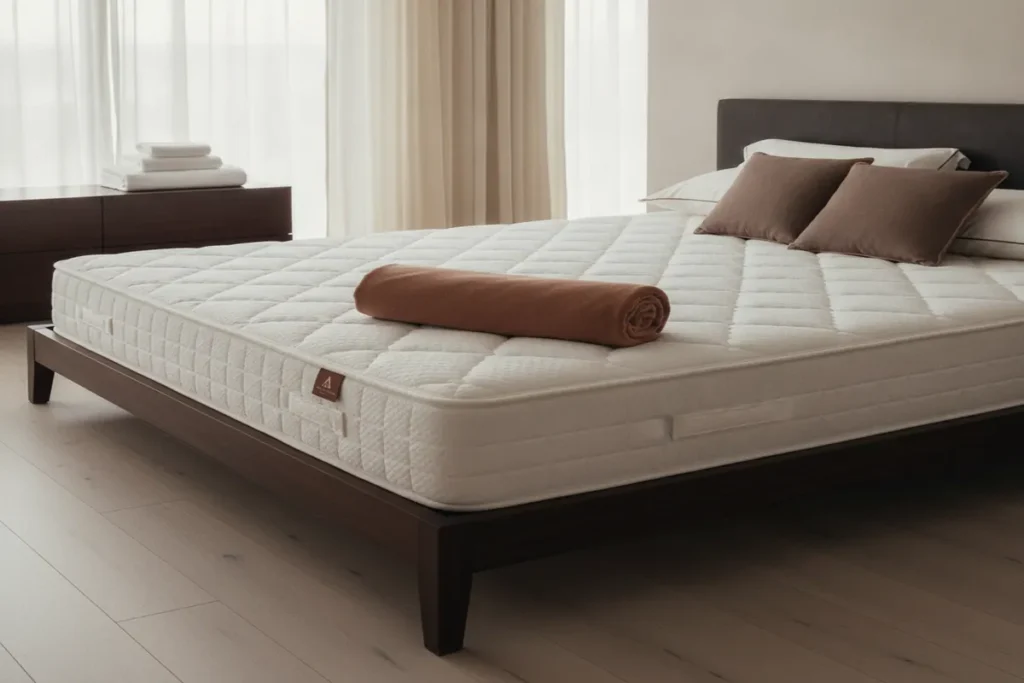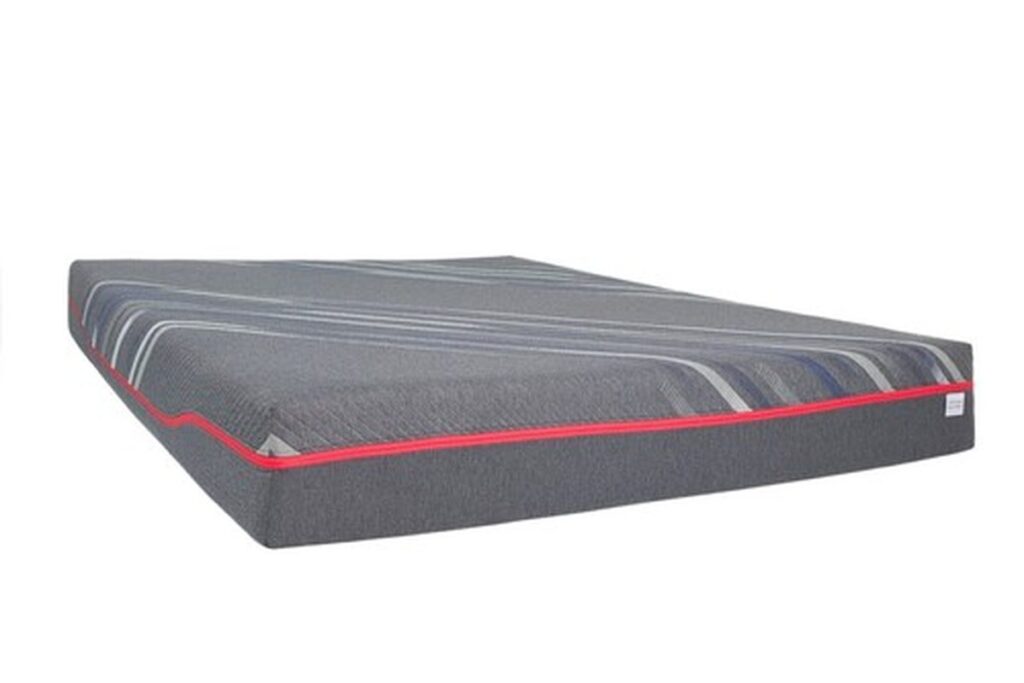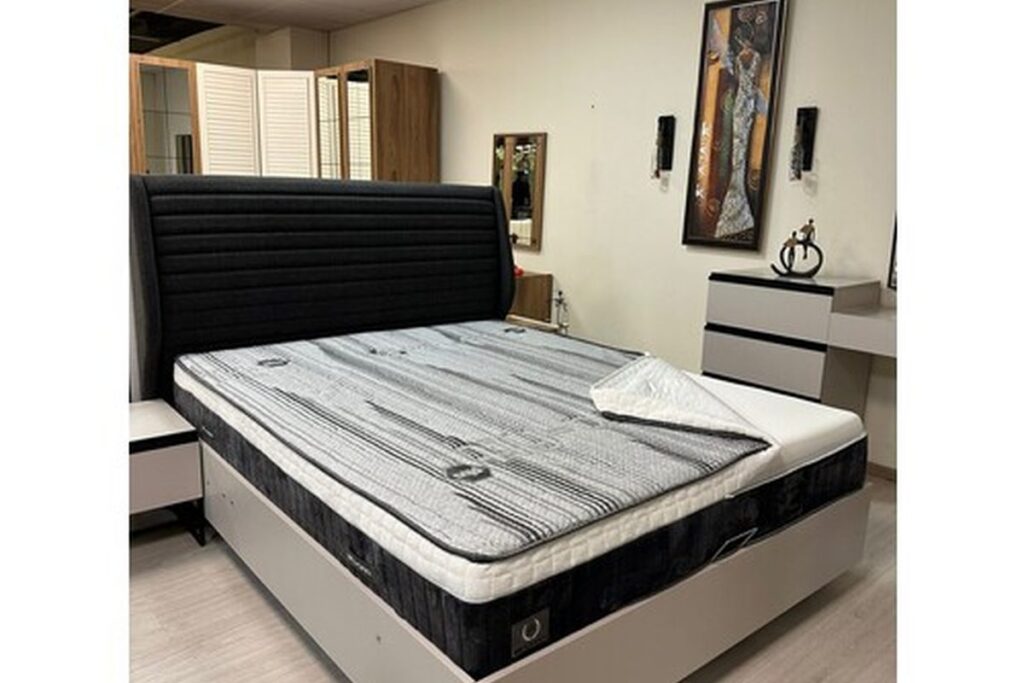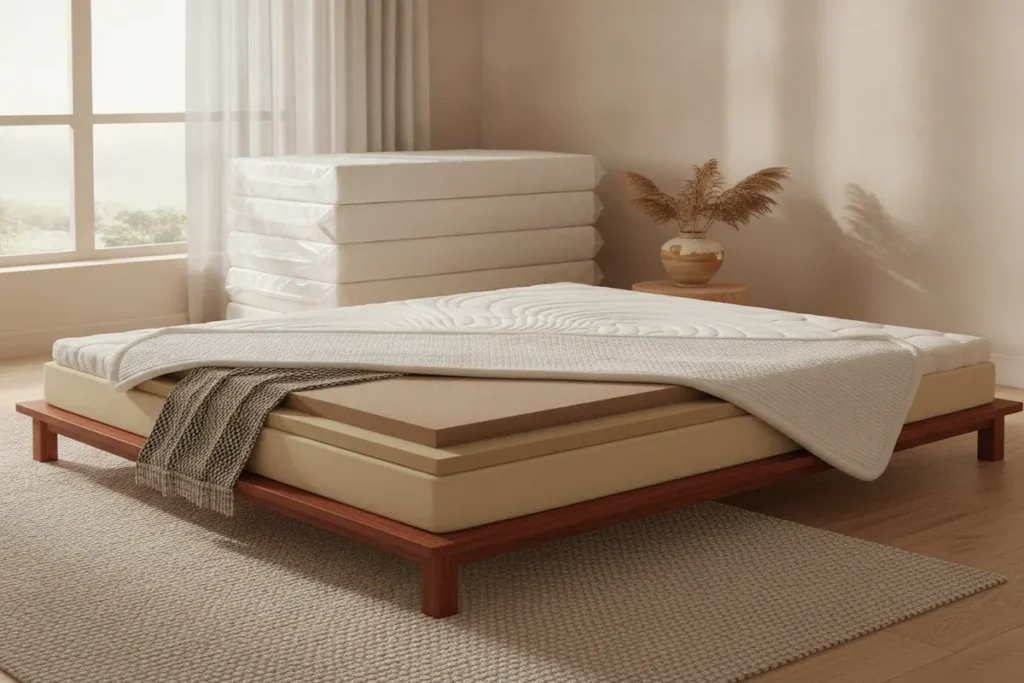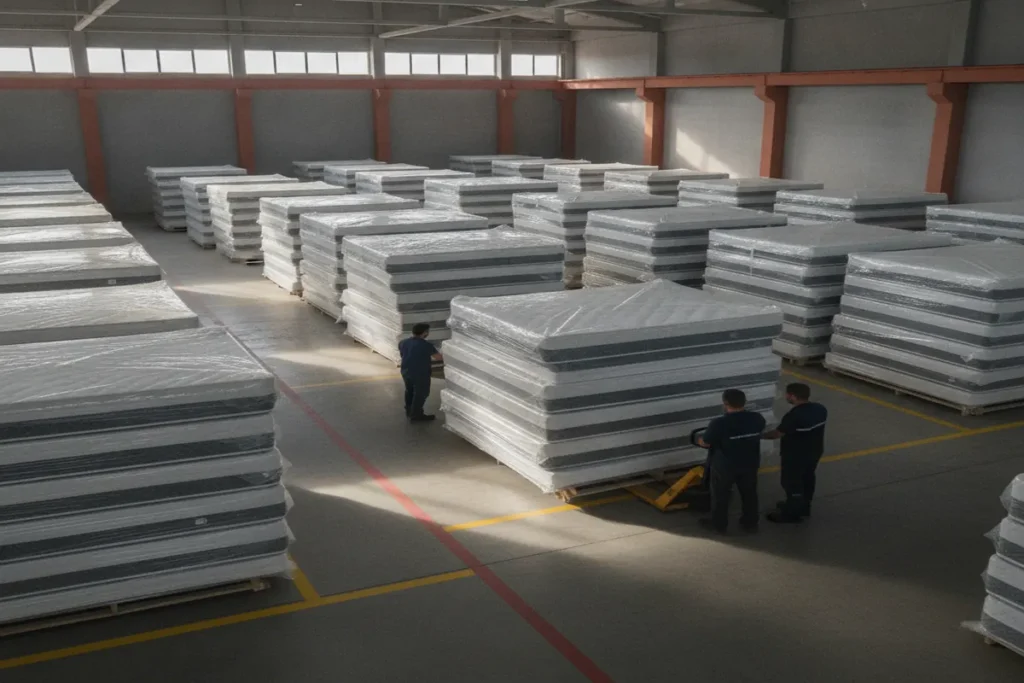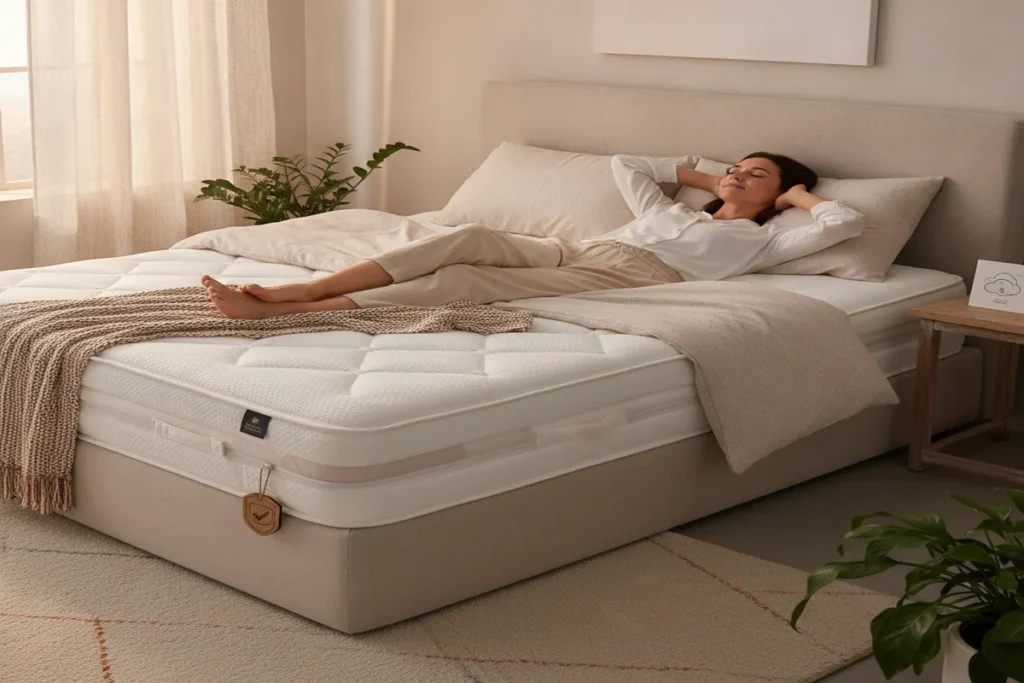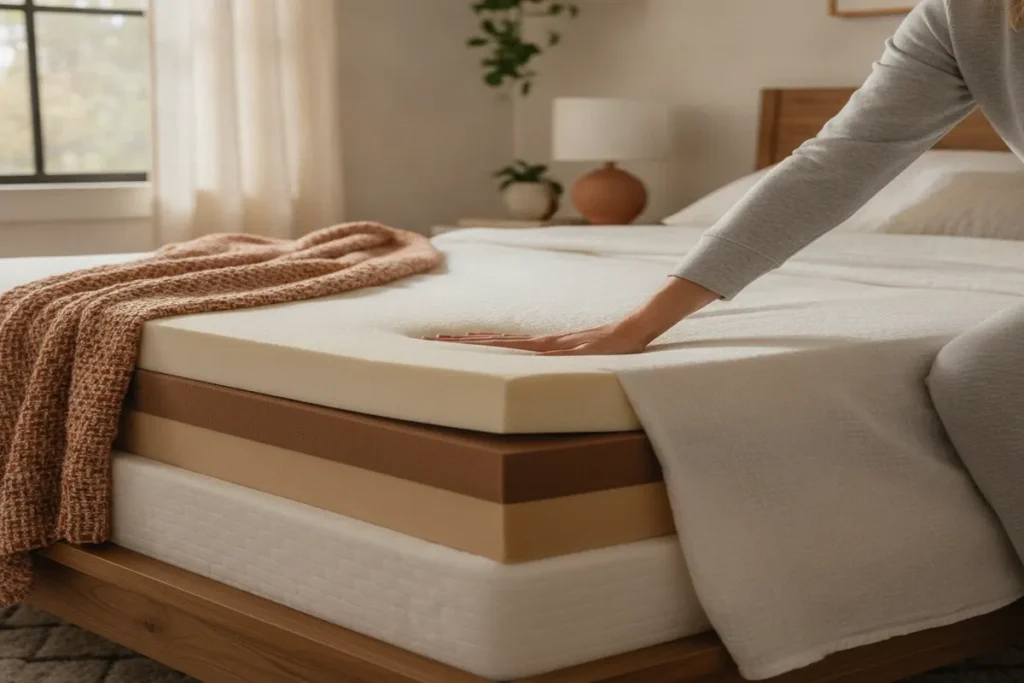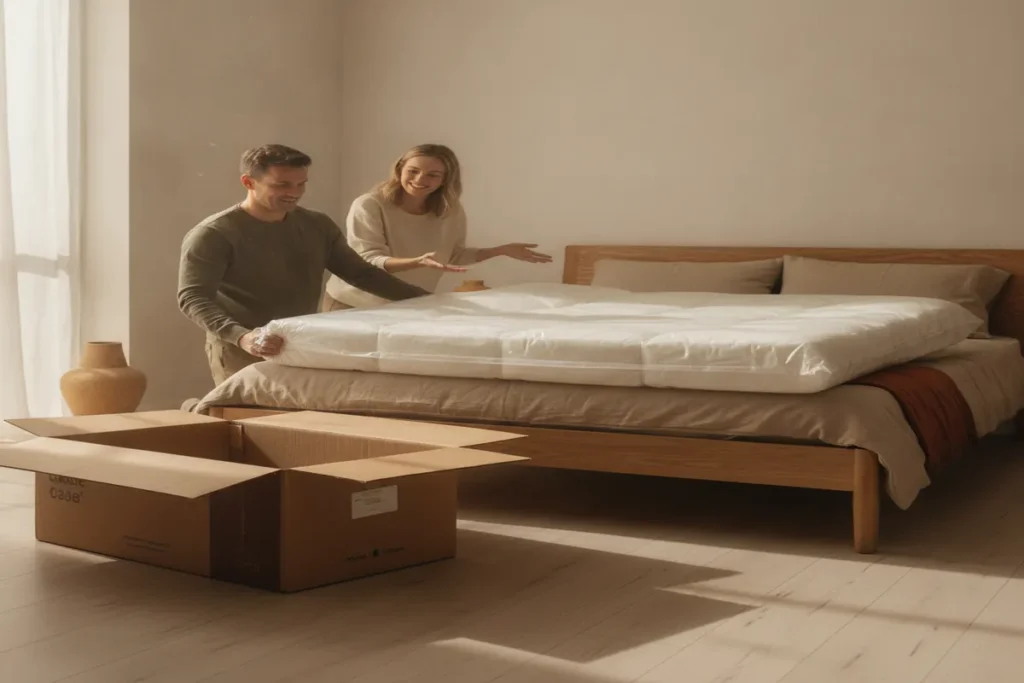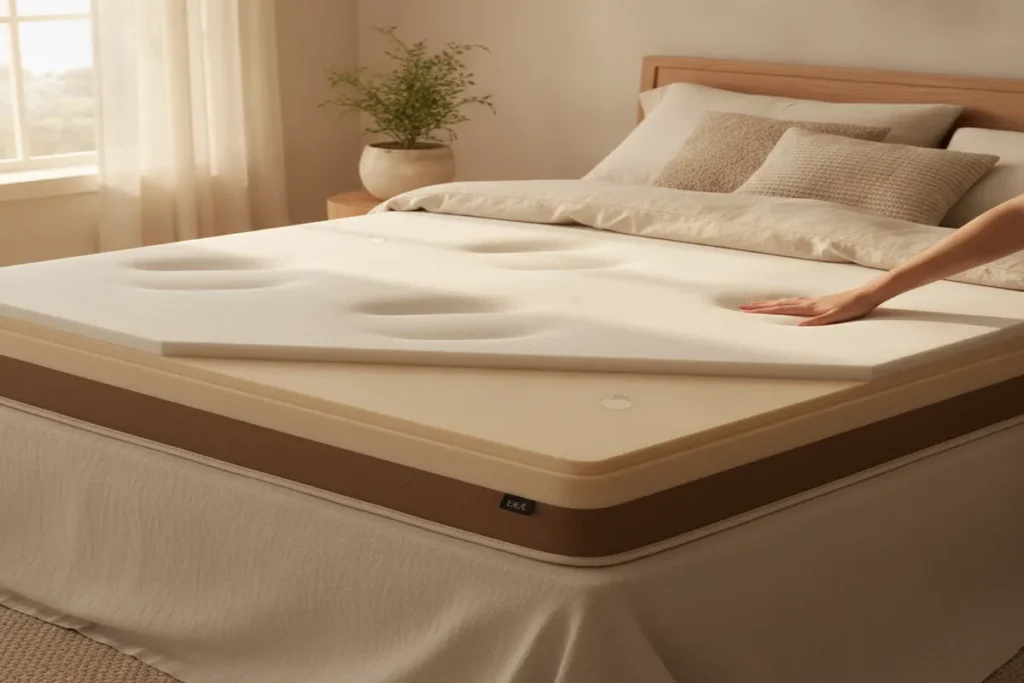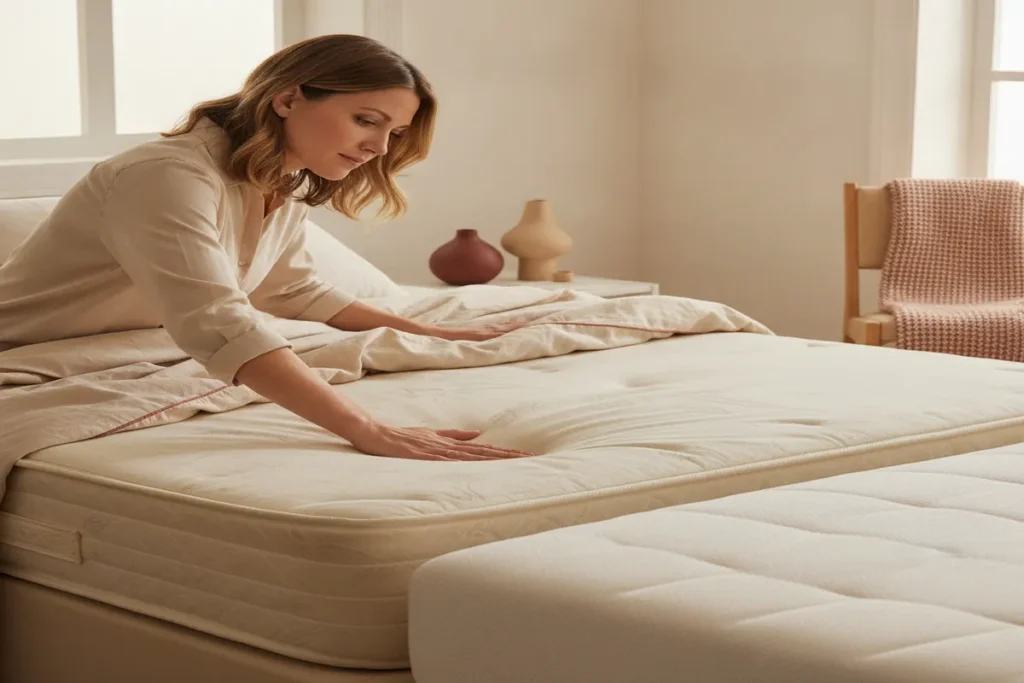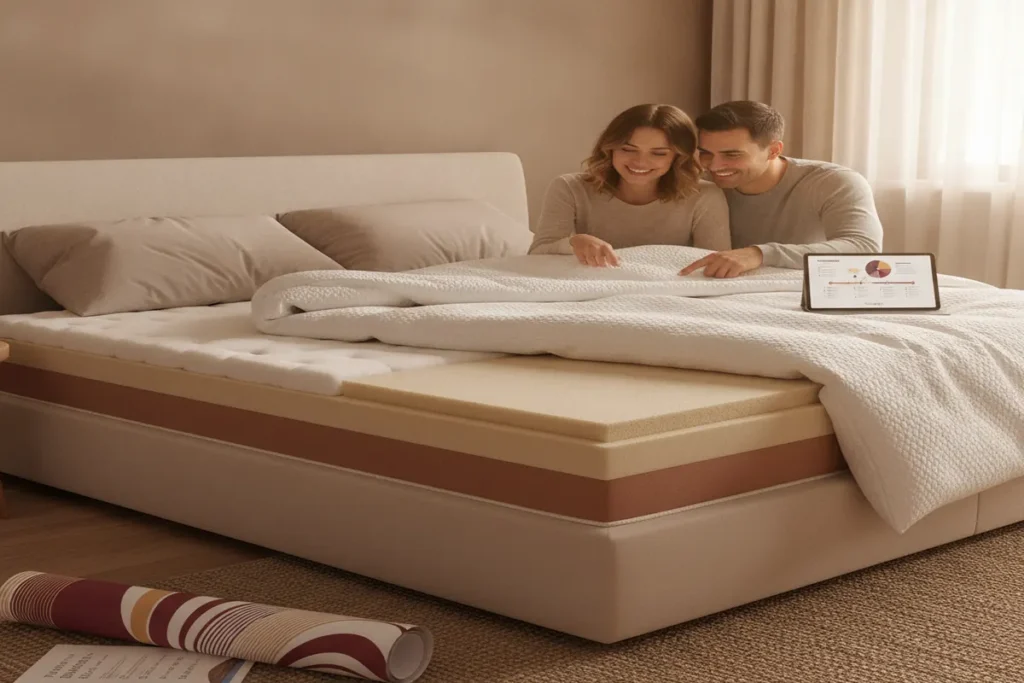

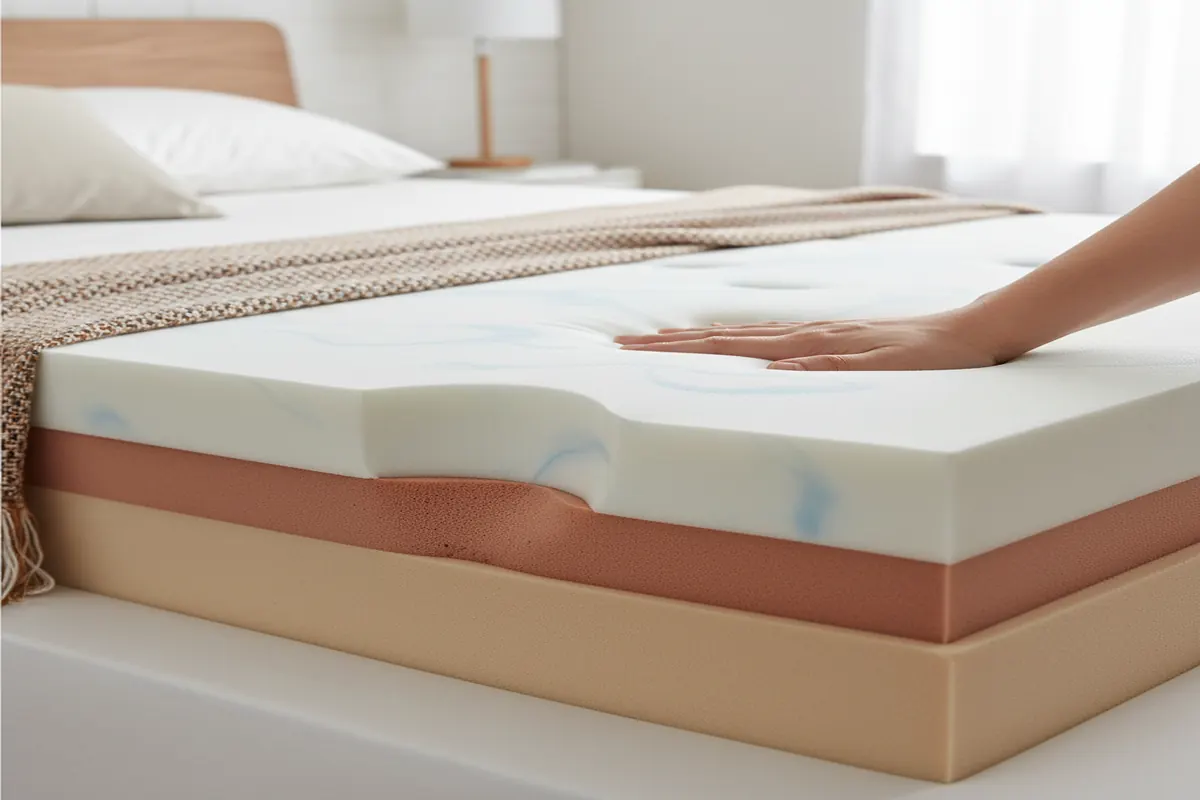
Foam mattress comfort layers are the uppermost sections of a foam mattress, strategically engineered to provide immediate pressure relief, contouring, and a plush or responsive feel for the sleeper. These layers work in concert with deeper transition layers and the foundational support core to distribute body weight, alleviate pressure points, and enhance overall sleep quality by cradling the body and promoting spinal alignment. Their composition, density, and thickness are paramount in determining a mattress’s unique feel, durability, and suitability for various sleep preferences and body types.
Quick Summary
- Foam mattress comfort layers are the top sections of a mattress, designed for pressure relief and contouring
- they significantly influence feel, support, and sleep quality
- common types include memory foam, polyfoam, and latex, each offering distinct characteristics
- selecting the right comfort layers depends on sleep position, body type, and desired firmness
What Exactly Are Foam Mattress Comfort Layers and Why Do They Matter?
At the heart of every comfortable foam mattress lies its sophisticated layering system, with the comfort layers taking center stage. These are the softest, most pliable layers positioned directly beneath the mattress cover, designed for direct interaction with your body. Their primary purpose is not just softness, but to meticulously cushion the body, absorb impact, and prevent pressure points from developing, particularly around the shoulders, hips, and knees.
Think of comfort layers as the “sensory experience” of your mattress. They dictate the initial feel—whether it’s a deep hug, a gentle cradle, or a buoyant lift. Beyond mere comfort, these layers are critical for:
-
Pressure Relief: By conforming to the unique curves of your body, comfort layers distribute weight evenly, reducing stress on sensitive areas and promoting better blood circulation. This is especially vital for side sleepers and individuals with joint pain.
-
Contouring and Support: While not the primary support mechanism, comfort layers contribute significantly to spinal alignment by filling in the gaps around the lumbar region and shoulders, ensuring the spine remains in a neutral position.
-
Motion Isolation: High-quality foam comfort layers, particularly memory foam, excel at absorbing movement. This means less disturbance from a restless partner, leading to uninterrupted sleep.
-
Temperature Regulation: Modern comfort foams often incorporate cooling technologies (e.g., open-cell structures, gel infusions, phase-change materials) to dissipate heat and prevent overheating, a common concern with traditional foams.
-
Durability and Lifespan: The quality and density of the comfort layers directly impact the mattress’s ability to resist sagging and body impressions over time, thereby extending its overall lifespan.
Without well-engineered comfort layers, a mattress, even one with a robust support core, would feel excessively firm and uncomfortable, failing to provide the nuanced support and pressure relief essential for restorative sleep. For a deeper understanding of how these layers integrate, exploring our Mattress Collection can illustrate various constructions.
Exploring the Different Types of Foam Comfort Layers: Memory Foam vs. Polyfoam vs. Latex
The world of foam mattress comfort layers is diverse, with each material offering distinct characteristics that appeal to different sleepers. Understanding these differences is key to choosing a mattress that truly meets your needs. The three primary types you’ll encounter are memory foam, polyfoam, and latex foam.
Memory Foam Comfort Layers
Memory foam, or viscoelastic foam, is renowned for its unique ability to soften and conform to the body in response to heat and pressure. It offers a deep, cradling sensation, often described as a “hug.”
-
Characteristics:
- Excellent Pressure Relief: Superb at distributing body weight and eliminating pressure points.
- Superior Motion Isolation: Minimizes transfer of movement across the bed.
- Contouring: Molds precisely to your body’s shape, supporting natural spinal alignment.
- Slow Response: Takes time to return to its original shape, creating a “sinking in” feeling.
- Potential for Heat Retention: Traditional memory foam can trap heat, though modern versions (like Visco Foam Mattress options) often incorporate cooling technologies (gel, open-cell designs) to mitigate this.
-
Best For: Side sleepers, individuals with joint pain, those who prefer a deep contouring feel, and couples concerned about motion transfer.
Polyfoam Comfort Layers (Polyurethane Foam)
Polyfoam, or polyurethane foam, is a versatile and widely used material in mattress construction. It comes in various densities and firmness levels, serving as both comfort and transition layers.
-
Characteristics:
- Versatility: Can be engineered to be soft, medium, or firm, making it adaptable for different feels.
- Quicker Response: Generally responds faster to pressure changes than memory foam, providing a more “on top” feel.
- Breathability: Tends to be more breathable than traditional memory foam.
- Affordability: Often more cost-effective to produce, contributing to lower mattress prices.
- Durability Varies: Higher-density polyfoam is more durable, while lower-density versions can soften or sag more quickly.
-
Best For: Budget-conscious buyers, those who prefer a more responsive feel than memory foam, and as a supportive transition layer beneath softer foams.
Latex Foam Comfort Layers
Latex foam is derived from the sap of rubber trees (natural latex) or synthetically produced. It’s highly prized for its unique blend of responsiveness, durability, and natural properties.
-
Characteristics:
- Exceptional Durability: Often outlasts other foam types, resisting sagging and impressions for many years.
- Responsive Bounce: Offers a buoyant feel that makes moving around in bed easier, unlike the “sinking in” of memory foam.
- Excellent Pressure Relief: Conforms effectively without the deep hug, providing a floating sensation.
- Breathability: Naturally more breathable than many synthetic foams, helping with temperature regulation.
- Hypoallergenic: Natural latex is resistant to dust mites, mold, and mildew, making it a good choice for allergy sufferers.
- Eco-Friendly Options: Natural latex is a sustainable and renewable resource.
-
Best For: Back and stomach sleepers, those who prefer a bouncier, more responsive feel, individuals with allergies, and eco-conscious consumers. Our Latex Foam Mattress and Latex Topper options showcase these benefits.
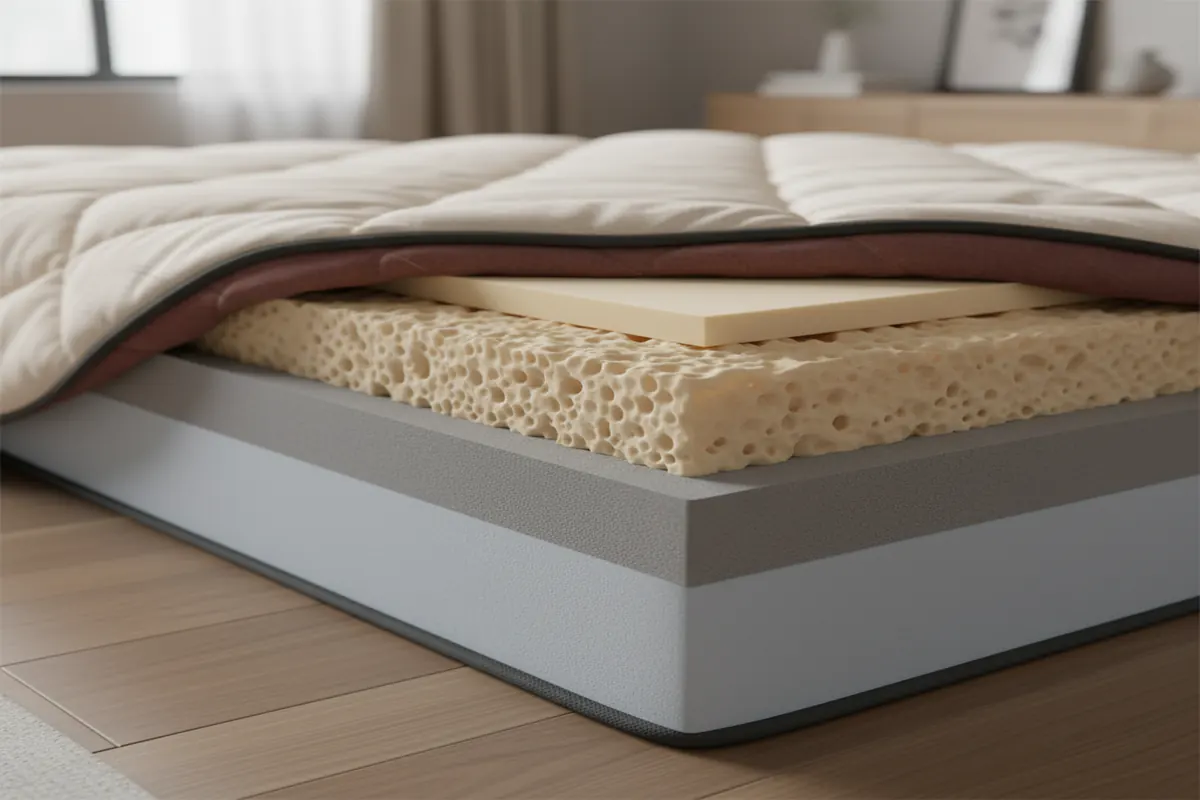
Here’s a quick comparison to highlight their key differences:
How Do Foam Comfort Layers Impact Your Sleep Experience and Mattress Durability?
The comfort layers are not just about immediate softness; they are foundational to both your nightly sleep quality and the long-term performance of your mattress. Their influence extends across several critical aspects:
Impact on Sleep Experience
-
Personalized Comfort: Different foams offer distinct feels. Memory foam provides a deep, personalized cradle, ideal for those seeking pressure point relief and a feeling of being “hugged” by the mattress. Latex offers a more buoyant, responsive feel, making it easier to change positions while still providing excellent support. Polyfoam can range from plush to firm, acting as a versatile buffer. Choosing the right type for your preferences is paramount to waking up refreshed.
-
Spinal Alignment: The primary goal of comfort layers is to allow your body to sink just enough to maintain natural spinal alignment. For instance, a side sleeper needs a softer comfort layer to allow their shoulder and hip to sink in, preventing unnatural curvature. A stomach sleeper, however, needs a firmer comfort layer to prevent their hips from sinking too deeply, which can strain the lower back.
-
Pressure Point Alleviation: This is arguably the most significant benefit. By conforming to your body, comfort layers prevent the build-up of pressure on sensitive areas like hips, shoulders, and knees. This reduces tossing and turning, improves circulation, and can significantly alleviate chronic pain. This is a key reason why many choose Visco Foam Mattress options for therapeutic benefits.
-
Temperature Regulation: While traditional foam can sometimes retain heat, modern comfort layers are engineered with advanced cooling technologies. Gel infusions, open-cell structures, copper, or graphite can wick away heat, ensuring a cooler, more comfortable sleep surface. This is a crucial consideration, especially in warmer climates or for individuals who “sleep hot.”
-
Motion Isolation: For couples, the ability of comfort layers to absorb motion is a game-changer. Memory foam is particularly adept at this, ensuring that movements on one side of the bed don’t disturb the other sleeper. This leads to fewer sleep interruptions and more harmonious rest.
Impact on Mattress Durability
The quality and design of the comfort layers are direct predictors of how long your mattress will maintain its comfort and support.
-
Resistance to Sagging: Over time, lower-quality foams can break down, leading to permanent body impressions and sagging. High-density foams, particularly latex and dense memory foam, are much more resilient, resisting these changes and maintaining their structural integrity for longer. Investing in a mattress with durable comfort layers is an investment in its lifespan.
-
Maintenance of Firmness/Feel: A mattress’s initial feel is largely defined by its comfort layers. If these layers degrade quickly, the mattress will lose its intended firmness, becoming too soft or uneven, compromising both comfort and support.
-
Overall Mattress Lifespan: Since the comfort layers are the first point of contact and bear the brunt of daily use, their durability directly contributes to the overall lifespan of the entire mattress. A mattress with excellent comfort layers can often last 8-10 years or even more, as highlighted in our Turkish Mattress Lifespan guide.
-
Cost-Effectiveness Over Time: While mattresses with premium comfort layers might have a higher upfront cost, their extended durability often makes them more cost-effective in the long run, as you won’t need to replace your mattress as frequently.
Choosing the Right Foam Comfort Layers for Your Sleep Style and Body Type
Selecting the ideal foam comfort layers is a highly personal decision that hinges on your unique sleep preferences, body characteristics, and any specific health considerations. This isn’t a one-size-fits-all scenario; what feels like heaven to one person might be uncomfortable for another.
Consider Your Primary Sleep Position
Your preferred sleeping position is the most critical factor in determining the required softness and contouring of your comfort layers.
-
Side Sleepers:
- Need: Softer comfort layers that allow the shoulders and hips to sink deeply enough to keep the spine aligned. Adequate pressure relief is crucial to prevent pain in these areas.
- Best Foam Options: Plush to medium-soft memory foam (Visco Foam Mattress options are excellent), or softer natural latex.
- Why: These foams provide deep contouring, cradling the body’s curves and preventing painful pressure points. A layer of 2-4 inches of soft comfort foam is often ideal. For more insights, see Turkish Mattress for Side Sleepers.
-
Back Sleepers:
- Need: A balance of contouring and support to maintain the natural curve of the spine, particularly in the lumbar region. The hips should sink slightly, but not excessively.
- Best Foam Options: Medium-firm memory foam, medium-density polyfoam, or medium-firm latex.
- Why: These provide enough give to conform to the spinal curve without allowing the hips to sink too far, which can lead to lower back pain.
-
Stomach Sleepers:
- Need: Firmer comfort layers to prevent the hips from sinking too deeply into the mattress, which can hyperextend the spine and cause lower back pain.
- Best Foam Options: Firm polyfoam or firm latex. Memory foam can be too soft for many stomach sleepers.
- Why: A firmer surface keeps the body on a more even plane, maintaining spinal alignment.
Evaluate Your Body Type and Weight
Your body weight influences how deeply you sink into the mattress and how much support you require.
-
Lightweight Sleepers (under 130 lbs):
- Need: Softer comfort layers to ensure sufficient compression and contouring. Heavier foams might feel too firm and fail to activate pressure relief.
- Best Foam Options: Softer memory foam or plush latex.
-
Average Weight Sleepers (130-230 lbs):
- Need: A good balance of support and contouring. Most medium-firm options will work well.
- Best Foam Options: Medium memory foam, medium-firm polyfoam, or medium latex.
-
Heavier Sleepers (over 230 lbs):
- Need: Denser, more durable comfort layers that resist compression and provide adequate support without bottoming out. Thicker comfort layers can also be beneficial.
- Best Foam Options: High-density memory foam, firm polyfoam, or firm, high-density latex. These materials offer robust support and better longevity.
Consider Your Specific Needs and Preferences
-
Pain Relief: If you suffer from chronic back pain, hip pain, or shoulder pain, memory foam’s superior pressure relief might be ideal. Latex also offers excellent pressure relief with a more responsive feel.
-
Temperature Sensitivity: If you tend to sleep hot, prioritize comfort layers with advanced cooling technologies (gel memory foam, open-cell polyfoam, natural latex).
-
Allergies: Natural latex is naturally hypoallergenic and resistant to dust mites, mold, and mildew, making it an excellent choice for allergy sufferers.
-
“On-Top” vs. “In-the-Mattress” Feel: Do you prefer to feel like you’re floating on top of the mattress (latex, polyfoam) or sinking into a deep cradle (memory foam)?
-
Motion Isolation: Couples who are easily disturbed by a partner’s movement should lean towards memory foam.
Expert Insight
“The true magic of a foam mattress lies in its comfort layers. They are the interface between your body and the bed, and their quality and composition are paramount. We’ve seen firsthand that a well-chosen comfort layer can transform sleep quality, providing not just softness but targeted pressure relief and support that adapts to the sleeper’s unique physiology. It’s not about finding the ‘best’ foam, but the ‘best fit’ for your individual needs.” – Industry experts confirm that personalized foam selection is key.
Common Mistakes to Avoid When Evaluating Foam Mattress Comfort Layers
Navigating the world of foam mattress comfort layers can be complex, and it’s easy to make missteps that could lead to an uncomfortable and ultimately disappointing purchase. As experienced specialists in the field, we’ve identified several common pitfalls to help you make a more informed decision.
1. Prioritizing Softness Over Support and Density
-
Mistake: Many buyers equate comfort solely with softness, opting for the plushiest comfort layers without considering the underlying support or foam density.
-
Why it’s a mistake: While initial softness feels good, overly soft comfort layers (especially with low density) can lead to insufficient support, causing your body to sink too deeply and misaligning your spine. Low-density foams also break down faster, leading to premature sagging and body impressions.
-
How to avoid it: Focus on finding a balance. A comfort layer should provide contouring and pressure relief without compromising spinal alignment. Always inquire about the density of the foam (measured in pounds per cubic foot, PCF). For memory foam, look for 3.5 PCF or higher for durability; for polyfoam, 1.8 PCF or higher. Our Buying Guides offer more details on foam specifications.
2. Ignoring Your Sleep Position and Body Type
-
Mistake: Choosing comfort layers based on a friend’s recommendation or general reviews, without considering how they align with your specific sleep position and body weight.
-
Why it’s a mistake: As discussed, a side sleeper needs different comfort layer properties than a stomach sleeper. Similarly, a heavier individual will compress foams more significantly than a lighter person. A mismatch leads to discomfort, pain, and poor sleep quality.
-
How to avoid it: Refer back to the “Choosing the Right Foam Comfort Layers” section. Be honest about your primary sleep position and body type, and select foams that are designed to support those specific needs.
3. Overlooking Temperature Regulation Features
-
Mistake: Buying a foam mattress without considering its potential for heat retention, especially with traditional memory foam.
-
Why it’s a mistake: Sleeping hot is a major comfort killer. If you tend to overheat at night, traditional dense foams can trap body heat, leading to restless sleep and discomfort.
-
How to avoid it: Actively look for comfort layers that incorporate cooling technologies. These include:
- Gel-infused memory foam: Gel particles absorb and dissipate heat.
- Open-cell foam structures: Allow for better airflow compared to traditional closed-cell foams.
- Phase-change materials: Absorb or release heat to maintain an optimal sleep temperature.
- Natural latex: Inherently more breathable due to its open-cell structure.
- Consider our 4 Seasons Bed for temperature-regulating options.
4. Not Understanding the Role of Transition Layers
-
Mistake: Focusing solely on the top comfort layer and ignoring the transition layers that sit between the comfort layer and the support core.
-
Why it’s a mistake: Transition layers are crucial. They provide a gradual increase in firmness, preventing you from “bottoming out” on the firm support core. They enhance deep compression support and contribute to the overall feel and durability of the mattress. Without adequate transition layers, even excellent comfort layers won’t perform optimally.
-
How to avoid it: When researching mattresses, inquire about the full layering system, not just the top layer. A good transition layer provides progressive support and prevents a sudden drop-off in firmness.
5. Skipping the Trial Period and Return Policy Review
-
Mistake: Making a purchase without fully understanding the mattress’s trial period, warranty, and return policy.
-
Why it’s a mistake: A mattress can feel different after a few nights or weeks than it does in a showroom. A proper trial period (e.g., 90-120 nights) is essential to allow your body to adjust and truly evaluate the comfort layers. Without a clear return policy, you could be stuck with an unsuitable mattress.
-
How to avoid it: Always check the Warranty Information and Return Policy before buying. Sinyora Yatak offers comprehensive policies to ensure customer satisfaction.
Understanding the Cost of Foam Mattress Comfort Layers: What Influences Pricing?
The cost of a foam mattress is significantly influenced by the quality, type, and thickness of its comfort layers. While it’s tempting to focus solely on the overall mattress price, understanding the factors that drive the cost of these crucial layers can help you appreciate the value proposition and make a more informed investment.
Key Factors Influencing Comfort Layer Costs:
-
Type of Foam Material:
- Polyfoam: Generally the most affordable option. Its lower production cost translates to more budget-friendly mattresses.
- Memory Foam (Visco Foam): Typically more expensive than basic polyfoam, especially high-density or gel-infused varieties. Specialized formulations for cooling or faster response times also increase cost.
- Latex Foam: Often the most expensive, particularly natural latex. The harvesting and processing of natural latex are labor-intensive, and its superior durability and unique properties command a higher price point. Synthetic latex is usually more affordable than natural latex but still pricier than polyfoam.
-
Foam Density:
- Higher Density = Higher Cost: Denser foams (e.g., memory foam 5+ PCF, polyfoam 2+ PCF, latex 80+ kg/m³) require more raw material per cubic foot. This increased material usage directly translates to a higher manufacturing cost.
- Benefit of Density: Higher-density foams are more durable, resist sagging longer, and often provide better support and pressure relief over time. While they cost more upfront, they typically offer a better long-term value.
-
Thickness of Comfort Layers:
- Thicker Layers = Higher Cost: A mattress with a thicker comfort layer (e.g., 3-4 inches vs. 1-2 inches) will naturally require more foam material, increasing the overall cost.
- Benefit of Thickness: Thicker comfort layers often provide deeper contouring, enhanced pressure relief, and a more luxurious feel, especially for side sleepers or heavier individuals. However, excessively thick soft layers can sometimes compromise support for certain sleep positions.
-
Specialized Features and Infusions:
- Cooling Technologies: Gel infusions, copper, graphite, phase-change materials, or advanced open-cell structures designed to improve airflow and dissipate heat add to the manufacturing cost of foam comfort layers.
- Certifications: Foams certified by organizations like CertiPUR-US (for polyfoam/memory foam) or GOLS/GOTS (for organic latex) ensure materials are free from harmful chemicals and produced sustainably. These certifications often add a premium due to rigorous testing and compliance.
- Proprietary Blends: Some manufacturers develop unique foam formulations with specific properties (e.g., faster response memory foam, extra-durable polyfoam). These proprietary blends often come with a higher price tag.
General Cost Ranges (Illustrative, Varies Widely):
-
Entry-Level Foam Mattresses (Polyfoam dominant comfort layers): Typically range from \$300 – \$800. These often feature thinner, lower-density comfort layers.
-
Mid-Range Foam Mattresses (Memory foam or hybrid foam comfort layers): Expect to pay \$800 – \$1,500. These usually incorporate higher-density memory foam or a combination of different foam types with better cooling features. Our Foam Mattress range often falls within this category.
-
Premium Foam Mattresses (High-density memory foam, natural latex, or advanced hybrids): Can range from \$1,500 – \$3,000+. These mattresses boast thick, high-quality comfort layers, often natural latex, with superior durability, advanced cooling, and specialized support. Our Latex Foam Mattress options would be in this segment.
Consider the Value Proposition:
While a higher price often correlates with higher quality comfort layers and overall mattress durability, it’s crucial to assess the value for your specific needs. A more expensive mattress with robust, high-density comfort layers might last significantly longer and provide superior comfort, making it a more economical choice over its lifespan compared to a cheaper mattress that needs frequent replacement. For example, comparing a Turkish Foam Mattress vs Spring often reveals foam options can offer competitive long-term value.
A Practical Checklist for Selecting Your Ideal Foam Mattress Comfort Layers
Making the right choice for your foam mattress comfort layers can feel overwhelming, but a structured approach can simplify the process. Use this checklist to guide your decision-making and ensure you cover all critical aspects before committing to a purchase.
1. Identify Your Core Sleep Profile:
-
Primary Sleep Position:
- [ ] Side Sleeper (Prioritize soft to medium-soft, deep contouring)
- [ ] Back Sleeper (Prioritize medium-firm, balanced contouring)
- [ ] Stomach Sleeper (Prioritize firm, minimal sinkage)
- [ ] Combination Sleeper (Prioritize responsive, medium-firm)
-
Body Weight Category:
- [ ] Lightweight (<130 lbs) (Softer comfort layers)
- [ ] Average Weight (130-230 lbs) (Medium comfort layers)
- [ ] Heavier Weight (>230 lbs) (Denser, firmer comfort layers)
-
Temperature Preference:
- [ ] Sleep Hot (Seek cooling features: gel, open-cell, latex)
- [ ] Sleep Cool/Neutral (Less critical, but good airflow is always a plus)
-
Pain Points/Health Concerns:
- [ ] Back Pain (Focus on spinal alignment, pressure relief)
- [ ] Joint Pain (Prioritize deep pressure relief, memory foam often effective)
- [ ] Allergies (Consider natural latex for hypoallergenic properties)
2. Evaluate Foam Types and Their Characteristics:
-
Memory Foam (Visco Foam):
- [ ] Desire deep contouring, “hug” feel?
- [ ] Value superior motion isolation?
- [ ] Willing to consider cooling technologies for heat?
-
Polyfoam:
- [ ] Prefer a more responsive, “on top” feel?
- [ ] Seeking a more budget-friendly option?
- [ ] Need versatile firmness options?
-
Latex Foam:
- [ ] Want a buoyant, responsive feel?
- [ ] Prioritize exceptional durability and longevity?
- [ ] Interested in natural, hypoallergenic properties?
3. Assess Foam Specifications and Quality:
-
Comfort Layer Thickness:
- [ ] 2-3 inches (Standard, good for most)
- [ ] 3-4+ inches (For deeper contouring, side sleepers, heavier individuals)
-
Foam Density (Crucial for Durability):
- [ ] Memory Foam: Aim for 3.5 PCF (pounds per cubic foot) or higher.
- [ ] Polyfoam: Aim for 1.8 PCF or higher.
- [ ] Latex: Look for ILD (Indentation Load Deflection) for firmness and density (e.g., 75-90 kg/m³ for medium-firm).
-
Certifications:
- [ ] CertiPUR-US (for memory foam/polyfoam): Ensures low VOCs, no harmful chemicals.
- [ ] GOLS/GOTS (for organic latex): Guarantees organic and sustainable production.
4. Consider the Full Mattress Construction:
-
Transition Layers:
- [ ] Are there effective transition layers between comfort and support core?
- [ ] Do they provide a gradual firmness transition?
-
Support Core:
- [ ] Is the support core robust enough for your body weight and sleep style? (e.g., high-density foam, Pocket Coils Mattress in hybrid designs)
5. Practical Considerations Before Purchase:
-
Trial Period:
- [ ] Is there a generous home trial period (e.g., 90-120 nights)?
- [ ] What are the conditions for return/exchange? (Check Return Policy)
-
Warranty:
- [ ] Does the mattress come with a substantial warranty (e.g., 10+ years)?
- [ ] What does the warranty cover regarding sagging/impressions? (Check Warranty Information)
-
Reviews and Testimonials:
- [ ] Have you read reviews from sleepers with similar profiles?
-
Budget:
- [ ] Does the chosen mattress fit your budget, considering its long-term value? (See How Much Does a Turkish Mattress Cost)
By systematically working through this checklist, you can confidently evaluate different foam mattress options and select comfort layers that are truly optimized for your personal sleep needs, leading to years of comfortable and supportive rest.
How Can You Upgrade to More Comfortable Sleep with Sinyora Yatak?
At Sinyora Yatak, we understand that exceptional sleep begins with meticulously crafted comfort layers. As a leading manufacturer of Turkish Mattresses, we pride ourselves on blending traditional craftsmanship with advanced foam technologies to create sleep surfaces that offer unparalleled comfort, support, and durability. Whether you’re seeking the deep hug of Visco Foam Mattress or the responsive buoyancy of Latex Foam Mattress, our diverse Mattress Collection is designed to cater to every individual’s unique sleep profile.
We invite you to explore our carefully curated selection, where each mattress is engineered with high-quality comfort layers to address specific needs, from pressure relief for Turkish Mattress for Side Sleepers to robust support for heavier individuals. Our commitment to quality ensures that the comfort layers in every Sinyora Yatak mattress are not only luxurious but also built to last, resisting sagging and maintaining their integrity for years to come.
Beyond full mattresses, consider our Topper Collection—including Sponge Topper Mattress, Latex Topper, and Visco Topper—as an excellent way to upgrade your existing sleep surface with additional comfort layers. These toppers can instantly transform your bed, adding an extra dimension of plushness, pressure relief, or responsiveness tailored to your preferences.
Discover the difference that expertly designed foam comfort layers can make. Visit our Shop All Products page, delve into our Buying Guides, or Contact Us for Support to find the perfect Sinyora Yatak solution for your best night’s sleep. Experience the unique quality that What Makes Turkish Mattresses Special and join countless satisfied sleepers who trust Sinyora Yatak for their comfort and well-being.
Expert Insight
“The real innovation in modern foam mattresses isn’t just about the type of foam, but how those foams are layered and engineered together. A sophisticated comfort layer isn’t merely a soft top; it’s a precisely calibrated system designed to interact with the sleeper’s body, providing dynamic pressure relief and support. We’re constantly pushing boundaries to create foams that are more breathable, more durable, and more responsive to individual needs, ensuring that every Sinyora Yatak mattress delivers a truly restorative sleep experience.” – A Sinyora Yatak product development specialist on foam mattress innovation.
Key Terms
-
Comfort Layers: The uppermost sections of a mattress, directly beneath the cover, designed to provide immediate softness, pressure relief, and contouring for the sleeper.
-
Transition Layers: Intermediate foam layers positioned between the comfort layers and the support core, providing a gradual increase in firmness and preventing the sleeper from “bottoming out” on the firm base.
-
Support Core: The foundational layer(s) of a foam mattress, providing the primary structural support, stability, and deep compression resistance for the entire sleep system.
-
Memory Foam (Visco Foam): A viscoelastic polyurethane foam known for its ability to soften with body heat and pressure, conforming closely to the sleeper’s shape for deep contouring and superior motion isolation.
-
Polyfoam (Polyurethane Foam): A versatile, open-cell foam used in various mattress layers, offering a range of firmness levels from soft to firm, and generally more responsive than memory foam.
-
Latex Foam: A natural or synthetic foam derived from rubber, known for its exceptional durability, responsive bounce, pressure relief, and natural breathability.
Frequently Asked Questions
Q: How thick should foam mattress comfort layers be?
Q: Can I replace just the comfort layers of my foam mattress?
Q: Do foam mattress comfort layers make a mattress hot?
Q: What is the difference between comfort layers and a mattress topper?
Q: How long do foam mattress comfort layers last?
Q: Are all foam mattress comfort layers the same firmness?
Help: FAQs · Sleep Science · Sleep Resources · Privacy Policy