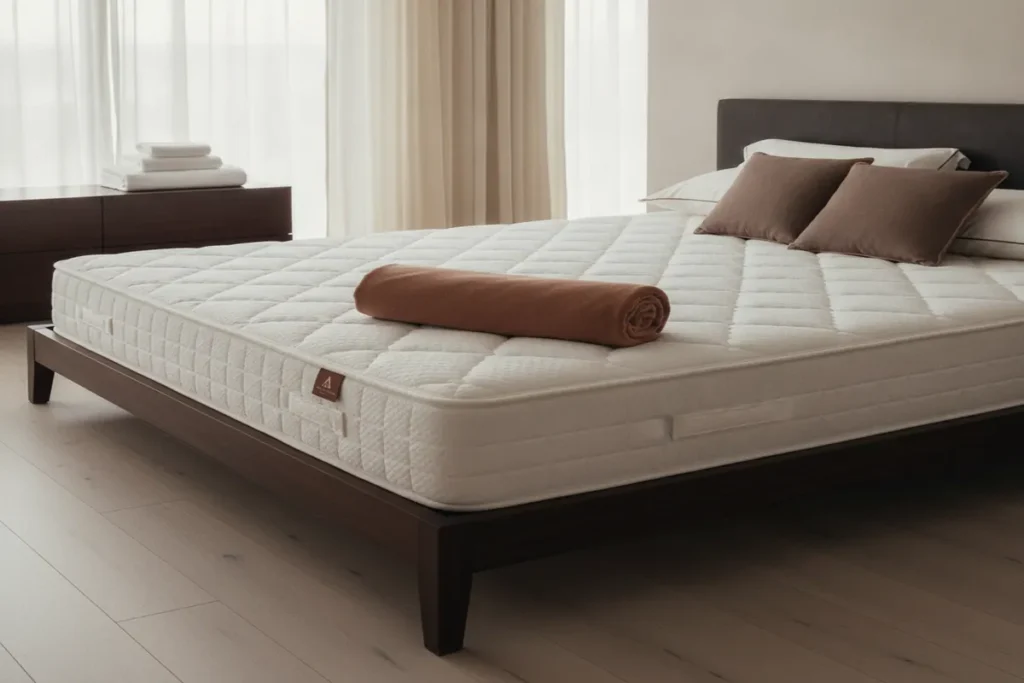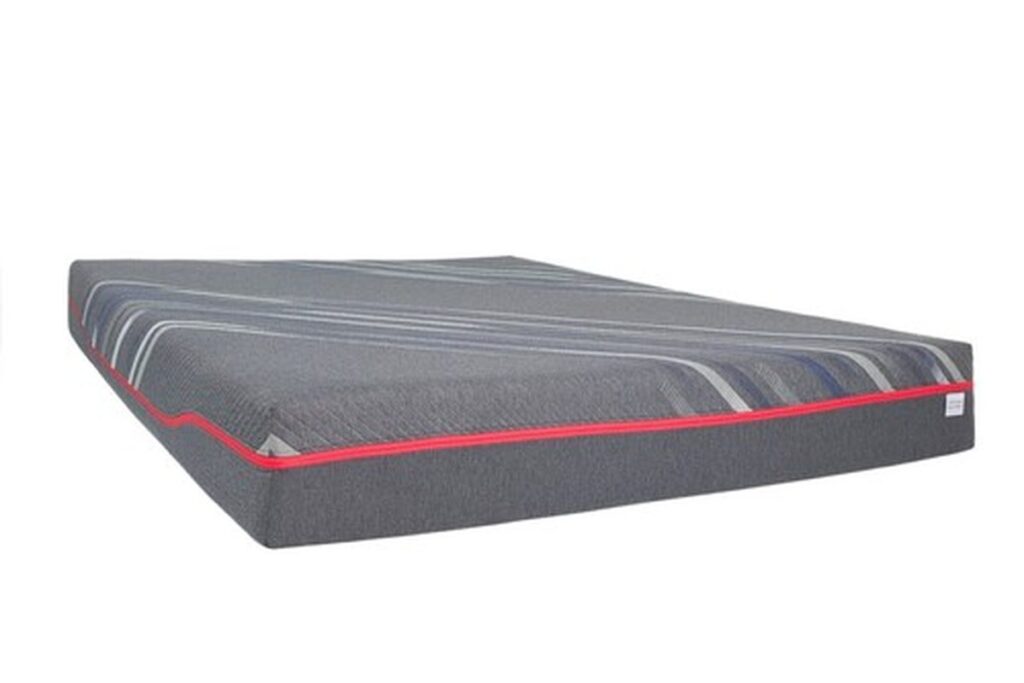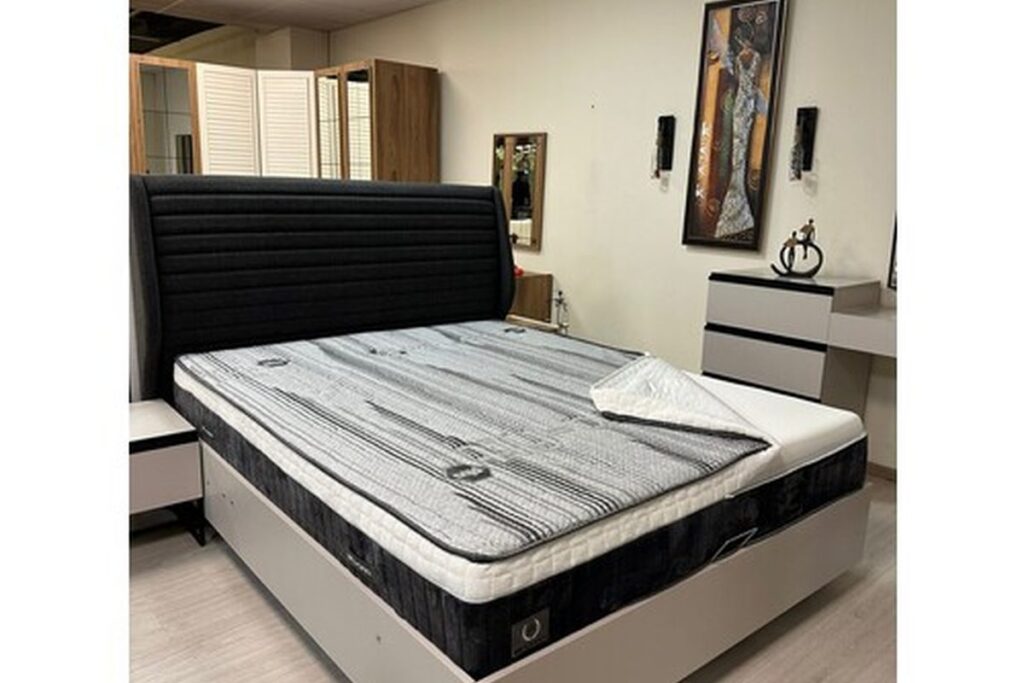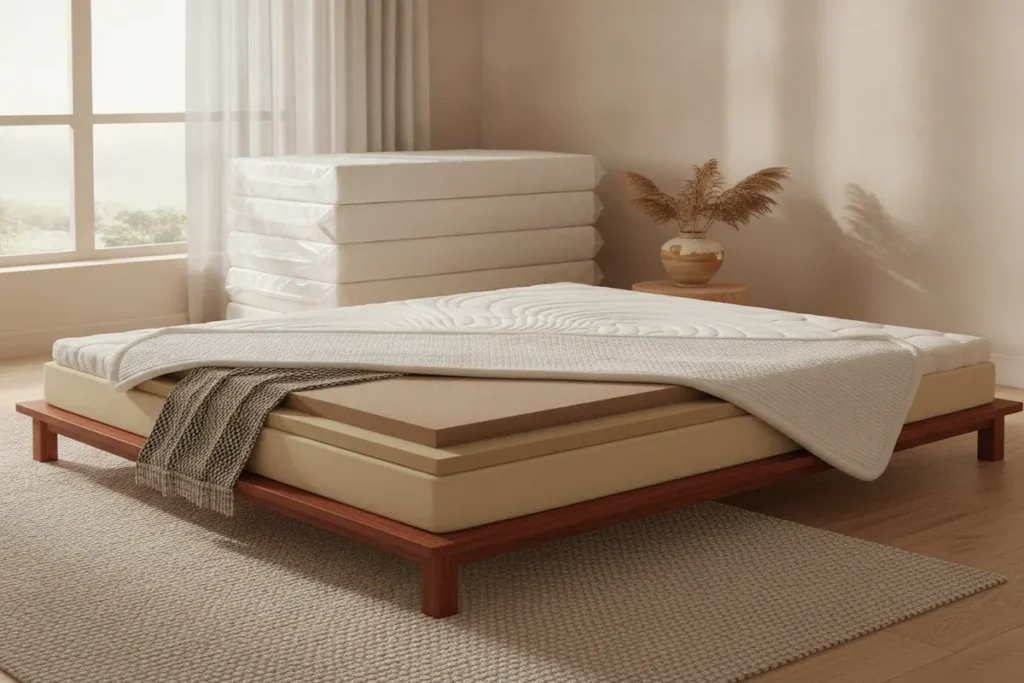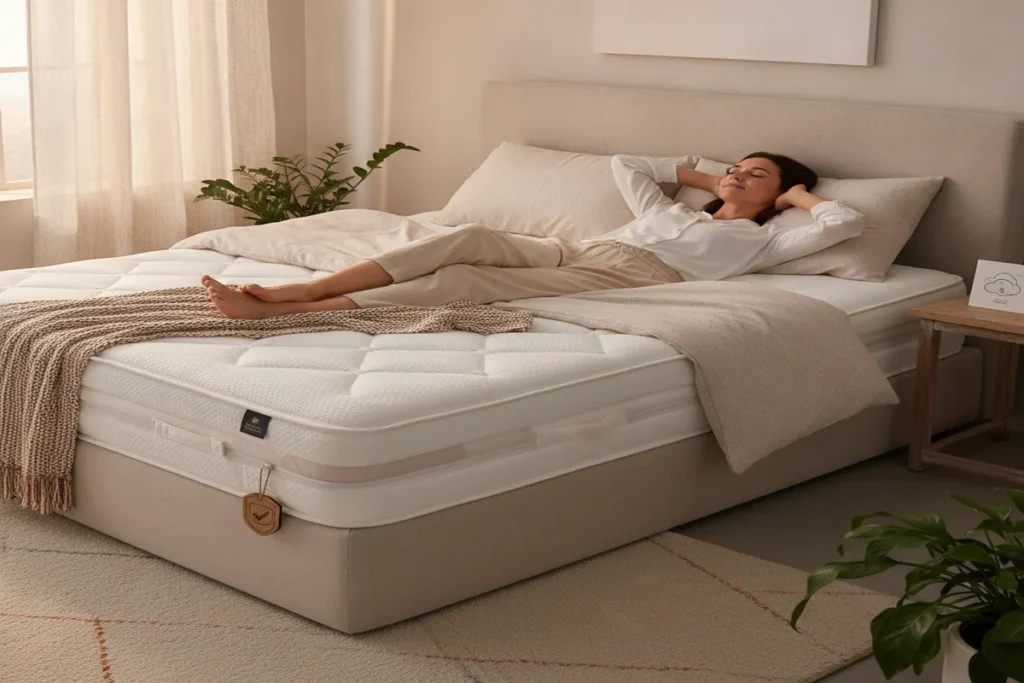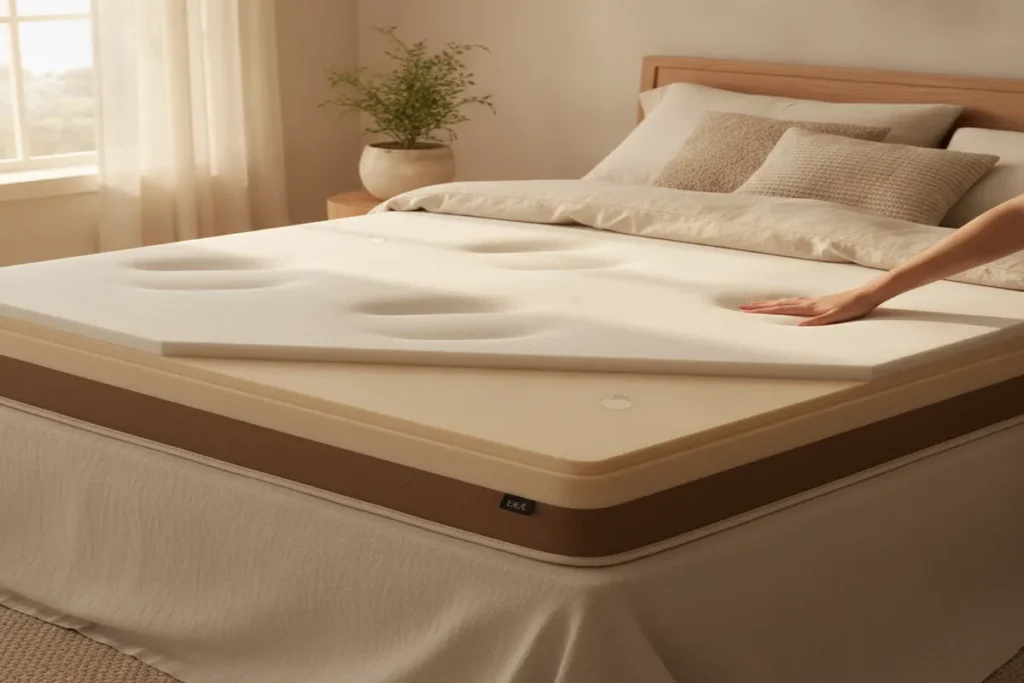

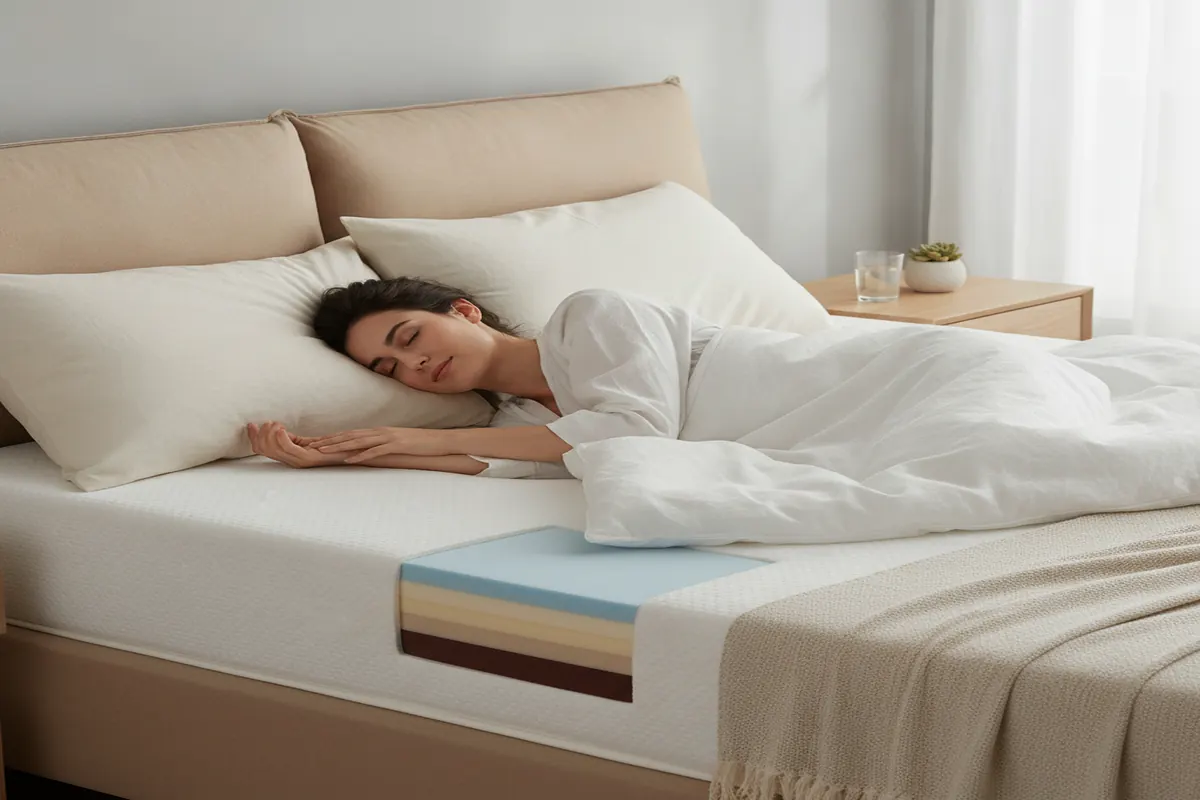
Choosing the right foam mattress for hot sleepers means prioritizing materials and construction designed to dissipate heat and promote airflow. The most effective options typically include open-cell memory foam, gel-infused foams, or natural latex, often combined in hybrid designs with breathable covers. These advanced materials work to prevent heat retention, ensuring a cooler and more comfortable sleep environment throughout the night for those prone to overheating.
Quick Summary
- Hot sleepers need foam mattresses with advanced cooling features
- Open-cell memory foam, gel infusions, and natural latex are key materials for temperature regulation
- Hybrid foam mattresses offer superior airflow and support for heat dissipation
- Density and cover materials like Tencel or phase-change fabrics significantly impact cooling performance
Which Foam Mattress Materials Truly Keep Hot Sleepers Cool?
For hot sleepers, the traditional image of a dense, heat-trapping foam mattress is quickly becoming outdated. Modern advancements in foam technology specifically target temperature regulation, offering a range of materials designed to keep you cool. Understanding these materials is the first step in making an informed decision for your best foam mattress for hot sleepers for home.
Open-Cell Memory Foam: Unlike traditional closed-cell memory foam, open-cell varieties feature a less dense, more porous structure. This allows air to circulate more freely within the foam, preventing heat from getting trapped. While it still offers the signature pressure relief of memory foam, its improved breathability makes it a far better choice for hot sleepers.
Gel-Infused Memory Foam: Gel is often swirled into the memory foam during manufacturing or added as a top layer. The primary function of these gel particles or beads is to absorb and draw heat away from the body, providing an initial cooling sensation. Some gel foams also incorporate phase-change materials (PCMs) that actively absorb and release heat to maintain a consistent temperature.
Copper-Infused Foam: Copper is a highly conductive material, meaning it efficiently transfers heat away from the body. Beyond its cooling properties, copper is also naturally antimicrobial, offering hygienic benefits.
Graphite-Infused Foam: Graphite, another excellent thermal conductor, is often infused into foam layers to pull heat away from the sleeping surface. It’s lightweight and effective in enhancing the cooling capacity of memory foam.
Natural Latex Foam: Latex, especially natural latex derived from rubber trees, is inherently more breathable than most synthetic foams due to its open-cell structure. It doesn’t conform as closely to the body as memory foam, which allows for more air circulation around the sleeper. Latex Foam Mattresses are also known for their responsiveness, durability, and hypoallergenic properties.
Memory Foam Innovations for Cooling
While traditional memory foam can be a hot sleeper’s nightmare, specialized versions have emerged:
Perforated Memory Foam: Some memory foam layers are designed with strategically placed holes or channels to create vertical airflow paths, allowing heat to escape more easily.
Zoned Cooling Layers: Mattresses may feature different types of cooling foams or perforation patterns in specific zones (e.g., shoulder, lumbar, hip) to address areas where body heat tends to accumulate most.
The Breathable Benefits of Latex Foam
For many hot sleepers, Latex Foam Mattresses stand out due to their natural properties:
Natural Airflow: The unique cellular structure of latex, particularly Dunlop and Talalay processes, creates a naturally open and breathable material.
Responsiveness: Latex offers a buoyant feel, meaning you sleep more “on” the mattress rather than “in” it, which prevents the heat-trapping cradle effect common with dense memory foam.
Durability: Latex is incredibly resilient and long-lasting, maintaining its cooling properties over many years without significant degradation.
Hybrid Foam Options for Enhanced Airflow
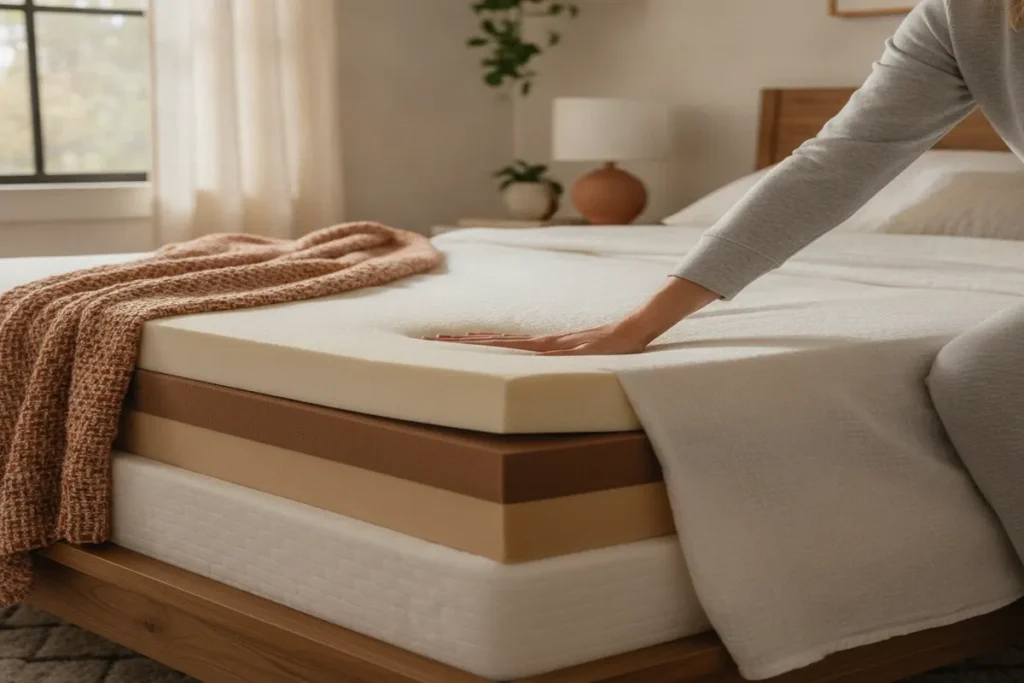
A hybrid foam mattress combines the best of both worlds: foam comfort layers with an innerspring coil support system.
Pocket Coils Mattress: The individual pocketed coils in the base layer allow for significant airflow throughout the mattress core. This chimney-like effect draws heat away from the foam layers and dissipates it, making hybrids one of the best foam mattress for hot sleepers options.
Combination of Materials: Hybrids often feature cooling foam layers (gel, latex, open-cell memory foam) on top of the breathable coil system, providing both pressure relief and superior temperature regulation.
Memory Foam vs. Latex Foam: Which Reigns Supreme for Temperature Regulation?
When it comes to choosing the best foam mattress for hot sleepers, the debate often narrows down to memory foam versus latex foam. Both offer distinct advantages, but their cooling capabilities differ significantly. Understanding these differences is crucial for selecting a mattress that truly meets your needs.
Is a ‘Tempur-Pedic’ Style Mattress Right for Hot Sleepers?
The term “Tempur-Pedic” is often synonymous with high-quality memory foam, known for its exceptional pressure relief and body-conforming properties. However, traditional dense memory foam can be a significant concern for hot sleepers due to its tendency to trap heat.
If you are a hot sleeper drawn to the feel of a Visco Foam Mattress (memory foam), it’s essential to look for models that incorporate specific cooling technologies. Many brands, including Sinyora Yatak, offer advanced memory foam formulations that address heat retention.
- What to Look For:
- Open-Cell Structure: As discussed, this is paramount for heat dissipation.
- Cooling Infusions: Gel, graphite, or copper can significantly improve temperature regulation.
- Phase-Change Materials (PCMs): These materials, integrated into the fabric or foam, are designed to absorb and release heat to maintain a stable temperature.
- Breathable Covers: A mattress with a cover made from Tencel, cotton, or other moisture-wicking materials can enhance the cooling effect.
While a traditional, dense memory foam mattress might not be the best memory foam mattress for hot sleepers, modern iterations with advanced cooling features can indeed be a viable option for those who love the unique feel of memory foam but struggle with heat. Always check the specific construction and cooling technologies advertised by the brand.
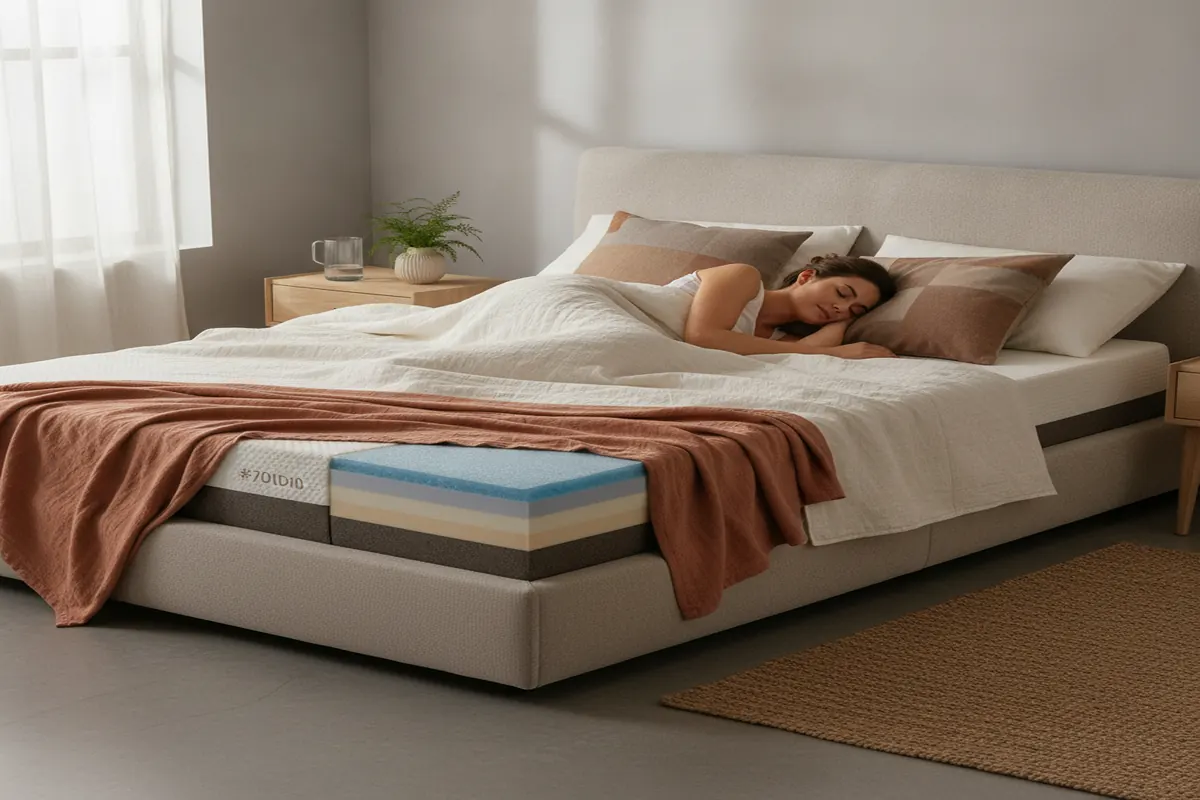
Beyond Material: Essential Features to Consider for a Cooler Foam Mattress
While the core foam material is critical, a truly effective cooling mattress for hot sleepers integrates several other design elements. These features work in concert to enhance airflow, wick away moisture, and prevent heat buildup, contributing to the overall performance of the best foam mattress for hot sleepers.
Mattress Cover Fabric: The outermost layer of your mattress plays a significant role in temperature regulation.
- Moisture-Wicking Materials: Fabrics like Tencel, bamboo, or specialized performance fabrics are excellent at drawing moisture away from your body, allowing it to evaporate and cool you down.
- Phase-Change Materials (PCMs): Some covers are infused with PCMs that react to your body temperature, absorbing heat when you’re too warm and releasing it when you cool down, maintaining a neutral microclimate.
- Breathable Weaves: A loose, breathable weave in the cover fabric allows air to circulate more freely, preventing heat from getting trapped at the surface.
Mattress Density and Firmness:
- Density: While denser foams can be more durable, they can also be less breathable. For hot sleepers, a medium-density foam (around 3.5-5.0 lbs/cu ft for memory foam) often strikes the best balance between support, durability, and breathability. Very soft foams that allow you to sink deeply can also reduce airflow around your body.
- Firmness: A firmer mattress typically means you sleep more on the surface rather than in it. This reduces the amount of mattress material conforming directly to your body, allowing for better air circulation and less heat retention.
Ventilation and Airflow Channels:
- Perforations: Many cooling foam mattresses feature perforated layers, with small holes drilled through the foam to create vertical airflow channels.
- Convoluted (Egg Crate) Layers: These textured foam layers create pockets of air and increase surface area for heat dissipation.
- Zoned Support: While primarily for pressure relief, zoned designs can also be used to create varying densities or perforations that enhance airflow in specific areas.
Mattress Height and Layers:
- A thicker mattress doesn’t automatically mean hotter. In fact, a well-designed multi-layer mattress can utilize different foam types strategically, with cooling layers on top and supportive, breathable layers below.
- A hybrid mattress construction, featuring a base of Pocket Coils Mattress, inherently offers superior airflow due to the open space between the coils, making it a prime candidate for hot sleepers.
Practical Considerations:
Always ask about the specific cooling technologies integrated into each layer of the mattress, not just the top.
Don’t solely rely on “cool-to-the-touch” claims; true cooling performance comes from sustained heat dissipation.
Common Pitfalls When Buying a Foam Mattress as a Hot Sleeper
Navigating the mattress market as a hot sleeper can be tricky, with many marketing claims that don’t always translate to real-world performance. Avoiding these common mistakes will save you discomfort and potential buyer’s remorse when seeking the best foam mattress for hot sleepers brands.
Mistake 1: Assuming All “Memory Foam” is the Same: The biggest pitfall is believing that all memory foam will make you hot. As discussed, there’s a vast difference between traditional closed-cell memory foam and modern open-cell, gel-infused, or graphite-infused versions.
- Avoid: Generic “memory foam” descriptions without specific details on cooling technology.
- Look For: Explicit mentions of “open-cell,” “gel-infused,” “copper-infused,” or “graphite-infused” along with reputable brand names known for cooling innovation.
Mistake 2: Over-Reliance on Initial “Cool-to-the-Touch” Claims: Many mattresses feel cool when you first lie down due to phase-change materials in the cover. However, true cooling performance is about sustained heat dissipation throughout the night, not just an initial sensation.
- Avoid: Making a decision based solely on a brief showroom test or superficial claims.
- Look For: Reviews from other hot sleepers discussing long-term cooling performance, and information about the mattress’s internal structure for airflow.
Mistake 3: Neglecting Mattress Cover Materials: The mattress cover is your first line of defense against heat. A poor cover can negate the benefits of cooling foams underneath.
- Avoid: Overlooking the fabric composition of the mattress cover.
- Look For: Covers made from breathable, moisture-wicking materials like Tencel, bamboo, organic cotton, or specialized performance fabrics.
Mistake 4: Ignoring Your Sleeping Position and Body Type: How you sleep and your body mass affect how much you sink into a mattress and, consequently, how much airflow you get.
- Avoid: Choosing a mattress that’s too soft if you’re a heavy individual or a stomach sleeper, as sinking too deep can restrict airflow.
- Look For: A firmness level that supports proper spinal alignment while keeping you more “on” the mattress surface, especially for back and stomach sleepers. Side sleepers may need a slightly softer feel but should still prioritize cooling foam layers.
Mistake 5: Not Considering Hybrid Options: Many hot sleepers automatically dismiss foam mattresses due to past experiences. However, hybrid mattresses offer the pressure relief of foam with the superior airflow of an innerspring core, making them an excellent solution.
- Avoid: Limiting your search to only pure foam mattresses if you’re a chronic hot sleeper.
- Look For: Pocket Coils Mattress bases combined with cooling foam comfort layers for optimal airflow and support.
Mistake 6: Forgetting About Your Pillow and Bedding: Even the best foam mattress for hot sleepers can’t fully compensate for a non-breathable pillow or heavy bedding.
- Avoid: Investing heavily in a cooling mattress only to use a traditional, heat-trapping pillow or thick blankets.
- Look For: Cooling pillows (e.g., Visco Pillow, Latex Pillow (Natural), or gel-infused options), moisture-wicking sheets, and lightweight, breathable duvets.
By being aware of these common mistakes, hot sleepers can approach their mattress purchase with greater confidence and make a choice that genuinely supports cooler, more comfortable sleep.
Your Checklist for Selecting the Ideal Cooling Foam Mattress
Making a confident decision for the best foam mattress for hot sleepers requires a systematic approach. Use this checklist to evaluate options and ensure you’re prioritizing the features that truly matter for temperature regulation and comfort.
Identify Core Material Preference & Cooling Technology:
- Do I prefer the contouring of memory foam or the responsiveness of latex?
- If memory foam, does it specify “open-cell,” “gel-infused,” “copper-infused,” or “graphite-infused”?
- Is it a Latex Foam Mattress (natural latex for superior breathability)?
- Am I open to a hybrid mattress (foam layers over Pocket Coils Mattress) for maximum airflow?
Evaluate Mattress Cover & Top Layer:
- Is the cover made from moisture-wicking materials like Tencel, bamboo, or performance fabrics?
- Does the cover or top layer incorporate phase-change materials for active temperature regulation?
- Is the weave breathable, allowing air circulation?
Assess Foam Density and Construction:
- For memory foam, is the density appropriate (medium-density often best for cooling and support)?
- Are there perforations, airflow channels, or convoluted layers within the foam structure?
- How many layers does the mattress have, and what is the purpose of each layer (e.g., cooling top, supportive middle, breathable base)?
Consider Firmness Level for Your Sleep Style:
- Does the mattress offer enough support to prevent excessive sinking, which can trap heat?
- Is the firmness level suitable for my primary sleeping position (side, back, stomach) while still promoting airflow?
Look into Brand Reputation and Reviews:
- Does the brand (e.g., Sinyora Yatak) have a track record of addressing cooling concerns in their products?
- Are there consistent positive reviews from other hot sleepers regarding the mattress’s temperature regulation?
- Do they offer a clear Warranty Information and Return Policy specifically for comfort issues?
Test the Mattress (if possible) or Utilize Trial Periods:
- If testing in-store, spend at least 15-20 minutes to allow your body temperature to react.
- Confirm the brand offers a generous home trial period (e.g., 90-120 nights) to fully assess cooling performance in your own sleep environment.
Factor in Budget and Value:
- While cooling features add to the cost, consider it an investment in quality sleep.
- Compare features and materials across different best foam mattress for hot sleepers brands to ensure you’re getting good value.
Don’t Forget Accessories:
- Plan for cooling pillows (Visco Pillow, Latex Pillow (Natural)), breathable sheets, and a best memory foam mattress topper for hot sleepers if needed.
- Consider a breathable mattress protector if you use one.
By systematically working through this checklist, you can confidently narrow down your options and select a foam mattress that truly delivers a cooler, more comfortable night’s sleep.
Maximizing Your Sleep Comfort: Practical Tips and Accessories for Hot Sleepers
Even with the best foam mattress for hot sleepers, optimizing your entire sleep environment can make a significant difference. A holistic approach ensures that every element contributes to a cool and comfortable night, especially if you’re prone to night sweats or hot flashes.
The Role of Cooling Toppers
A best memory foam mattress topper for hot sleepers can be a game-changer, especially if you’re not ready to replace your entire mattress or if your current mattress is generally comfortable but just a bit too warm.
Gel-Infused Toppers: Similar to gel-infused mattresses, these toppers contain gel beads or layers that absorb and dissipate heat. A Visco Topper with gel can provide an immediate cooling effect.
Latex Toppers: A Latex Topper offers natural breathability and responsiveness, preventing you from sinking too deeply and trapping heat. It’s an excellent choice for adding a cool, buoyant layer to a warmer mattress.
Copper or Graphite Toppers: These conductive materials help draw heat away from your body.
Phase-Change Material Toppers: Advanced toppers may feature PCMs that actively regulate temperature.
Breathable Fiber Toppers: While not foam, some natural fiber toppers (like wool or cotton) can offer excellent moisture-wicking and breathability, creating a cooler surface.
When to Use a Topper:
You have a relatively new mattress that’s too firm or just slightly too warm.
You want to experiment with cooling technologies before committing to a new mattress.
You’re on a budget but need immediate relief from overheating.
Optimizing Your Sleep Environment
Beyond your mattress and topper, several other factors contribute to a cool sleep space:
Pillows: Your pillow is in direct contact with your head and neck, major heat-dissipation points.
- Cooling Gel Pillows: Often made with memory foam and gel infusions.
- Latex Pillows: Naturally breathable and supportive, like the Latex Pillow (Natural) or Latex Pillows Neck Support.
- Shredded Memory Foam Pillows: Allow more airflow than solid blocks.
- Visko Pillows Neck Support: Can be designed with cooling properties.
Bedding:
- Sheets: Opt for natural, breathable fibers like cotton (percale weave), bamboo, Tencel, or linen. Avoid high thread counts (above 400-600) as they can reduce breathability.
- Duvets/Comforters: Choose lightweight, breathable options. Down alternative, wool, or specialized cooling fibers can regulate temperature better than heavy synthetic fillings.
Room Temperature & Airflow:
- Keep your bedroom cool (ideally between 18-20°C or 65-68°F).
- Use a fan or air conditioning.
- Ensure good air circulation by opening windows if the outdoor temperature is suitable.
Sleepwear: Light, loose-fitting sleepwear made from natural, moisture-wicking fabrics (cotton, bamboo, silk) can greatly enhance comfort.
Hydration: Stay hydrated throughout the day, but avoid excessive fluids right before bed to minimize trips to the bathroom.
Pre-Sleep Routine: A cool shower or bath before bed can lower your core body temperature. Avoid heavy meals, strenuous exercise, or excessive alcohol close to bedtime, as these can elevate body temperature.
By combining the right cooling foam mattress with thoughtful accessories and an optimized sleep environment, hot sleepers can significantly improve their comfort and achieve restorative sleep.
Expert Insight
“The key to a truly cool foam mattress isn’t just one material, but a synergistic design. We’ve moved far beyond simple gel infusions. Today’s leading Turkish Mattresses for hot sleepers, for instance, often combine open-cell structures with advanced conductive materials like graphite or copper, paired with inherently breathable layers such as natural latex and a supportive coil base. It’s about engineering the entire sleep surface to actively manage temperature, not just react to it. Consumers should look for transparency in layer composition and proven thermal regulation technologies.” – Industry experts confirm that a multi-faceted approach to cooling is essential for effective heat management in foam mattresses.
Key Terms
Open-Cell Foam: A type of foam with a less dense, more porous internal structure that allows air to flow more freely, reducing heat retention compared to traditional closed-cell foams.
Gel-Infused Foam: Foam (often memory foam) mixed with gel particles or beads designed to absorb and dissipate body heat, providing an initial cooling sensation.
Natural Latex Foam: A highly durable and responsive foam derived from rubber tree sap, known for its inherent breathability, buoyant feel, and hypoallergenic properties.
Phase-Change Materials (PCMs): Substances incorporated into mattress covers or foam layers that absorb and release thermal energy to maintain a stable temperature, reacting to changes in body heat.
Hybrid Mattress: A mattress combining multiple layers of foam (memory foam, latex, polyfoam) with an innerspring coil support system, offering a balance of pressure relief, support, and enhanced airflow.
A short comparison to help you make a better decision.
How Can You Upgrade to More Comfortable Sleep with Sinyora Yatak?
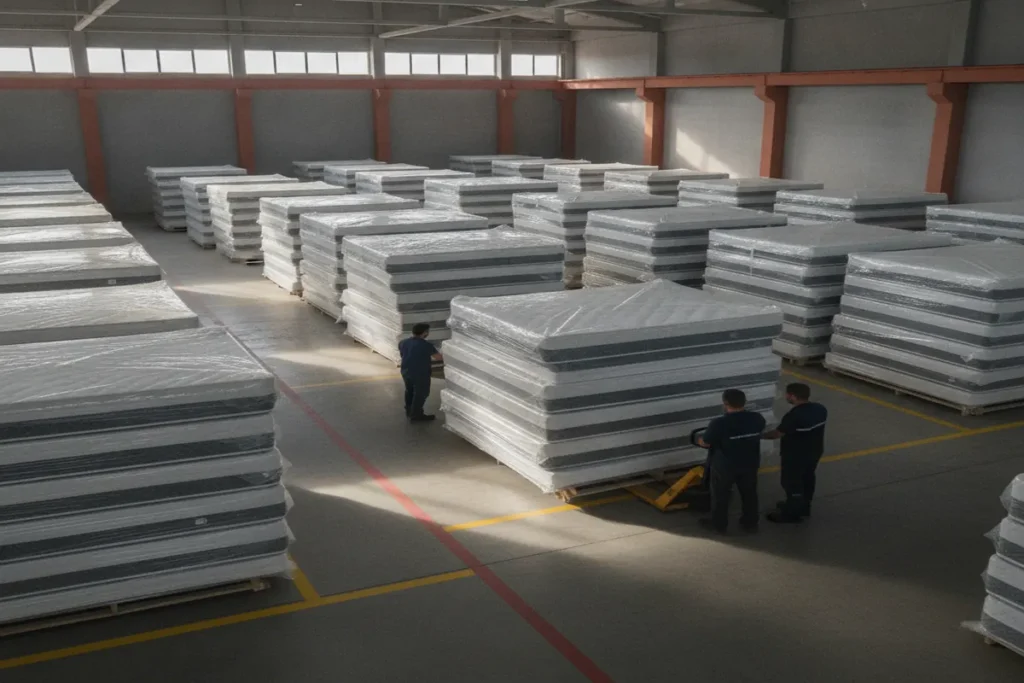
At Sinyora Yatak, we understand the challenges hot sleepers face in finding a truly comfortable mattress. Drawing on generations of expertise in crafting Turkish Mattresses, our collection is meticulously designed with innovative materials and construction methods to ensure optimal temperature regulation. Whether you’re seeking the contouring comfort of advanced memory foam or the natural breathability of latex, we have solutions engineered to keep you cool and supported throughout the night. Explore our Mattress Collection featuring options like the breathable Latex Foam Mattress, the innovative Visco Foam Mattress with cooling properties, and our Pocket Coils Mattress for superior airflow. Consider pairing your new mattress with our Pillow Collection or Topper Collection to complete your personalized cool sleep system. Experience the Sinyora Yatak difference and transform your sleep – visit Shop All Products or Contact Us for Support to find your ideal cooling mattress today. We also offer Mattress Wholesale in Turkiye and can Ship Turkish Mattresses Internationally, ensuring quality sleep reaches you wherever you are.
Frequently Asked Questions
Q: What is the single most important feature for a foam mattress to be cool?
Q: Can a memory foam mattress actually be cool, or should hot sleepers always choose latex?
Q: Are hybrid mattresses better for hot sleepers than pure foam mattresses?
Q: What type of mattress topper is best for a hot sleeper?
Q: How often should I replace my cooling foam mattress?
Q: Besides the mattress, what else can I do to stay cool at night?
Help: FAQs · Sleep Science · Sleep Resources · Privacy Policy