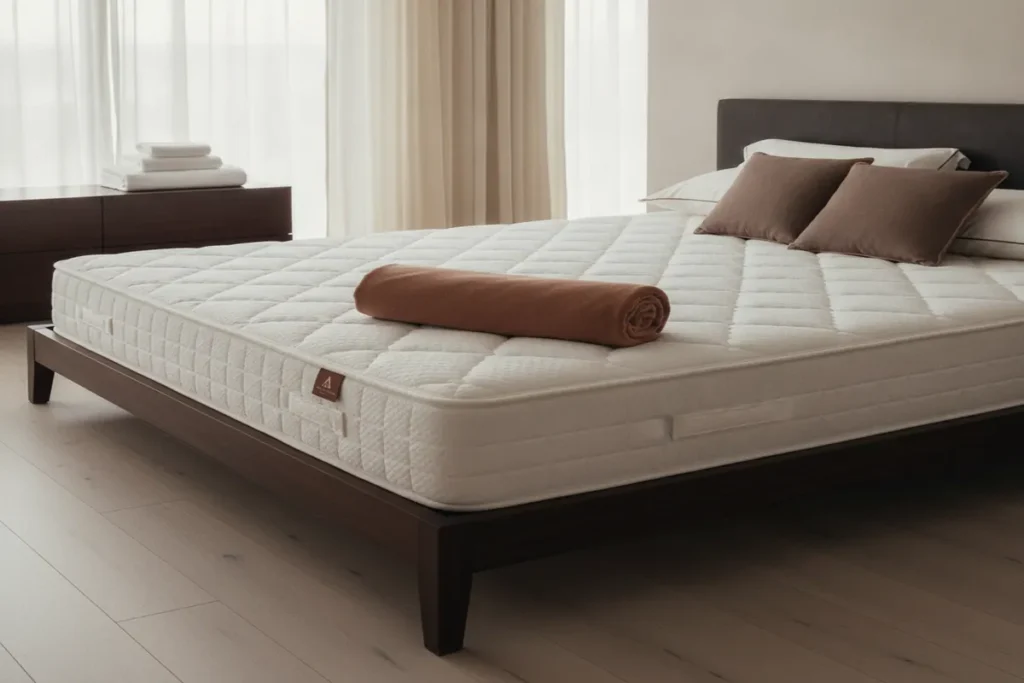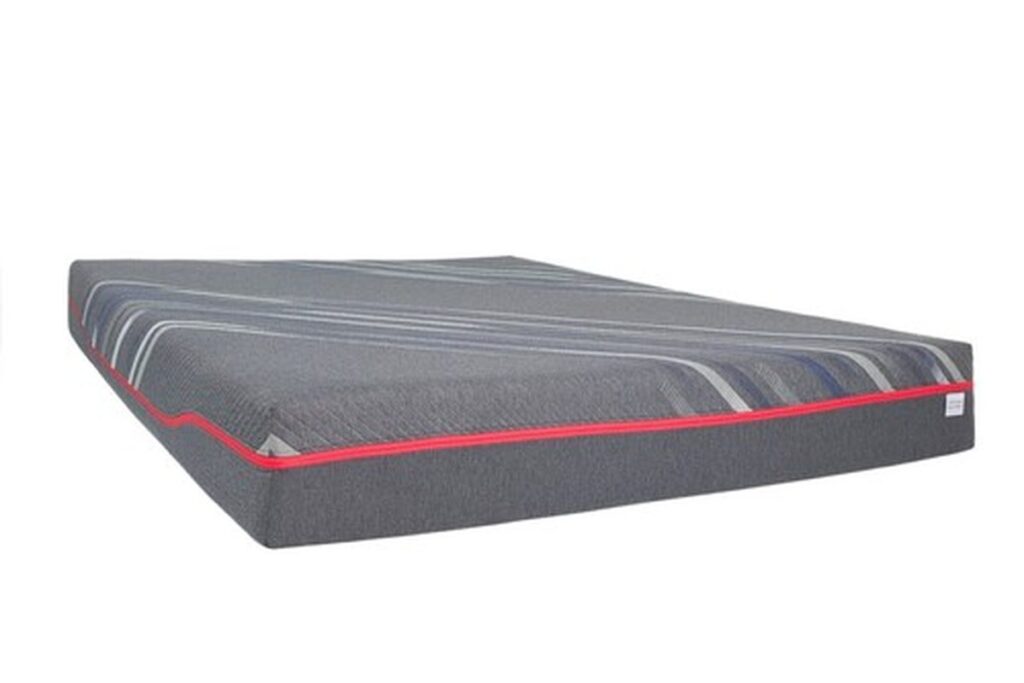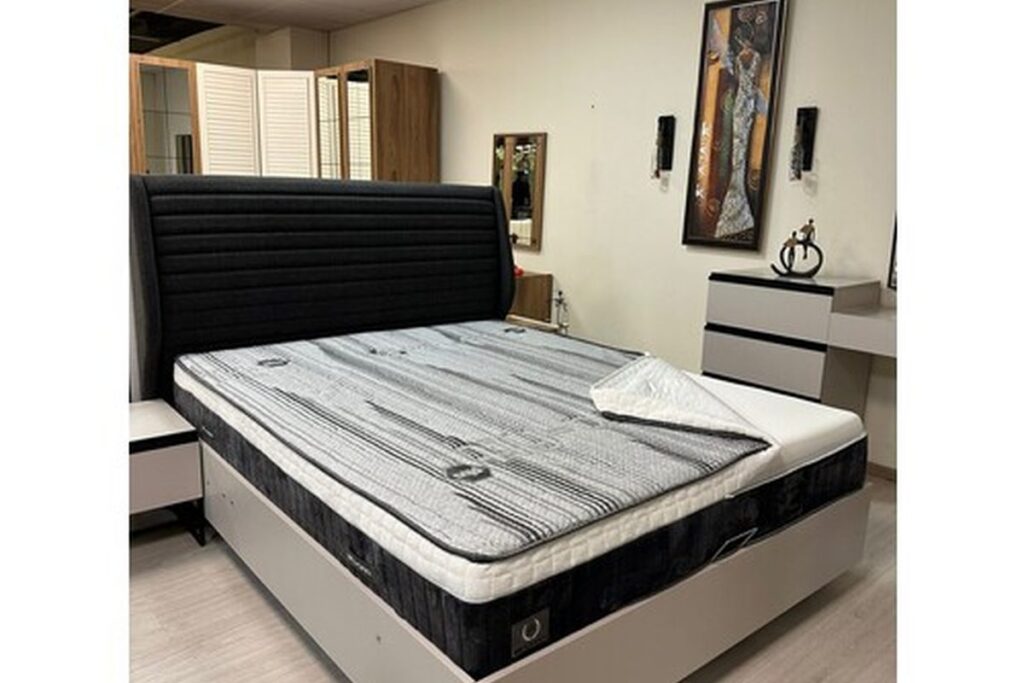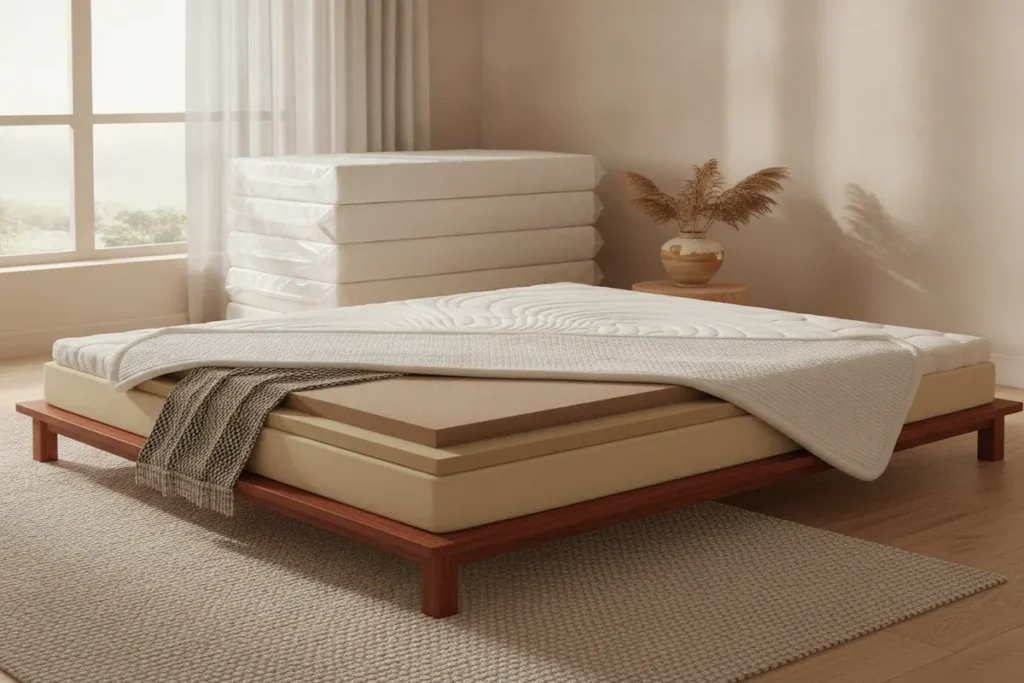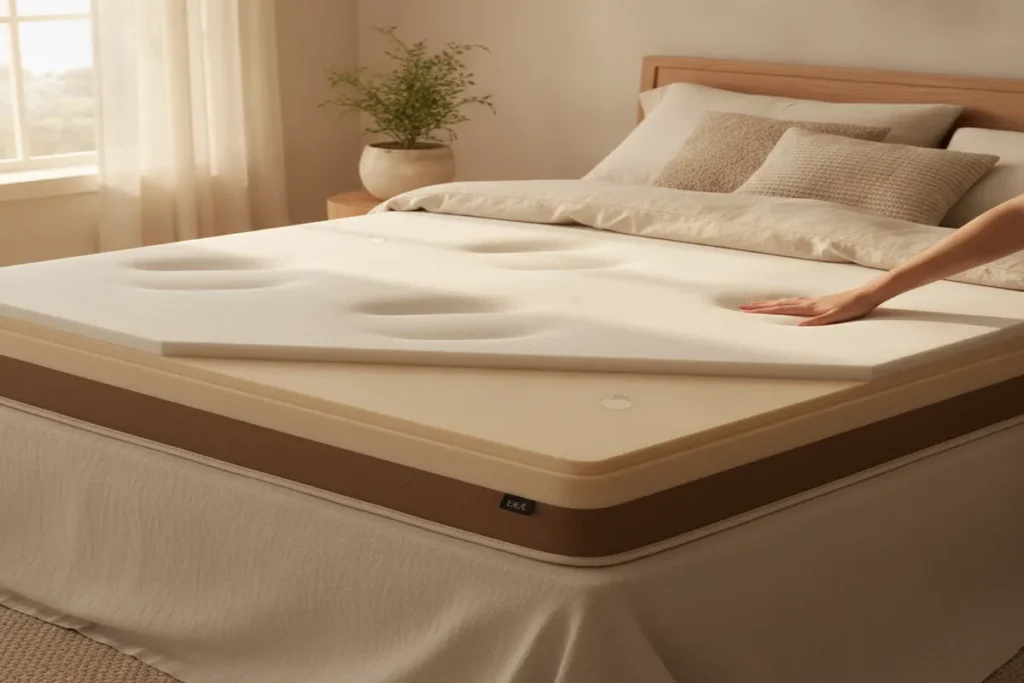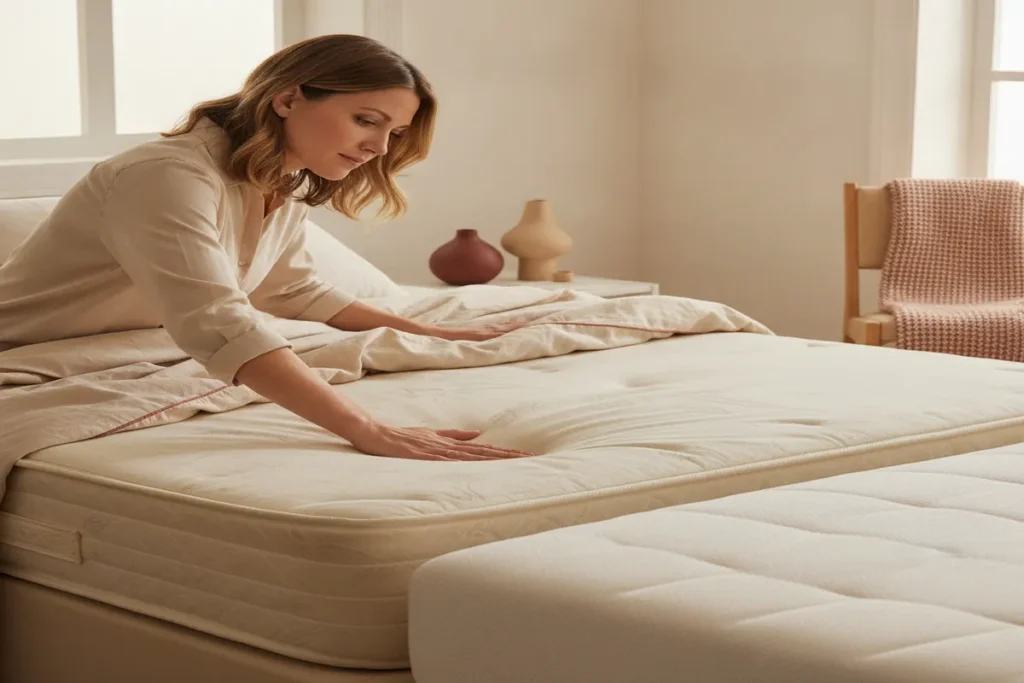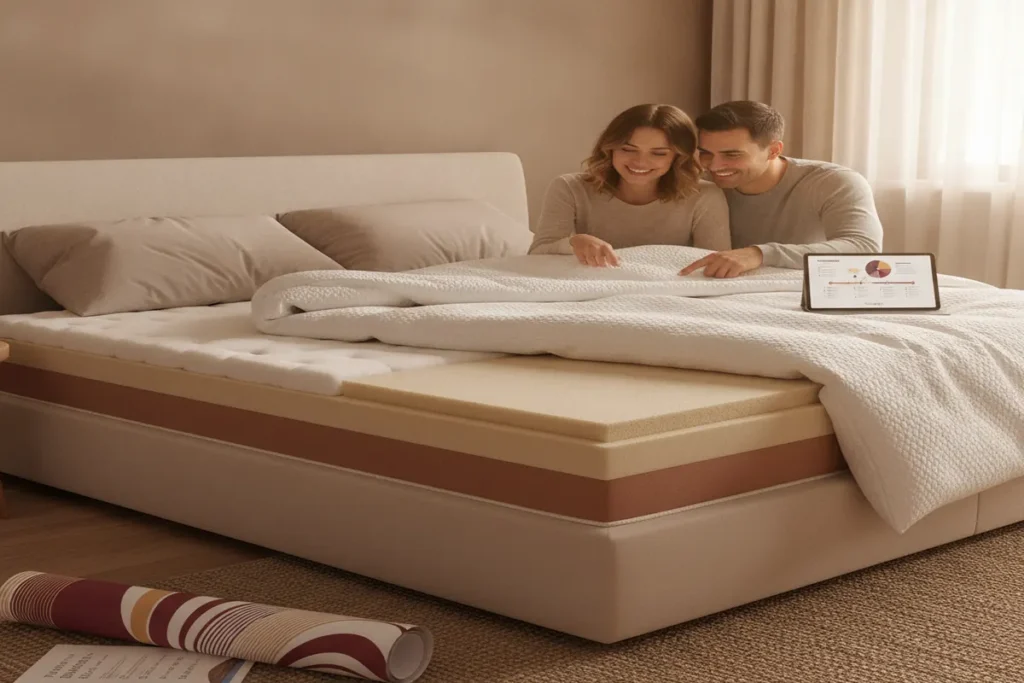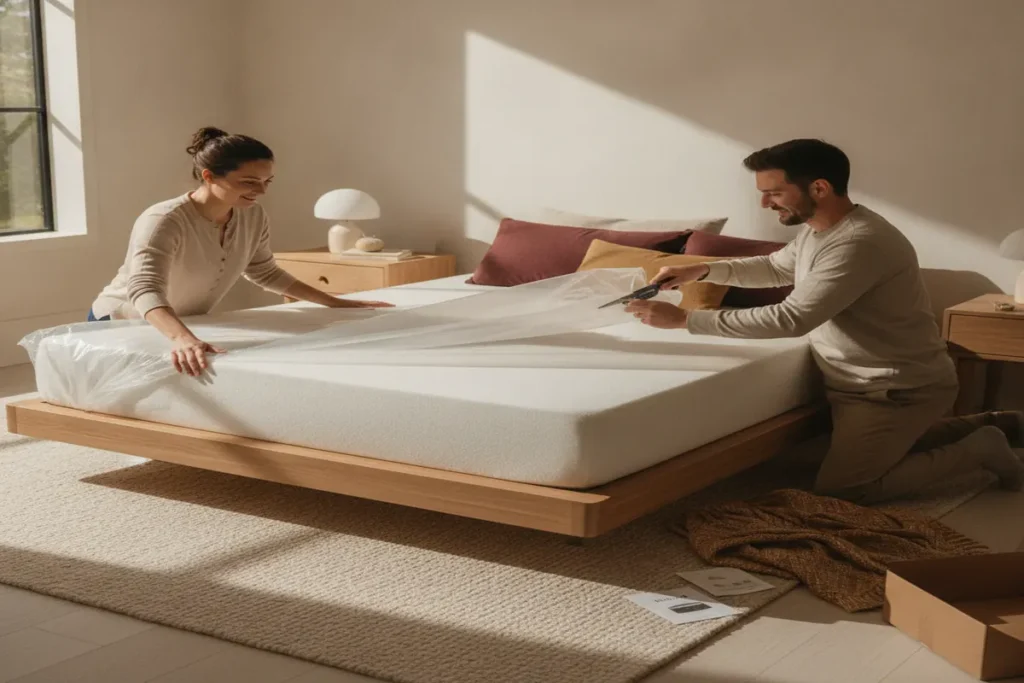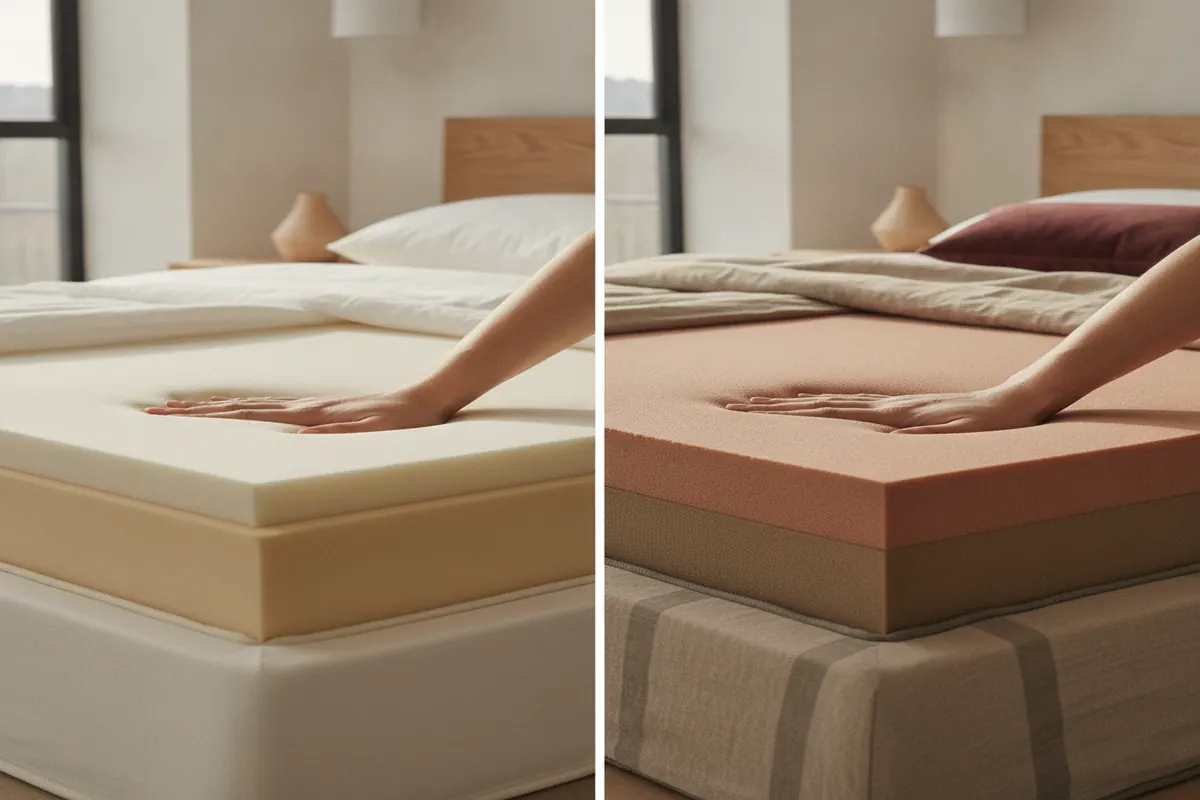
When navigating the vast world of mattresses, the terms “foam mattress” and “memory foam mattress” are often used interchangeably, leading to confusion. However, they refer to distinct material properties and sleep experiences. While all memory foam is a type of foam, not all foam is memory foam. The fundamental difference lies in memory foam’s unique viscoelastic properties, allowing it to slowly conform to your body’s heat and pressure, offering unparalleled contouring and pressure relief, whereas standard foam (often polyfoam) provides more immediate responsiveness and a broader range of firmness levels.
Quick Summary
- Foam mattresses are a broad category, encompassing polyfoam and latex
- Memory foam is a specific viscoelastic foam known for contouring
- Memory foam excels in pressure relief and motion isolation by adapting to body heat
- Standard foam (polyfoam) offers more immediate responsiveness and varied firmness
What Exactly is a Memory Foam Mattress, and How Does it Differ from Standard Foam?
To truly compare, we must first define our terms. The umbrella term “foam mattress” covers a wide array of materials, each with unique characteristics. Memory foam, on the other hand, is a specific innovation within this broader category, engineered for distinct performance benefits.
Decoding “Foam Mattress”: More Than Just One Material
When someone refers to a “foam mattress,” they are typically talking about a mattress primarily constructed from one or more types of polyurethane foam, often referred to as polyfoam, or sometimes latex foam. These materials form the core support and comfort layers, providing a spring-free sleeping surface.
-
Polyfoam (Polyurethane Foam): This is the most common and versatile type of foam found in mattresses. Polyfoam can range dramatically in density and firmness, from soft, plush comfort layers to firm, supportive base layers. It’s known for its immediate responsiveness – meaning it springs back quickly when pressure is removed. It doesn’t typically conform to the body as deeply or slowly as memory foam, offering a more “on top of the mattress” feel. Its open-cell structure generally allows for better airflow than traditional memory foam.
-
Latex Foam: A premium type of foam, latex can be natural (derived from rubber trees), synthetic, or a blend. Latex mattresses are highly durable, buoyant, and responsive, offering a distinctive “push back” feel. They are excellent for pressure relief and provide a cooler sleep experience due to their open-cell structure. While distinct from polyurethane foams, latex mattresses are often considered within the broader “foam mattress” category due to their all-foam construction. (Explore our Latex Foam Mattress and Latex Topper options for a naturally responsive sleep surface.)
The Unique Properties of Memory Foam
Memory foam, also known as viscoelastic polyurethane foam, was originally developed by NASA in the 1960s. Its defining characteristics are its viscoelasticity and temperature sensitivity.
-
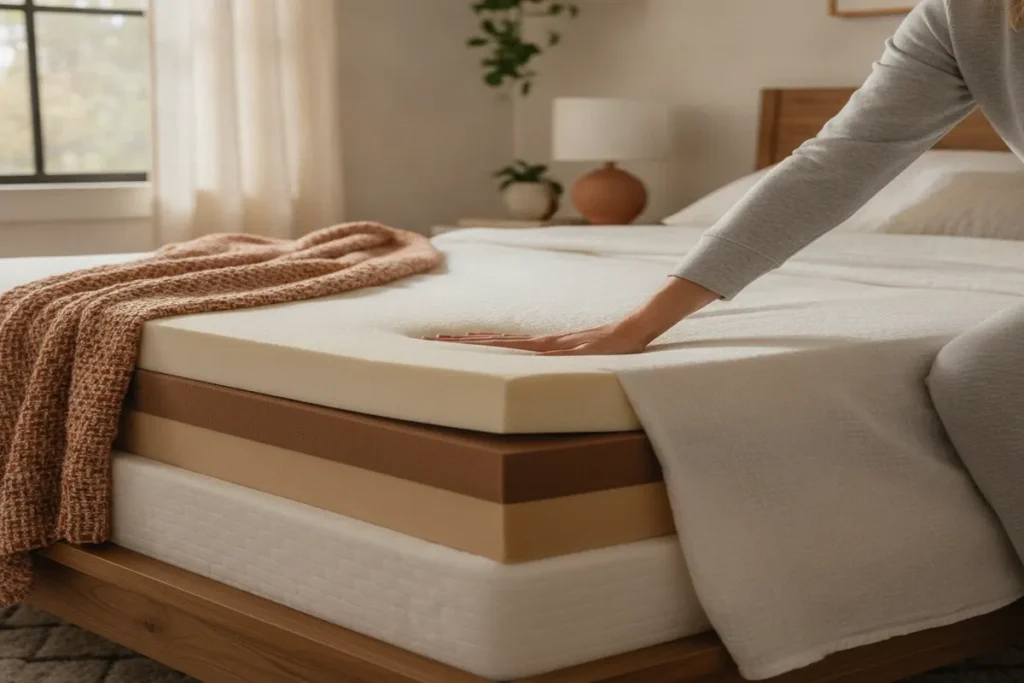
Viscoelasticity: This refers to memory foam’s dual properties of viscosity (resistance to flow) and elasticity (ability to return to its original shape). Instead of springing back immediately like polyfoam, memory foam slowly recovers its shape after pressure is removed, creating a unique “body-conforming” sensation.
-
Heat Sensitivity: Memory foam softens in response to body heat, allowing it to mold precisely to the sleeper’s contours. This personalized cradling effect distributes body weight evenly, minimizing pressure points.
-
Pressure Relief: By conforming so closely to the body, memory foam excels at relieving pressure on sensitive areas like hips, shoulders, and the lower back. This makes it a popular choice for individuals seeking pain relief.
-
Motion Isolation: Memory foam absorbs movement exceptionally well. If you share a bed, you’re less likely to feel your partner tossing and turning, leading to undisturbed sleep. (Our Visco Foam Mattress and Visco Topper ranges exemplify these superior motion isolation properties.)
Key Differences Summarized:
-
Response Time: Polyfoam is quick to respond; Memory foam is slow to respond.
-
Contouring: Polyfoam offers general support; Memory foam provides deep, personalized contouring.
-
Heat Sensitivity: Polyfoam is less affected by temperature; Memory foam softens with body heat.
-
Motion Transfer: Polyfoam has moderate motion isolation; Memory foam offers superior motion isolation.
-
Initial Feel: Polyfoam feels more “on top of” the mattress; Memory foam feels more like you’re “sinking into” or “cradled by” the mattress.
Understanding the Core Differences: Comfort, Support, and Feel
When evaluating a mattress, the subjective experiences of comfort, support, and overall feel are paramount. While both foam and memory foam mattresses aim to provide a restful night, their approaches to these essential elements differ significantly, influencing how you perceive your sleep surface.
A Side-by-Side Look at Key Attributes
To clarify these distinctions, let’s compare the attributes that most directly impact your sleep experience.
Elaboration on Comfort, Support, and Feel
-
Comfort: The comfort profile of a polyfoam mattress is often characterized by its immediate give and consistent feel across the surface. You feel supported on the mattress, with a quicker response to movement. This can be comfortable for those who dislike the feeling of sinking in or prefer to change positions easily. Memory foam, conversely, provides a unique, slow-adapting comfort. It gradually softens and molds to your body, creating a customized cradle that many find incredibly soothing. This “hug” can be deeply comforting for those seeking relief from pressure points.
-
Support: Both foam types can offer excellent support, but they achieve it differently. Polyfoam mattresses provide support through the inherent density and resilience of the material. A high-density polyfoam base can offer robust, uniform support that keeps the spine aligned. Memory foam provides support by contouring precisely to the body’s natural curves. This personalized support system fills in the gaps around your lumbar region and shoulders, ensuring optimal spinal alignment regardless of your sleeping position. The support is dynamic, adapting as your body shifts slightly throughout the night.
-
Feel: The overall “feel” is perhaps the most subjective differentiator. A standard foam mattress might feel more traditional, similar to an innerspring mattress without the coils, offering a blend of firmness and slight give. It’s often described as buoyant or responsive. A memory foam mattress has a distinctive sensation of melting into the surface. It can feel dense yet plush, and the slow recovery creates a sense of being enveloped. This feel is particularly appealing to those who desire deep pressure relief and minimal motion transfer.
Which Mattress Type Offers Better Pressure Relief and Back Pain Support?
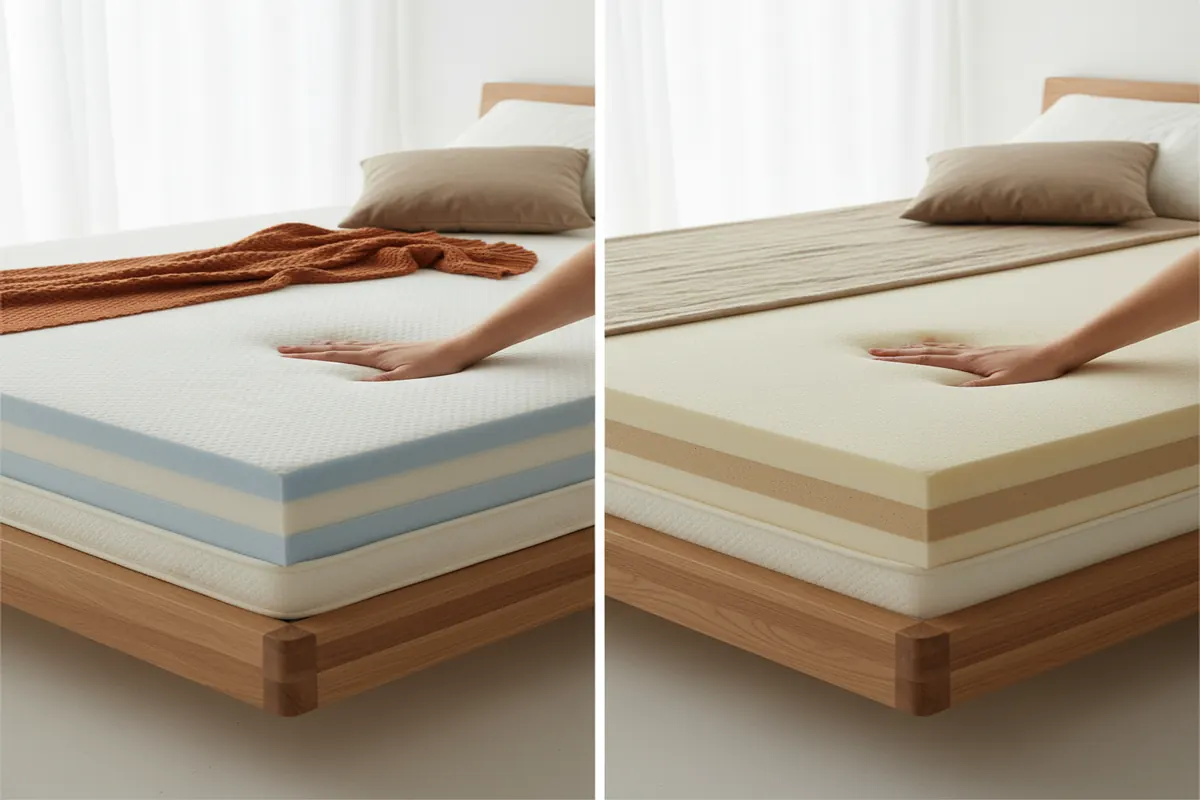
One of the most frequent questions we encounter at Sinyora Yatak is about the best mattress for alleviating back pain and providing superior pressure relief. Both foam and memory foam can be beneficial, but their mechanisms and effectiveness vary, making the choice highly personal. This is where understanding your specific needs becomes crucial.
Memory Foam for Targeted Back Pain and Pressure Relief
Memory foam is widely celebrated for its exceptional ability to provide targeted pressure relief. Its viscoelastic properties allow it to:
-
Cradle the Body: By softening with body heat and pressure, memory foam molds precisely to the unique curves of your body, including the natural arch of your lower back and the contours of your shoulders and hips.
-
Distribute Weight Evenly: This precise contouring eliminates pressure points by distributing your body weight uniformly across the mattress surface. This reduces strain on sensitive areas and promotes better blood circulation.
-
Promote Spinal Alignment: When your body is properly cradled, your spine can maintain its natural alignment, which is critical for alleviating and preventing back pain. The foam fills in the gaps, preventing the spine from sagging or arching unnaturally.
For individuals suffering from chronic back pain, fibromyalgia, or arthritis, the deep contouring and pressure distribution of memory foam can offer significant relief. It’s particularly beneficial for side sleepers whose hips and shoulders need extra cushioning and support to maintain spinal alignment. (Our Turkish Mattress for Side Sleepers is designed with these needs in mind, often incorporating Visco foam for optimal comfort.)
Standard Foam for Responsive Support and Back Pain
While not as deeply contouring, standard foam mattresses (especially those with high-density polyfoam) can also offer excellent back pain support, particularly for those who prefer a firmer, more responsive surface.
-
Consistent Support: High-density polyfoam provides robust, consistent support across the entire mattress, preventing excessive sinkage that can exacerbate back pain.
-
Immediate Responsiveness: For stomach sleepers and some back sleepers, a more responsive surface can be preferable. It prevents the hips from sinking too deeply, which can throw the spine out of alignment. A firmer polyfoam can offer the necessary resistance to keep the body in a neutral position.
-
Breathability: Some individuals find that the heat retention of traditional memory foam can worsen discomfort. Polyfoam, generally more breathable, can offer a cooler sleep surface, which might indirectly contribute to better sleep and less pain for some.
Considerations for Back Pain Sufferers
Choosing the right mattress for back pain isn’t just about the material; it’s about the synergistic effect of material properties, firmness, and your individual body.
-
Spinal Alignment: This is the golden rule. The mattress must keep your spine in a neutral, natural position, whether you’re on your back, side, or stomach.
-
Pressure Point Relief: Identify your common pressure points (hips, shoulders, lower back) and choose a mattress that alleviates pressure in those areas.
-
Firmness Level: Don’t assume “firmer is better.” A mattress that’s too firm can create new pressure points, while one that’s too soft can lead to excessive sinkage and misalignment. The ideal firmness is one that supports your body’s natural curves without creating discomfort.
-
Gel Memory Foam: If you like the contouring of memory foam but sleep hot, consider gel memory foam mattresses. These incorporate gel particles or layers to help draw heat away from the body, providing a cooler sleep experience while retaining the pressure-relieving benefits.
Recommendations based on Sleep Style for Back Pain:
-
Side Sleepers: Generally benefit most from medium-soft to medium-firm memory foam or a softer polyfoam comfort layer combined with a firm polyfoam base. This allows the shoulders and hips to sink in slightly while maintaining spinal alignment.
-
Back Sleepers: Often do well with medium-firm memory foam or a medium-firm polyfoam mattress. The key is enough support to prevent the lower back from arching while still offering some contouring.
-
Stomach Sleepers: Typically require a firmer polyfoam or a medium-firm memory foam to prevent the hips from sinking too far into the mattress, which can strain the lower back.
Beyond the Basics: Durability, Heat Retention, and Off-Gassing Considerations
While comfort and support are immediate concerns, a mattress is a long-term investment. Understanding factors like durability, potential heat retention, and off-gassing helps you make a choice that stands the test of time and promotes a healthy sleep environment.
Durability and Lifespan: Density is King
The lifespan of any foam mattress, whether standard polyfoam or memory foam, is primarily determined by its density. Higher density foams contain more material per cubic foot, making them more resilient and less prone to sagging over time.
-
Memory Foam Durability: High-density memory foam (e.g., 5 lbs/cubic foot or higher) is exceptionally durable and resistant to body impressions, often lasting 8-10 years or even longer. Lower density memory foams (3 lbs/cubic foot or less) will break down faster.
-
Polyfoam Durability: Similarly, high-density polyfoam (e.g., 1.8 lbs/cubic foot or higher for support layers) offers good durability. However, lower density polyfoam used in comfort layers or budget mattresses can soften and sag more quickly than comparable memory foam.
At Sinyora Yatak, we prioritize high-quality, dense foams in our constructions to ensure our mattresses offer an excellent Turkish Mattress Lifespan, providing lasting comfort and support.
Heat Retention: A Common Concern for Memory Foam
Traditional memory foam has a reputation for sleeping hot. This is due to its dense, closed-cell structure and its heat-sensitive nature, which causes it to soften and conform to the body, reducing airflow around the sleeper.
-
Memory Foam Solutions: Manufacturers have made significant advancements to combat heat retention:
- Gel Memory Foam: Infused with gel particles, beads, or layers designed to absorb and dissipate heat.
- Open-Cell Memory Foam: Engineered with a more porous structure to improve airflow.
- Copper or Graphite Infusions: These materials are highly conductive and help draw heat away from the body.
-
Polyfoam Advantage: Generally, polyfoam mattresses tend to sleep cooler than traditional memory foam. Their more open-cell structure allows for better air circulation, preventing heat buildup. Latex foam, with its naturally airy structure, is also an excellent choice for hot sleepers.
If you are a naturally hot sleeper, considering a gel memory foam or a high-quality polyfoam/latex mattress from our collection is advisable.
Off-Gassing: The “New Mattress” Smell
Off-gassing refers to the faint, sometimes noticeable, chemical odor that can emanate from new foam mattresses. This smell is caused by the release of volatile organic compounds (VOCs) that are byproducts of the manufacturing process.
-
Is it Harmful?: For most people, off-gassing is harmless and typically dissipates within a few days to a couple of weeks in a well-ventilated room. However, individuals with heightened sensitivities or respiratory issues might experience temporary discomfort.
-
Certifications: To ensure safety and minimize VOCs, look for mattresses with certifications like CertiPUR-US. This certification ensures that the foam is made without ozone depleters, PBDE flame retardants, mercury, lead, other heavy metals, formaldehyde, and has low VOC emissions for indoor air quality. All Sinyora Yatak foams meet stringent international safety standards.
-
Memory Foam vs. Polyfoam: Both types of polyurethane foam can off-gas, though memory foam, due to its denser composition, sometimes has a more pronounced initial smell. Latex foam generally has a natural, sometimes sweet, scent that is distinct from chemical off-gassing.
Summary of Pros and Cons:
-
Memory Foam:
- Pros: Excellent durability (high density), superior motion isolation, personalized pressure relief.
- Cons: Potential for heat retention (though improving), initial off-gassing.
-
Polyfoam:
- Pros: Generally more breathable, more affordable, immediate responsiveness, wide range of firmness.
- Cons: Varies greatly in durability (low density wears fast), less deep contouring, moderate motion isolation.
Choosing Your Ideal Mattress: A Practical Decision Framework
Selecting the right mattress is a significant decision that impacts your daily well-being. With the distinct characteristics of foam and memory foam laid out, the next step is to align these properties with your personal needs. This practical framework will guide you through the process, ensuring you make an informed choice. (For a broader selection, view our entire Mattress Collection.)
Your Personalized Mattress Decision Checklist
Before committing to a purchase, consider these crucial factors. By systematically evaluating each point, you can narrow down your options and identify the mattress type that genuinely suits you.
-
Identify Your Primary Sleep Position:
- Side Sleeper: Needs significant pressure relief for hips and shoulders to maintain spinal alignment. Memory foam or a softer polyfoam comfort layer is often ideal. (See our Turkish Mattress for Side Sleepers.)
- Back Sleeper: Requires a balance of support and contouring to fill the lumbar curve without excessive sinkage. Medium-firm memory foam or polyfoam works well.
- Stomach Sleeper: Needs a firmer surface to prevent hips from sinking too low, which can strain the lower back. Firmer polyfoam or medium-firm memory foam is usually preferred.
-
Assess Your Body Weight:
- Lighter Individuals (under 130 lbs): May find very firm mattresses uncomfortable. Softer foams (both memory and polyfoam) will provide better contouring and pressure relief.
- Average Individuals (130-230 lbs): Have the widest range of options. Medium-firm is often a good starting point for either foam type.
- Heavier Individuals (over 230 lbs): Require denser, firmer foams to provide adequate support and prevent premature sagging. High-density memory foam or firm polyfoam base layers are crucial for durability and support.
-
Consider Any Pain Points or Health Conditions:
- If you experience back pain, joint pain, or conditions like arthritis, the superior pressure relief and spinal alignment of memory foam might be particularly beneficial.
- If you have respiratory sensitivities, ensuring the mattress has low VOC certifications (like CertiPUR-US) is important, regardless of foam type.
-
Evaluate Your Temperature Sensitivity:
- Do you tend to sleep hot? If so, prioritize mattresses with cooling technologies like gel memory foam, open-cell polyfoam, or natural latex.
- Are you generally cold? Traditional memory foam’s heat retention might be a comforting factor.
-
Determine Your Motion Transfer Needs:
- If you share a bed and are easily disturbed by a partner’s movement, memory foam’s excellent motion isolation is a significant advantage.
- If motion transfer isn’t a concern, a responsive polyfoam might be perfectly suitable.
-
Set a Realistic Budget:
- Generally, polyfoam mattresses are more budget-friendly, while memory foam and latex tend to be in a higher price bracket, especially for high-density, feature-rich models. (For an idea of costs, review How Much Does a Turkish Mattress Cost.)
-
Prioritize a Generous Home Trial Period:
- A mattress feels different after a few nights than it does in a showroom. Look for companies that offer 90-120 night (or longer) sleep trials to truly test the mattress in your home environment.
The Role of Firmness: A Subjective Experience
It’s crucial to understand that “firmness” is subjective and not directly synonymous with “support.” A supportive mattress keeps your spine aligned, while firmness refers to how hard or soft the initial feel is. Both foam and memory foam mattresses come in various firmness levels. What feels firm to one person might feel medium to another. Always consider firmness in conjunction with your body weight and sleep position, rather than as an isolated factor.
Common Pitfalls When Buying Foam Mattresses and How to Avoid Them
The journey to finding your perfect mattress can be fraught with missteps if you’re not aware of common buying pitfalls. As specialists at Sinyora Yatak, we’ve observed certain patterns that lead to buyer’s remorse. By understanding these, you can navigate your purchase with confidence and avoid costly mistakes.
Mistakes to Avoid When Choosing Your Foam Mattress
-
Ignoring Foam Density: This is perhaps the biggest mistake. Low-density foam, whether polyfoam or memory foam, will break down faster, leading to premature sagging, loss of support, and a shorter lifespan. Many budget mattresses skimp on density.
- How to Avoid: Always inquire about the foam’s density specifications (e.g., lbs/cubic foot). For memory foam comfort layers, aim for 3.5 lbs/cubic foot or higher. For polyfoam support layers, look for 1.8 lbs/cubic foot or higher.
-
Buying Based Solely on “Firmness” Labels: Mattress firmness is not standardized across brands. One company’s “medium-firm” could be another’s “firm.” Relying solely on a label without trying the mattress or understanding its construction can lead to disappointment.
- How to Avoid: Use firmness labels as a general guide, but prioritize personal trial, review real customer feedback for specific models, and understand the foam types and layers that contribute to the feel.
-
Overlooking Certifications (Like CertiPUR-US): Without certifications, you have no guarantee about the safety or quality of the foams used. This can lead to concerns about off-gassing and exposure to harmful chemicals.
- How to Avoid: Always look for recognized certifications such as CertiPUR-US for polyurethane foams (both standard and memory foam). This ensures the foam is free from harmful chemicals and has low VOC emissions.
-
Not Taking Advantage of Home Trial Periods: A quick lie-down in a showroom is insufficient to determine if a mattress is right for you. Your body needs time to adjust, and you need to experience the mattress in your typical sleep environment.
- How to Avoid: Only purchase from retailers or brands (like Sinyora Yatak) that offer a substantial in-home sleep trial (e.g., 90 nights or more). This allows you to truly test the mattress’s suitability.
-
Focusing Only on Price: While budget is important, choosing the cheapest option often means compromising on foam density, quality, and ultimately, durability and comfort. A cheap mattress that quickly sags is not a saving.
- How to Avoid: View a mattress as an investment in your health and well-being. Allocate a reasonable budget and prioritize value (quality for price) over just the lowest price tag. Remember, a good mattress can last 7-10 years.
-
Ignoring Your Existing Bed Base and Headboard Compatibility: Foam mattresses, especially all-foam designs, require a solid, supportive foundation. Using an old, unsupportive box spring or a slatted base with wide gaps can cause the mattress to sag prematurely and void your warranty.
- How to Avoid: Ensure your bed base provides continuous, even support. For slatted bases, the gaps between slats should typically be no more than 2-3 inches apart. Consider upgrading to a new Bed Base and Headboard if yours is insufficient.
-
Neglecting Customer Reviews for Specific Models: Generic reviews about “foam mattresses” aren’t helpful. Specific product reviews can reveal common issues like excessive heat retention, initial firmness, or durability concerns for a particular model.
- How to Avoid: Read a variety of reviews for the specific mattress model you’re considering, paying attention to comments from sleepers with similar body types and sleep preferences.
By being aware of these common pitfalls and following the advice to avoid them, you’re well on your way to making a smart and satisfying mattress purchase that supports years of comfortable sleep.
Expert Insight
“Industry experts emphasize that the ‘best’ mattress is highly individual. While memory foam excels in pressure relief and contouring, modern polyfoams offer improved responsiveness and cooling. The critical factor is aligning mattress properties with your unique body type, sleep position, and comfort preferences, rather than adhering to generalized notions of superiority.”
Key Terms
-
Viscoelasticity: The unique property of memory foam that allows it to slowly conform to pressure and heat, then gradually return to its original shape, creating a “hug” sensation.
-
Polyfoam: A broad category of polyurethane foam commonly used in mattresses, known for its immediate responsiveness and versatility in density and firmness.
-
Motion Isolation: A mattress’s ability to absorb and minimize the transfer of movement from one side of the bed to the other, crucial for undisturbed sleep, especially for couples.
-
Off-Gassing: The initial, temporary odor released by new foam mattresses due to volatile organic compounds (VOCs) dissipating, which typically fades with ventilation.
-
ILD (Indentation Load Deflection): A standardized measure of a foam’s firmness, indicating the amount of force (in pounds) required to indent a 4-inch thick foam sample by 25% of its original height.
How Can You Upgrade to More Comfortable Sleep with Sinyora Yatak?
At Sinyora Yatak, we understand that true comfort is deeply personal. Having explored the nuances of foam and memory foam mattresses, you’re now equipped to make an informed decision. We invite you to experience the difference that Turkish craftsmanship and premium materials can make in your sleep. Our extensive collection features meticulously engineered mattresses designed to cater to every preference and need.
Whether you’re seeking the deep, pressure-relieving embrace of a Visco Foam Mattress or the resilient, breathable support of a high-quality Foam Mattress, Sinyora Yatak offers solutions built for lasting comfort and durability. Our commitment to excellence extends from our advanced foam technologies to our traditional Turkish manufacturing methods, ensuring every product delivers exceptional value.
Beyond mattresses, enhance your sleep sanctuary with our complementary Visco Topper and Visco Pillow options, engineered to provide additional cushioning and neck support. We proudly Ship Turkish Mattresses Internationally, bringing superior sleep directly to your door.
Don’t settle for restless nights. Explore our Shop All Products and Mattress Collection today. Our dedicated Customer Service team is always ready to assist you in finding your perfect Sinyora Yatak match. Contact Us for Support and take the first step towards truly transformative sleep.
Frequently Asked Questions
Q: Is memory foam good for everyone?
Q: How long do foam and memory foam mattresses last?
Q: Can I use a foam mattress on any bed base?
Q: What is gel memory foam?
Q: Is off-gassing from foam mattresses harmful?
Q: How do I clean a foam or memory foam mattress?